A ‘Once and Future’ Language
From the language of Kings and Parliament, to a century of being silenced in the classroom, Scots has a story of remarkable resilience. We speak to leading experts from the Universities of Aberdeen and Glasgow to explore the unique evolution of the Scots language.
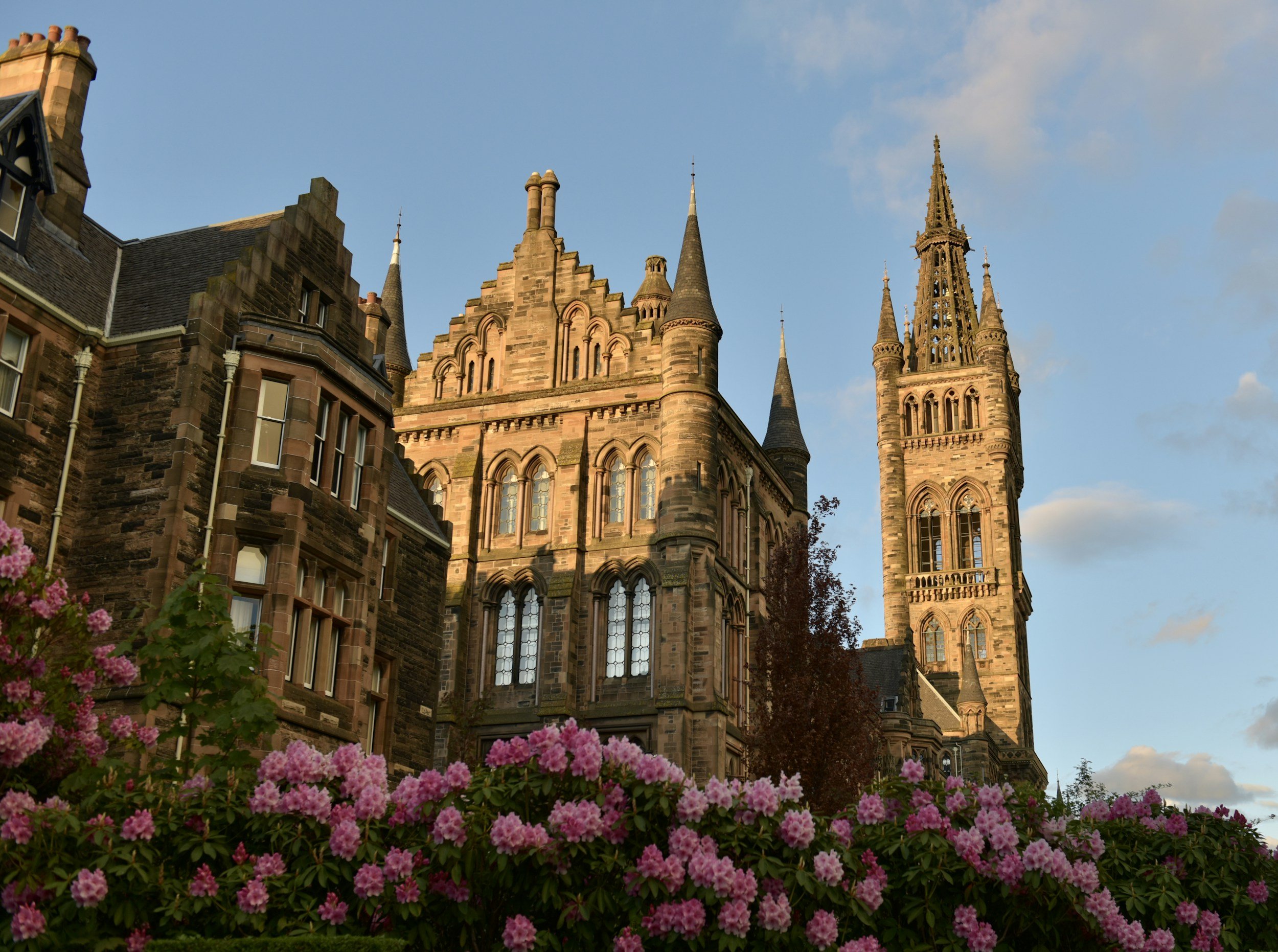
by Rhiannon Davis | Image by Paulina B via UNSPLASH
Scots grew out of the same early roots as English, but developed in its own direction during the Middle Ages, building a rich vocabulary, distinctive grammar and a strong literary tradition.
For hundreds of years it was the main language of government and everyday business in Scotland. After the 1707 Treaty of Union, however, its official use declined, and in 1845 state education policy required children to learn and speak English, with many punished for using Scots – a practice that lasted well into the 20th century.
Despite that, it never disappeared. The 2022 census recorded more than 1.5 million Scots speakers, with many more people saying they can read, write or understand it. Recognised today by both the Scottish and UK governments, Scots continues to be spoken across the country.
To find out more, we spoke to a couple of leading experts. First up, Professor Robert McColl Millar, Chair in Linguistics and Scottish Language at Aberdeen University:
How would you define Scots as a language, and how does it differ from English and Gaelic?
Scots and Standard English are kin-tongues, closely related to each other. Scots and the dialects of the north-east of England share much linguistically, both are quite distinct from the varieties spoken in the English Midlands and South. Scottish Gaelic is a distant relative of both varieties. It is a Celtic language, while English and Scots are Germanic.
Scots has often been described as a dialect rather than a language. From a linguistic perspective, what distinguishes a language from a dialect, and where does Scots sit within that discussion?
It has been said that 'a language is a dialect with an army and navy'. At present, Scotland and Scots cannot be described in these terms. But unlike most dialects, Scots has been a language and was the language used in Scotland for government in the fifteenth and sixteenth centuries. Its 'decline' was caused by, among other things, political instability, the Protestant Reformation and the Unions of 1603 and 1707. It was replaced in many contexts by Standard English. Yet it continues to be written and has, in the last hundred years, been used in 'high' literature when other dialects are generally used for 'folksy' writing only.
I have described Scots as a 'once and future language'. I have also compared it to the old logo of the Church of Scotland – the burning bush with nec tamen consumebatur 'and yet it was not consumed'. This refers to faith and (probably) the fact that Presbyterianism survived the 'killing time' of the late 17th century, but it could also be used for Scotland (which has survived as a discrete unit) and Scots and Gaelic, which have held out against the power associated with English.
How has the historical development of Scots shaped modern-day Scotland, particularly in literature, education and everyday speech?
The central point is that Scotland is unusual in European terms in not having a native tongue as the main language of use. In terms of literature, Scots has been used as a considerable marker of 'high' status for centuries. In prose, however, Scots is normally only found in dialogue, not narrative (this distinction has been lessened over the last thirty years). Education policy has often been used as a means of attacking the language use of children; this is particularly the case with urban forms of speech. More recently, however, its use in schools has been encouraged in some places.
In recent years there has been renewed recognition and official support for Scots as its own language. What does this recognition mean in practical terms, and why is it significant?
I think it's significant primarily in a symbolic way: Scots and Gaelic are recognised as central to the country. In practical terms, I am not sure what the outcomes are likely to be. Recognition of the language and powerful government support have not really helped the survival and spread of Irish, for instance. Our government is well disposed towards Scots, but it has other priorities as well. But if it encourages more children (and adults) to use the language, that can only be a good thing.
We also spoke to Joanna Kopaczyk-McPherson, Professor of Scots and English Philology at the University of Glasgow
How has Glaswegian dialect developed in relation to Scots?
Glaswegian is typically described as one of the West Central dialects of Scots, and it's an example of an urban dialect, with its own characteristics, e.g. a degree of dialect mixture (because of migration into Glasgow from across Scotland and Ireland in the 19th and early 20th centuries), but also a tendency to level out Scots features and adopt Scottish Standard English. There is also variation within the Glasgow dialect, especially among Asian communities (linguists have been looking at the so-called Glaswasian accent, for example).
What makes it distinctive to other parts of the country?
A strong association with the working class, with noticeable influence from Irish English and other migrant groups. Because of negative perceptions around language mixing and working class language, historically Glaswegian lacked the overt prestige characteristic of other Scots dialects, e.g. Doric. It was considered to be less authentic or more "polluted" – these negative attitudes were shaped by a strong sense of linguistic hierarchy, with standard language and literary language at the top. Today the perception has been shifting as more recognition is now given to multilingual repertoires and linguistic identity which reflects cultural and ethnic diversity. But the Glasgow dialect of Scots is still typically associated with jokes, banter and comedic representations of Scots speakers.
How do you see Scots evolving?
The Scottish Languages Act creates a legal framework for the support of linguistic communities who use Scots but it is up to these communities how they respond to it. Currently civil servants are working with communities and stakeholders on the strategy for Scots – it's a great opportunity to get involved and shape policy. I would recommend getting in touch with Oor Vyce who have become the lead organisation representing various groups.
The publisher acknowledges receipt of the Scottish Government’s Scots Language Publication Grant towards this publication.
