Banner-making: Sewing the seeds of change
Textile artist and banner maker, Keng Keng Tang shares the ingenuity of banners – their ability to share messages of protest and hope, from communities organising against climate change to those occupying arms factories.
By Keng Keng Tang, Photos by Rob Reid & Keng Keng Tang
The first banner I made was for a local climate action event in 2019. It said ‘Sewing the Seeds of Change’ in big golden letters on navy velvet fabric. It was part of a group workshop, and I was astonished by the number of people who turned up. It was heart warming to see a big group of people take their time to come together and work on something positive. That banner planted a seed in me.
Until then, I had worked in fashion and film and was becoming disillusioned with these industries. I felt like my creativity only existed to serve rich people or celebrities. I found myself working in places that seemed to be unaware of problems like the climate crisis or racial and social injustice. I felt lost and I didn’t want to be part of the problem anymore.
One day, I was on my way to work and the road was blocked by a large crowd of climate activists. They were holding flags and banners on the street. I was drawn by the eye-catching designs and slogans on the banners and my heart was caught by the bold messages: “ Save the Planet, This Way → ”.
Very quickly I found that my way of expressing activism, my tool, was banner-making.
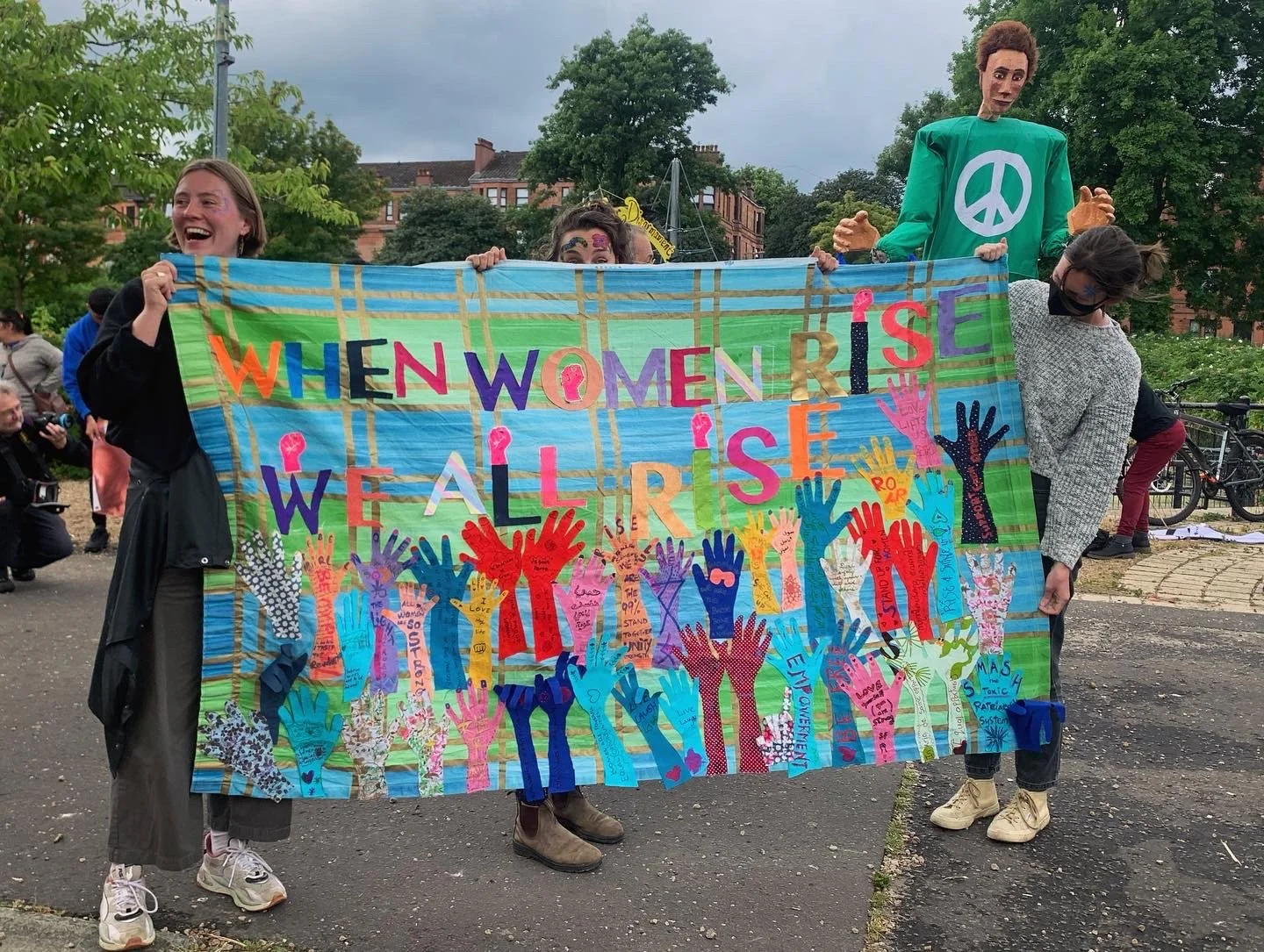
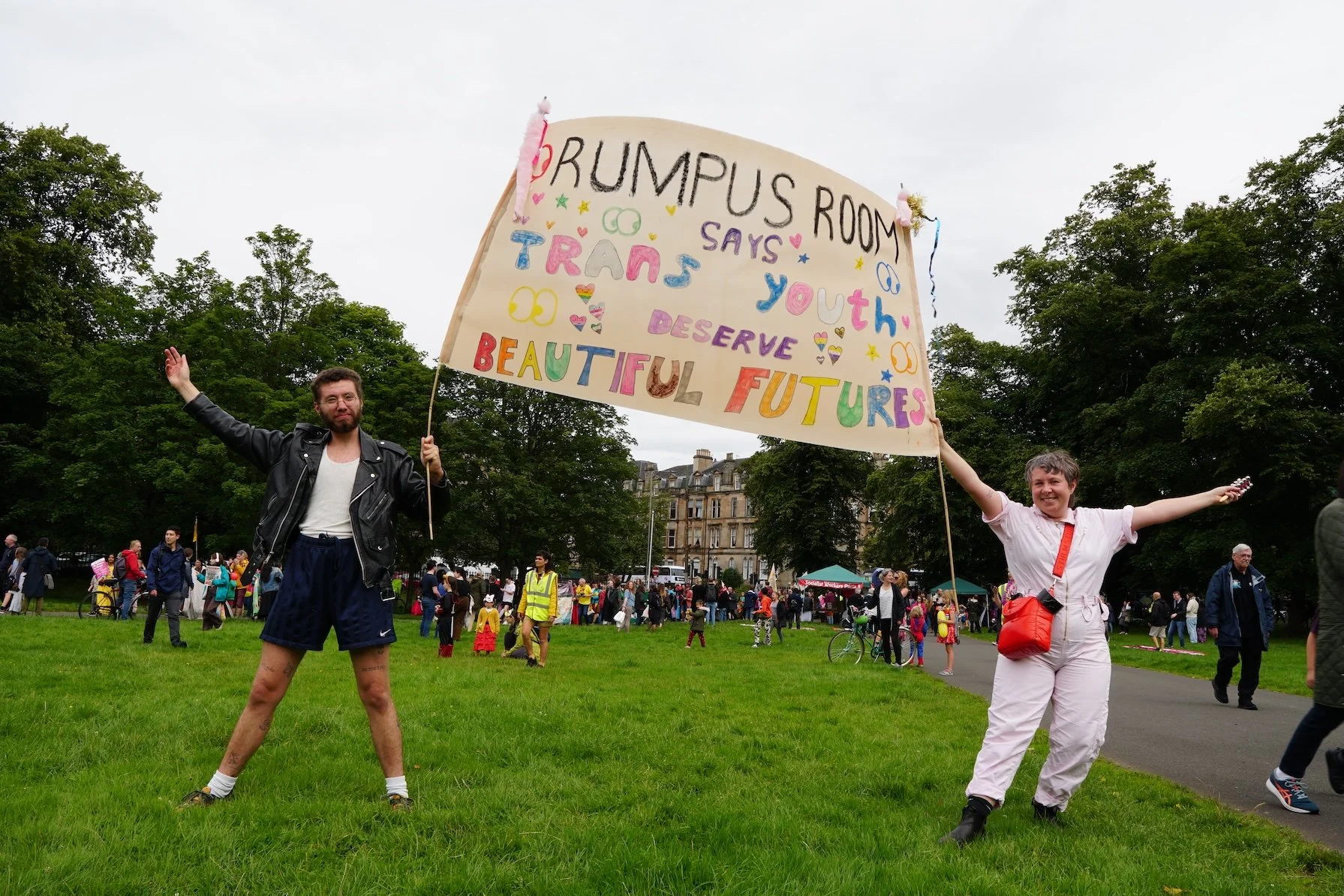
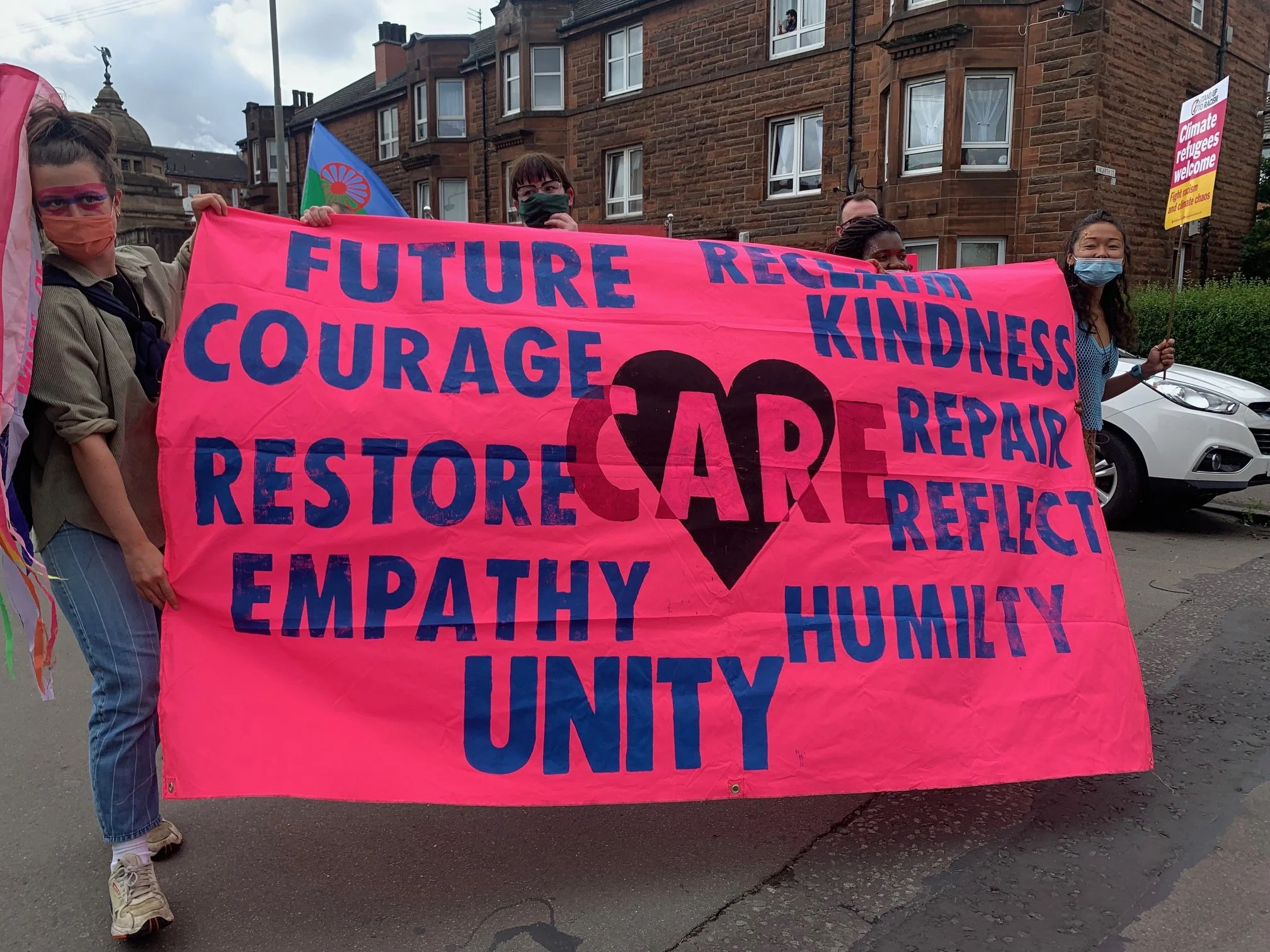
For me, a big part of being an arts activist is facilitating banner-making workshops. To hold a space which is safe and calm before a protest, where we bring people together to debrief and reflect, share skills and resources, and we learn to work collaboratively through sewing and painting. When we walk on the street to protest, we have something to hold on to that can bind us and thread our hearts together. Banner-making is a great way to build community – what we paint on the banners resonates in our hearts.
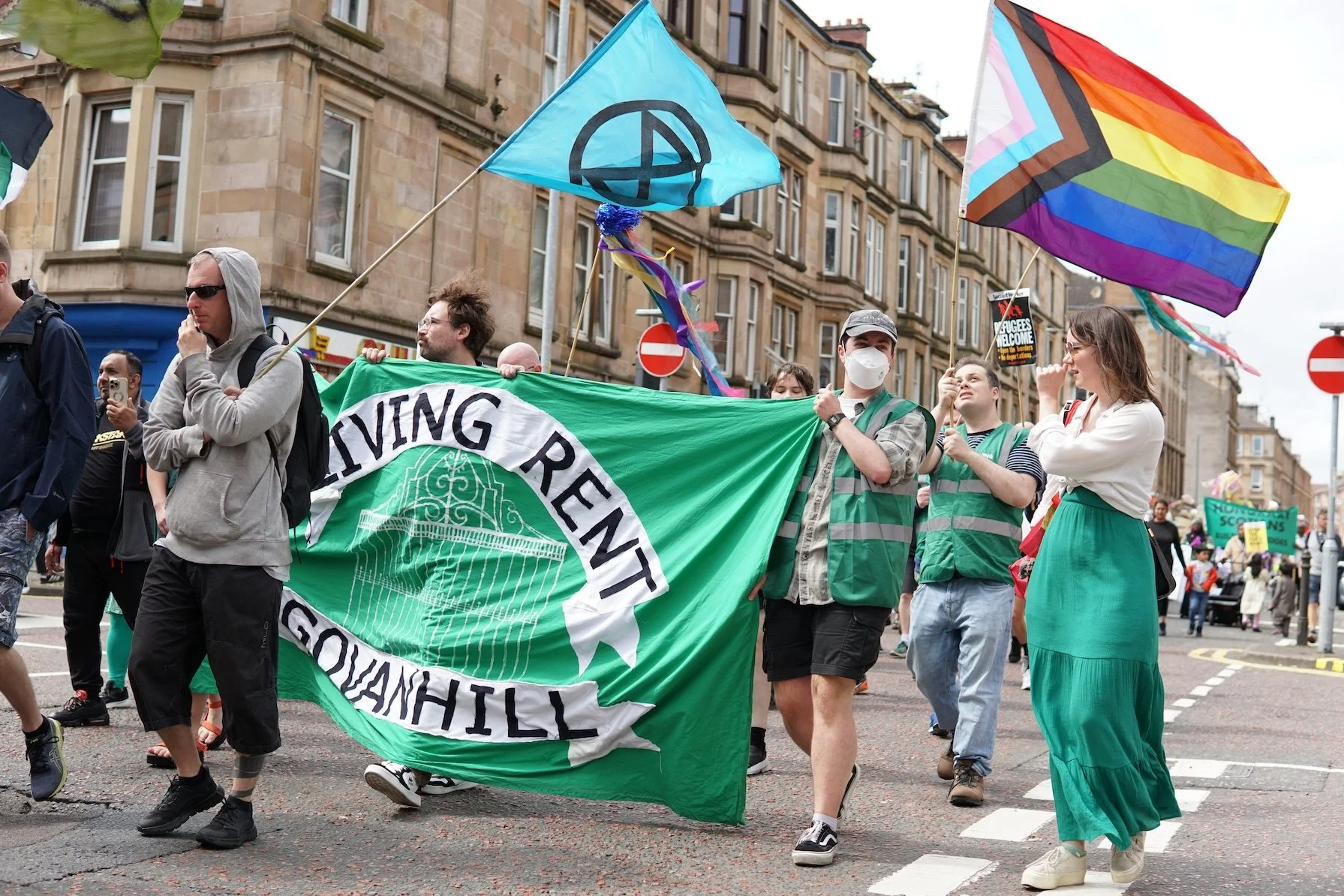
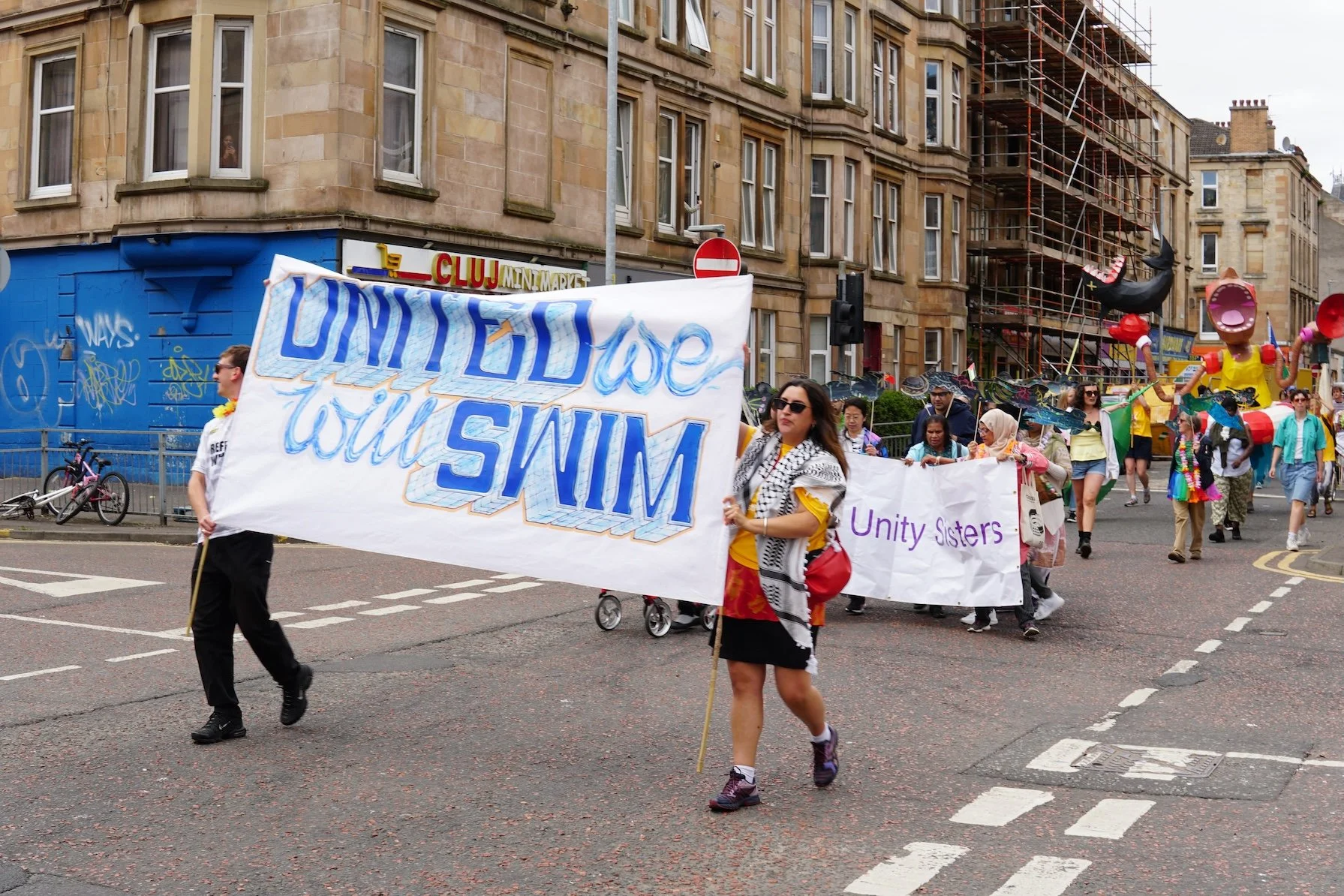
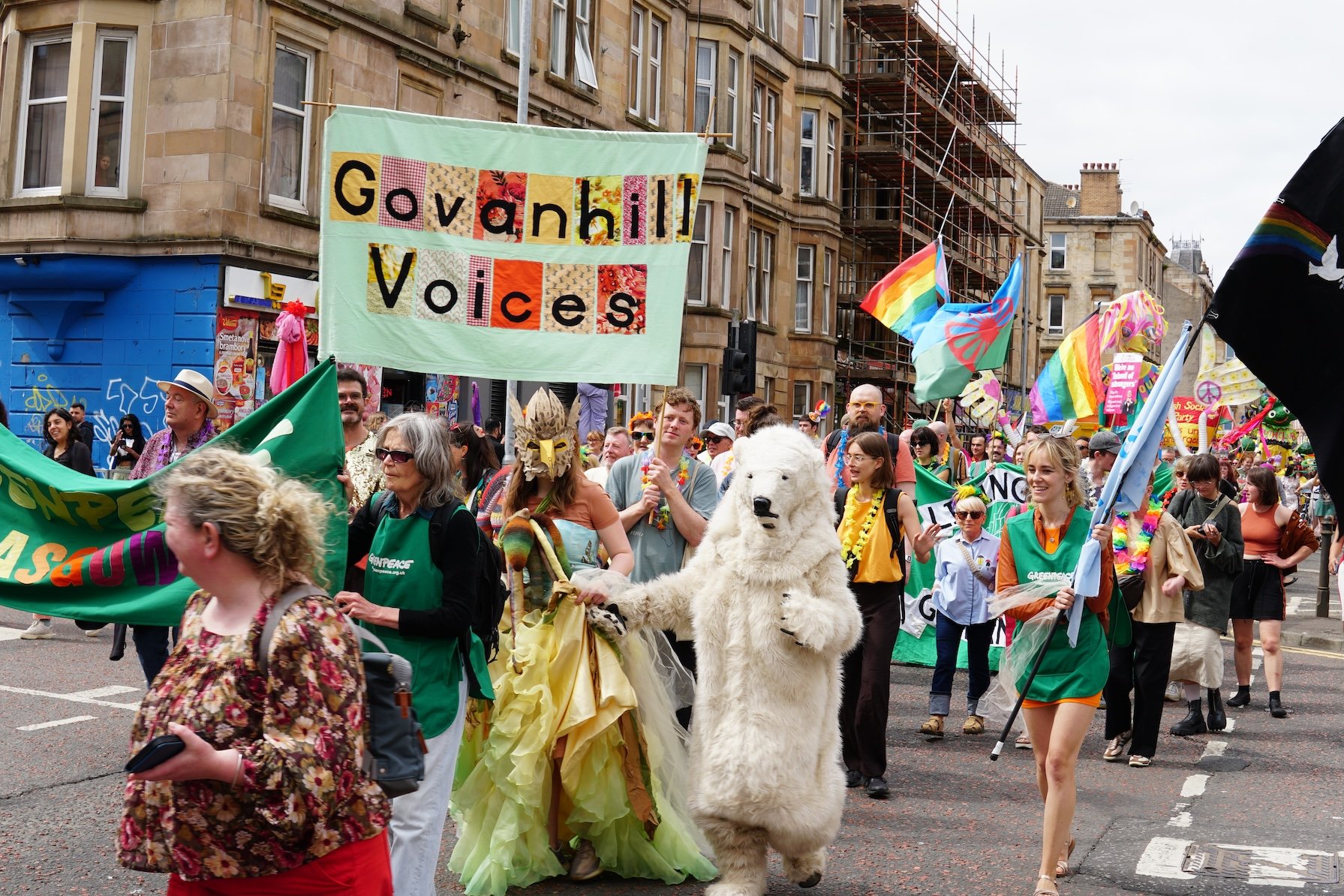
Banners help to take up space visually and physically at the protest. A large horizontal banner could be used in many different situations – at a protest, during the Govanhill International Festival parade, for blocking the entrance to an arms factory, or a road. This type of banner can create a strong human wall and help shield against police violence. Vertical banners can be used to drop down in front of a building to display a message in a very public way.
Recently, I have spent time on some new textile projects – community quilts. These share many of the ideas of the banners I spent so much time making – gathering a group of people and holding their messages. But quilts are more focussed on care and rest.
I’ve rediscovered how important it is to look after yourself and each other when being involved in a political movement – taking a moment to slow down, and realise that some fights are going to take time and energy. Building a community, like making a quilt, takes time and careful work, and requires many hands. This ensures our resistance can last for a long time.
Banners are such an important form of activist art. Popularised by trade unions and suffragettes and still strongly embedded in activism today. They can be like a lighthouse – signalling to others that people care, and they can show that hope exists. Banners can record our stories, and are soaked with our emotions – tears, rage, love, hope.