Doon a rabbit hole: Rediscoverin Scots writin fae dissertation tae preservation
Why is it so hard to find out-of-print Scots classics? After discovering a disconnect between her university syllabus and the language she spoke with pals, Stacey Anderson took a deep dive into the archives. She reflects on the importance of keeping Scots literature alive and how boring doodles in the margins can be a vital link to our past.
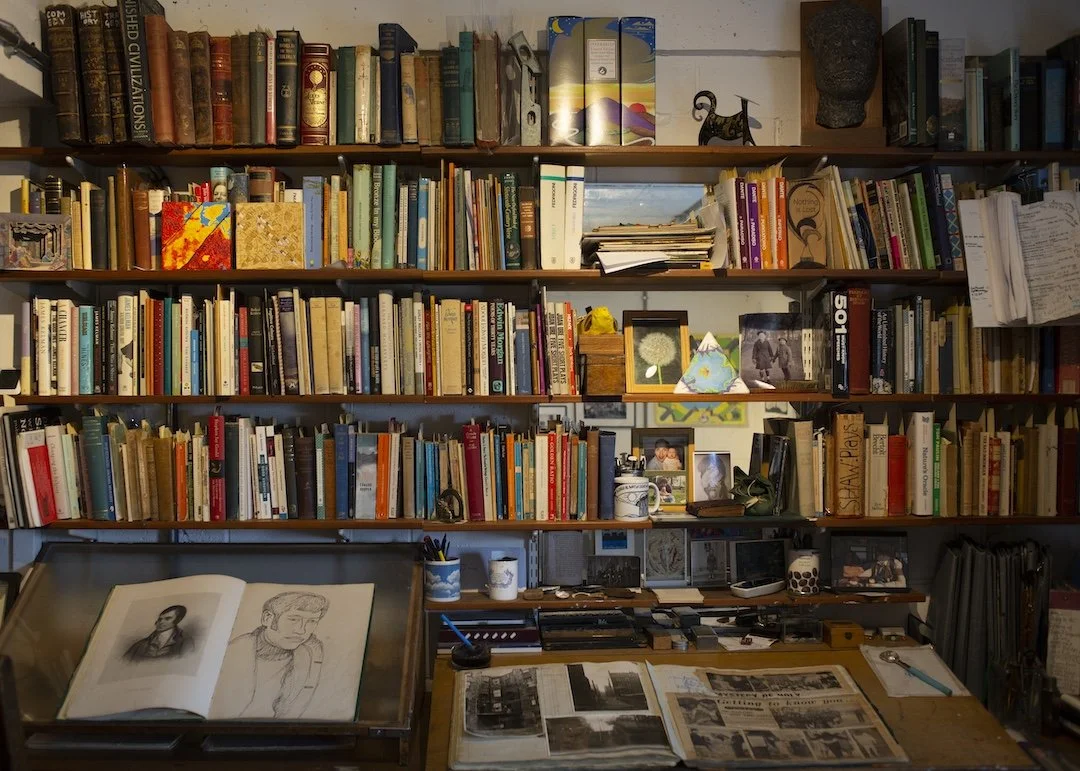
By Stacey Anderson | Photo by Miriam Ali
In 2019, a was studying for a degree in English Literature but had found masel either bored or repelled by the majority of the books ad been assigned. The exception wis the one that had been written close tae campus: Poor Things by Alasdair Gray.
The time tae pursue this interest came when a was dain ma dissertation. At the time Chris McQueer n Limmy were comin oot wae their own short stories in Scots n were both huge on Twitter. Ad noticed a big trend between social media bringing this sorta writing tae folk who wereny usually at book launches n the like. A thought this was the perfect subject to delve inty n so a got to spend aboot four months just readin aw about the use of Scots in literature. A read pieces that resembled the texts a sent n received wae pals n the social media posts a read on a daily basis, but a hadny seen at aw whilst a had been studying.
When a was researchin wit hud came before the stuff a was lookin at a ended up doon a rabbit hole of authors ad never really heard of before n whose writin was hard to trace. A noticed that even for James Kelman, who had cemented Scots language on a global stage by winnin the Booker Prize, new editions of his books were harder to come by, wae many oot ae print (this chinged in 2023 when ‘The Kelman Library’ oversaw the republication and printing of his oeuvre).
So many of our literary greats were the same, new versions of their copies were oot of print and so ye’d be at the mercy of wit ye could find by chance in a second hand book shop or on eBay.
A felt a surge of injustice at this, at the complete disconnect between wit a could read n wit was around me, n trouble accessin the literary legacy that came before wit a was currently readin. A felt ill equipped to be writin about a subject which a couldny access the history of.
But it goat me thinking about the preservation of and access to Scots literary tradition as I looked intae Muriel Spark as well as contemporary writers a liked, such as Janice Galloway n Jackie Kay. Libraries n archives were comin up as the key: bein the custodians of many authors’ work and personal papers which gives insight inty their writing process interests which appear in their work, as well as keepin copies of their books for folk tae borrow. A penny dropped for me here n a enrolled in a course called Information Management & Preservation which wud allow me tae follow this inty a career.
Sadly due tae completin the course during Covid restrictions, a didnae have the experience ye wud picture for this sorta course: a didnae get tae physically go intae any archives n a didnae get any first-hand experience of archive material. Once restrictions were bein lifted a found masel a placement at The Alasdair Gray Archive where I had the immense opportunity of goin through material belonging to one of Scotland’s most unique and talented artists and writers.
The Custodian of the Archive, Sorcha Dallas, was grateful fur me goin through his letters and ephemera n creatin an initial catalogue of what was there for the use of future academics, fans, students, you name it. But a always felt like a was the one who should be grateful for the opportunity to touch, look closely, and spend time wae stuff that belonged tae one of my favourite writers.
At the archive I saw wee notes and doodles made in the margins of books, the same sorta approach to leaving yer mark on yer possessions that ad seen over a screen a few years before, in books that were hundreds of years auld. A canny describe how special it is tae experience this. N it doesnae just matter if ye knew, or knew of, the person or no – seein this tangible urge that folk always seem tae have had tae record their thoughts, or proof of their existence, or proof of their boredom even, is magic.
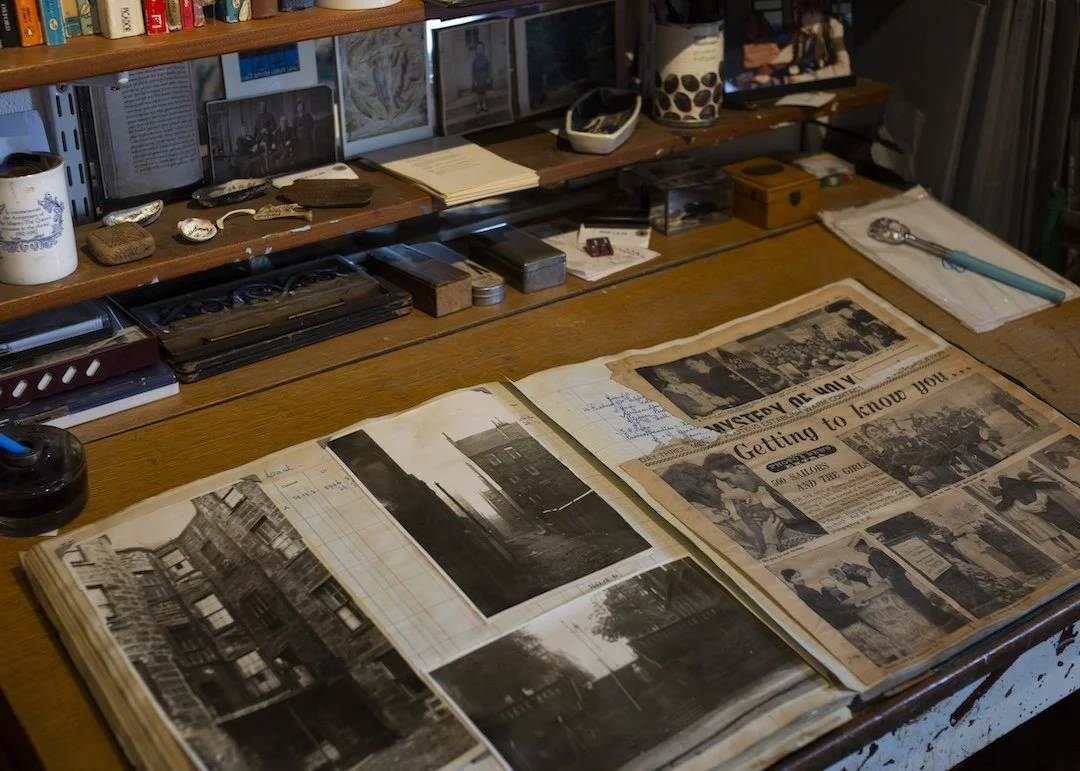

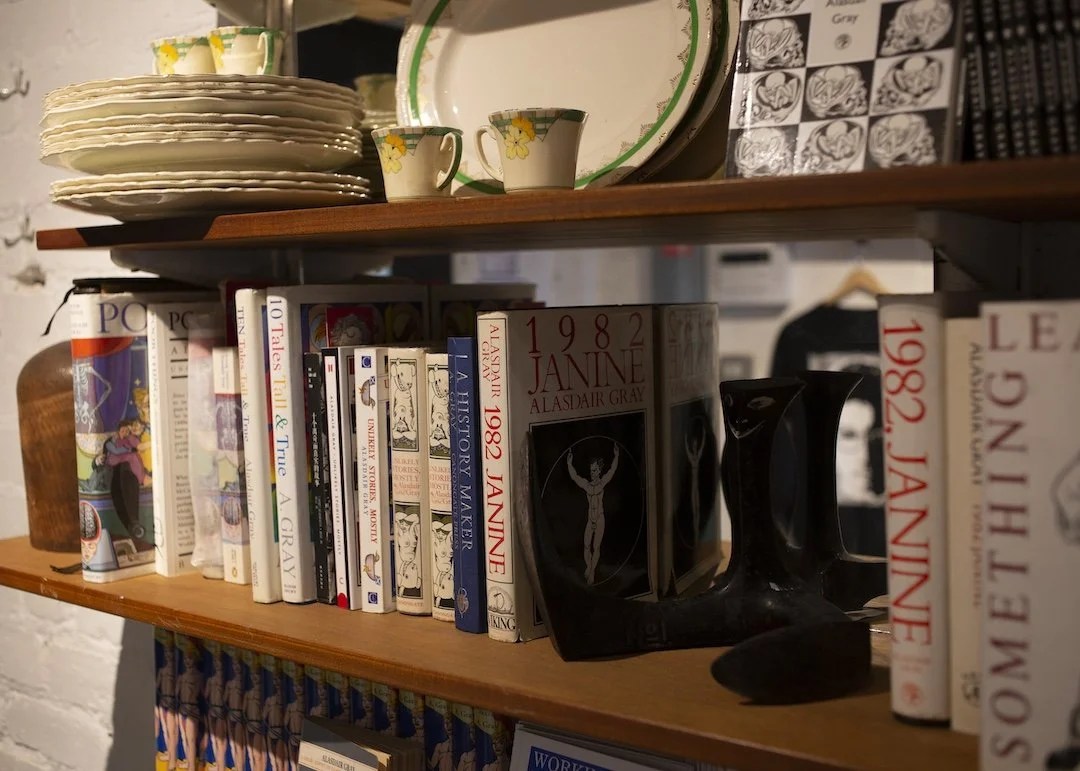
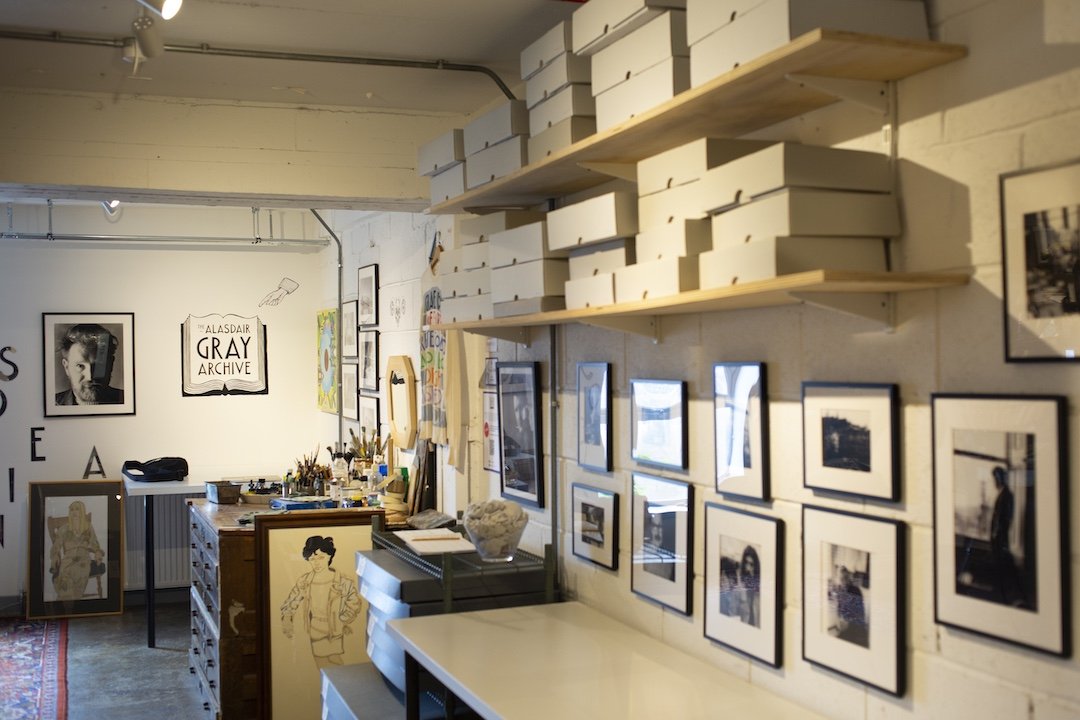
The final hing av discovered through my work wae archives is how much great stuff is held in them and how much it excites our interest n creativity. A lot of folk just don’t realise that aw that stuff is there, n that it’s there for them. Maist archive services are understaffed n am sure would like to advertise their services and outreach to their communities more than they do. But plenty of stuff is available digitally on museum n council-run archive websites anawl, so ad encourage everyone readin this to dedicate some time to fallin doon a rabbit hole of their own special interest or hobby n see what ancient stuff is oot there for them.
Dr. Johanna Green, Senior Lecturer in Information Studies, is remembered in this article.
Other archives tae visit:
The Scottish Council on Archives maintains a map tae help you discover n explore archive collections across Scotland: www.scottisharchives.org.uk/explore/scottish-archives-map
A favourite ad recommend checking oot is the collection of the Women’s Library in the East End which you can explore online here: archive.womenslibrary.org.uk
Ye can keep up wae The Alasdair Gray archive at: thealasdairgrayarchive.org
The publisher acknowledges receipt of the Scottish Government’s Scots Language Publication Grant towards this publication.
