Funding, Fragility, and the Future of Southside Theatre
Glasgow is a global cultural capital, but its foundations are fraying. James Dixon looks at the funding crisis facing Southside theatre makers and explains why "project-based" support is failing the artists – and the communities – who need it most.
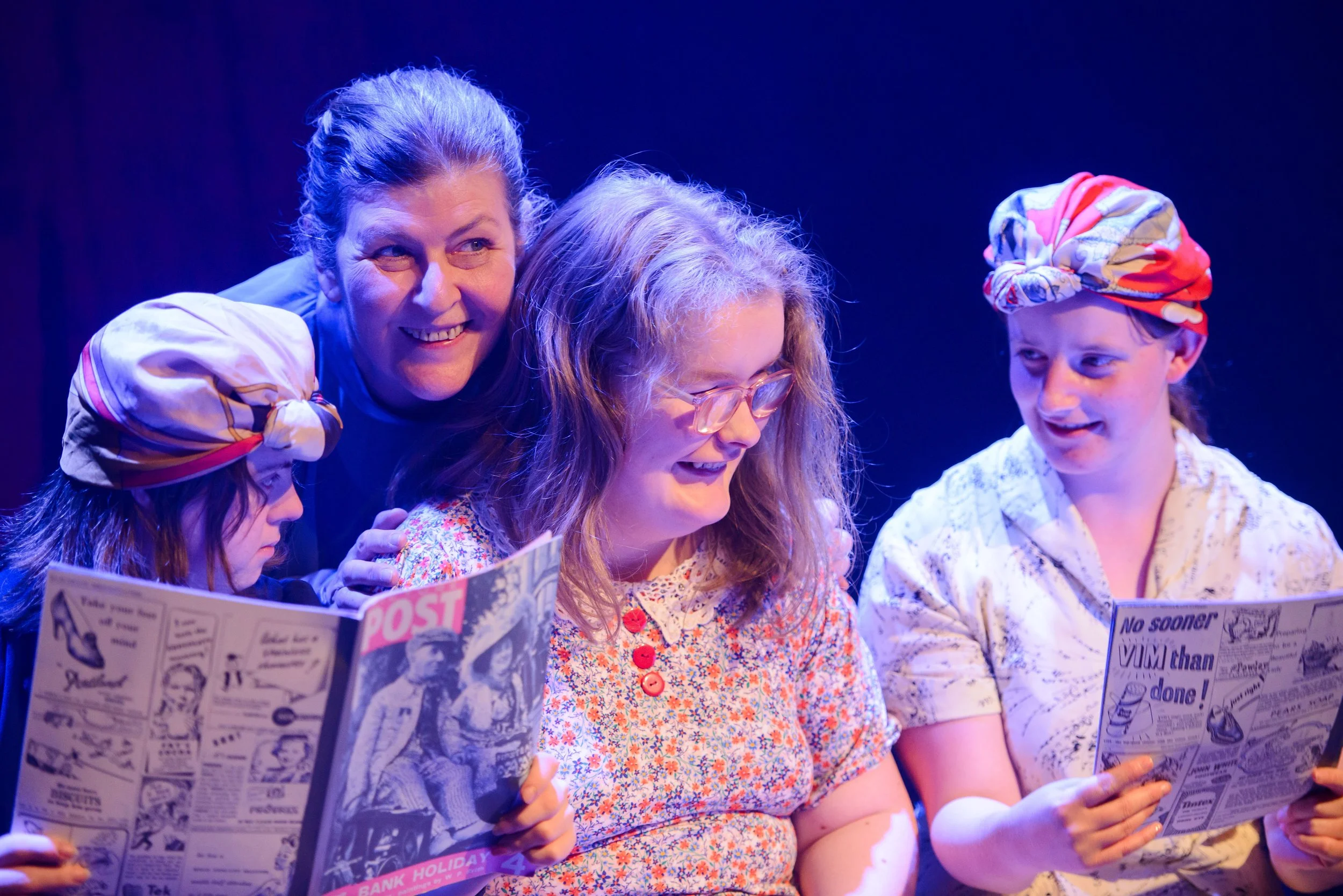
By James Dixon | Photos by Tim Morozzo and Stewart Ennis
I recently went to Scottish Opera’s staging of The Great Wave, by Dai Fujikura and Harry Ross. It received mixed reviews – indeed, I gave it quite a poor one myself, as the standard wasn’t what you would expect of such a well-regarded a company. It got me wondering why Scottish Opera would put such a sub-standard production on, so I looked into it.
As I’d suspected, it was because they were in essence paid to put it on: it came ready funded, through a variety of private donors and grants. You see, Scottish Opera is chronically short of cash. They simply couldn’t afford to turn down a ready funded show, even if it wasn’t all that good. Quality slipped, and there was great opportunity cost as other operas that might have taken more cash to get going went unmade.
It got me thinking about arts funding in Scotland in general, and in my native Southside in particular. Because if you cut funding, you lose something vital and important, and the quality of culture that your society can come up with diminishes, to everyone’s detriment.
Theatre is a big deal in Glasgow’s Southside. Any given evening, rehearsals and performances are going on in any venue artists can find, from church halls and the back rooms of pubs to more established, professional theatre spaces like The Citizens’ Theatre and Tramway. It’s here, arguably, away from the city’s larger, more mainstream stages, that Glasgow’s most vital creative work is going on: precarious, underfunded, and often overlooked.
There are signs of renewal at the top, of course. The Citizens’ Theatre has recently reopened after enjoying a major revamp, backed by around £17.5 million in public funding. Just around the corner, we have Tramway, which as well as being a great art gallery, is one of the city’s most dynamic, forward thinking theatrical spaces - though, it must be noted, Tramway comes with some accessibility options, with grass roots productions often unable to access their space. I’ve recently enjoyed performances in both with my family, in fact, with The Citizens’ Theatre’s musical rendition of Beauty and the Beast on Hogmanay, and Tramway’s Nutcracker ballet just before Christmas. Both were excellent creative endeavours, very human, very much displaying local talent at its best.
However, good as this all sounds, the Southside’s (and Scotland’s) broader theatrical ecosystem is much less secure.
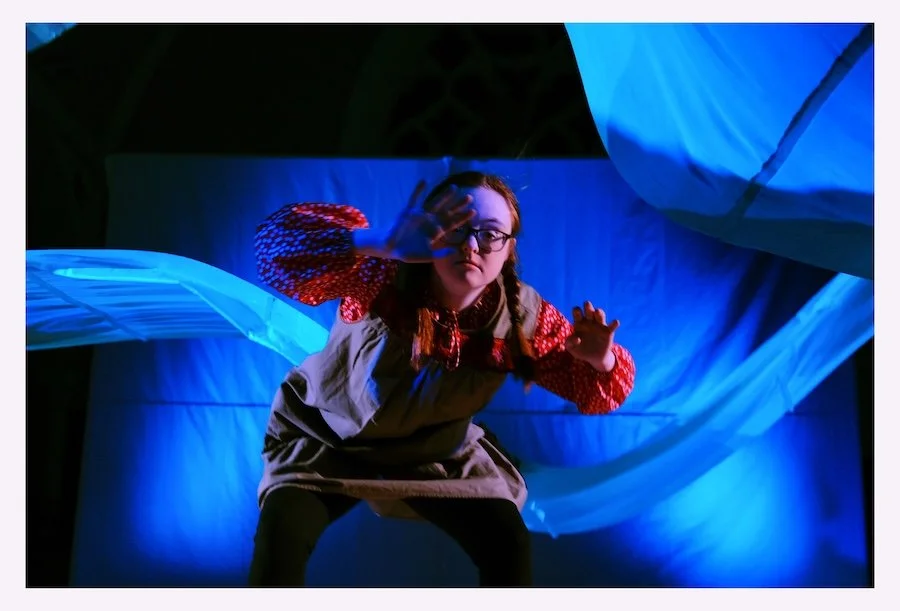
Image from The Occasion Theatre’s production of ‘Snow Queen’ by Stewart Ennis
Scotland’s theatre and arts funding is pretty complex. It contains a mixture of national support through endeavours like Creative Scotland, alongside city-level schemes via Glasgow Life and suchlike, more community-focussed programmes like National Lottery Community Fund and Inspiring Scotland’s Creative Communities Fund, as well as Creative Scotland’s Open Fund, Glasgow Life’s Arts Development Scheme, and targeted community programmes supporting participatory arts.
This all means a patchwork of opportunities for Southside theatricals.
This all appears quite substantial on paper. It certainly sounds like a lot. Creative Communities Glasgow funded a variety of community-led participatory art projects across the city between 2023 and 2025. Glasgow Life’s Artists in Communities programme has involved nearly a hundred thousand people over the past eight years. Multi-year funding supports several Southside staples, including Tramway, Citizens Theatre, Vanishing Point, Govanhill Baths Community Trust, and The Glad Café.
However, in real terms, figures like £900,000 simply don’t go very far. And, for grass-roots theatre makers, access to this kind of funding is highly competitive and very short term. For example, Creative Scotland’s Open Fund supports work across the full development pipeline, taking ideas from early research and development through to full production. Success rates remain low, though, and funding rarely guarantees any kind of stability or continuity.
The Occasion Theatre, founded in 2010, shows this tension very clearly. They are a Southside-based company led by co-artistic directors Peter Clerke and Catherine Gillard. The pair have spent decades in the sector and consider themselves fortunate to have endured in such a harsh climate.
Their funding model reflects the broader reality of local theatre finances. There is no core or revenue funding, only project based support which typically lasts a year or less. Their work depends on a patchwork of small grants, from the likes of the Bellahouston Bequest, Foundation Scotland, and the Hugh Fraser Foundation, along with support from Glasgow Life, local area partnerships, and the Glasgow Health and Wellbeing Fund.
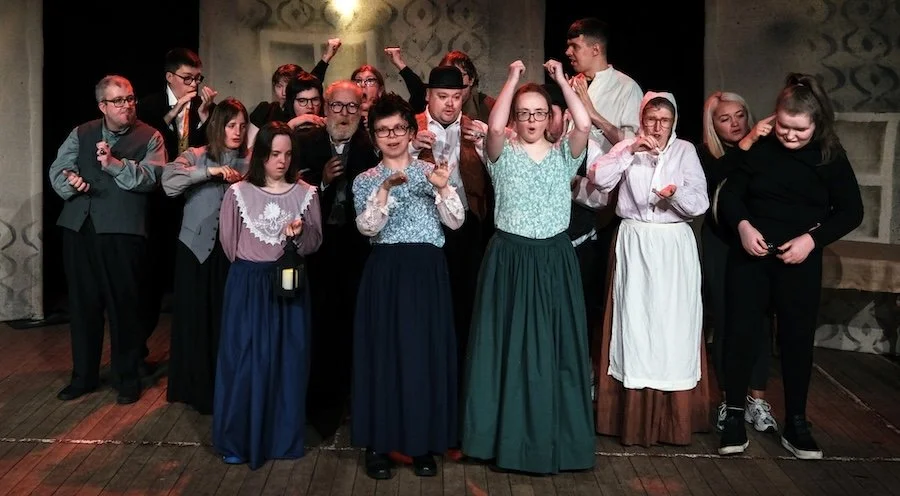
Image from The Occasion Theatre’s production of ‘A Christmas Carol’ by Stewart Ennis
The practical realities are stark. Without administrative staff, Clerke and Gillard have to do everything themselves: they write their own funding projects, as well as organising their projects, coordinating participants, and actually putting on their events. It’s all but impossible to plan ahead, or with any kind of long-term goal in mind. They cannot say with any real confidence what they will be doing from one year to the next, because funding cycles are short and the funds themselves pretty tight (when I asked them what is most needed, Clerke answered immediately and unequivocally: money!)
This instability affects both the company itself and the vulnerable adults they work with. In fact, their current production, The Splitting of Latham, was originally slated for last summer. However, they had to put it on hold for several months because funding arrived too late to give them time to actually stage it. Far from being unusual, this kind of disruption is pretty much baked into the system.
Broader structural changes compound these pressures. Rising costs – venue hire, materials, travel, accommodation, and so on – are squeezing budgets that were already really tight. At the same time, local authorities across Scotland are facing financial strain, which has led to reductions in already tentative arts funding and staffing. Competition for grants – already high – is therefore increasing as opportunities diminish.
This is all a real tragedy, because local theatre and arts are really valuable, if not in monetary terms. Community-led theatre can transform confidence, wellbeing, and self-advocacy. Arts output speaks to the soul of a people. Up and coming theatre makers need to be fostered, and they need to pay their rent! The benefits may be hard to quantify, but they are no less real for it.
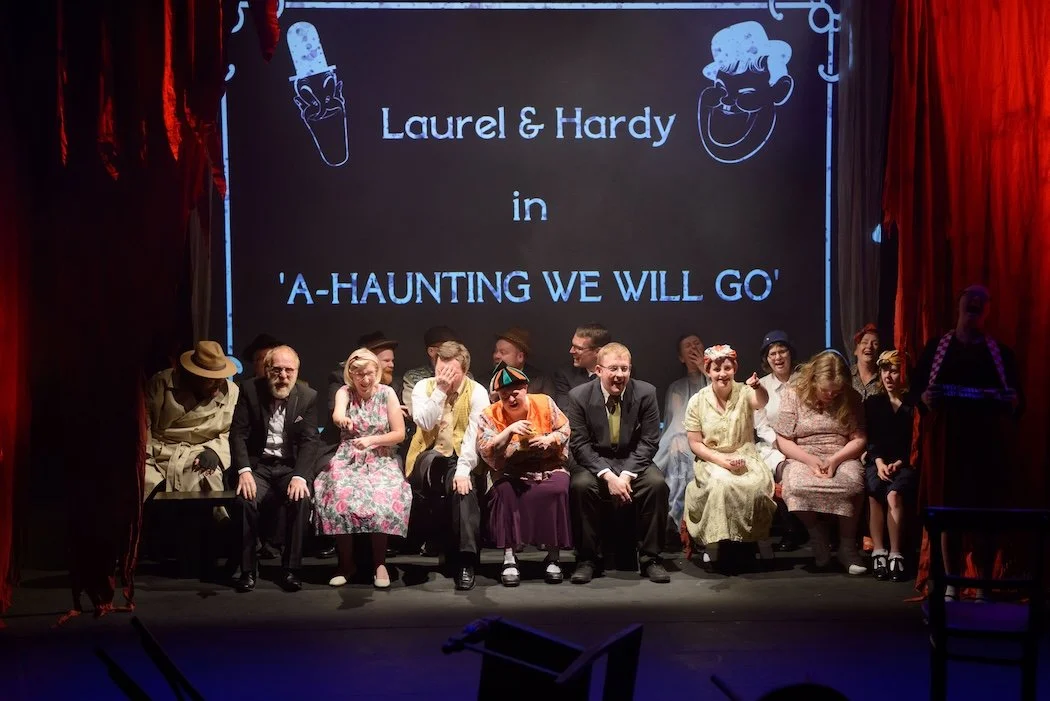
Image from The Occasion Theatre’s production of ‘Another Nice Mess’ by Tim Morozzo
Glasgow as a whole is a cultural capital with a globally recognised arts scene from institutions like Kelvingrove Art Gallery and Museum to its thriving live music culture – Simple Minds formed locally and Oasis were discovered after a famous session at King Tut’s. It was designated a European City of Culture 1990, reflecting a dynamic mix of historic heritage, contemporary creativity, and strong community-driven arts.
However, arts and theatre organisations – the foundations of this city’s creative identity – all too often operate on small, fragmented, and uncertain funding streams. And it’s highly visible in the Southside. It’s a diverse and creative area, full of people brimming with ideas and stories to tell. But it is also an area beset by rising costs, limited space, and short-term, inadequate funding, which all threatens to erode this kind of creative energy.
This must change. If Glasgow is to remain a true cultural capital, we must invest in it – and not just large spaces and flagship productions, but in the vital yet too often fragile ecosystems beneath them. They really needn’t be that fragile, they just need sustained funding, without which we risk hollowing out the very pipeline that has long defined the city’s creative pulse. We have a duty as stewards of so much creative capital to see that it continues and thrives, but we cannot keep taking it for granted.
See the Occasion Theatre’s Southside Group this month!
The Occasion present The Southside Group in The Splitting of Latham.
When: 23 April - 25 April at 7.30pm
Where: Queen's Park Govanhill Church, 170 Queen's Drive, Glasgow G42 8QZ
Tickets available through https://theoccasiontheatre.com/
