Govanhill: Wit Aboot Ye?
From the ‘proper’ speech of the classroom to the gallus rhythm of the scheme, Scots has always been the heartbeat of our streets. Mikael explores the history of our mother tongue, the defiance of the code-switch, and why - from Govanhill to Punjab - the Scots language belongs to anyone who calls this neighbourhood home.
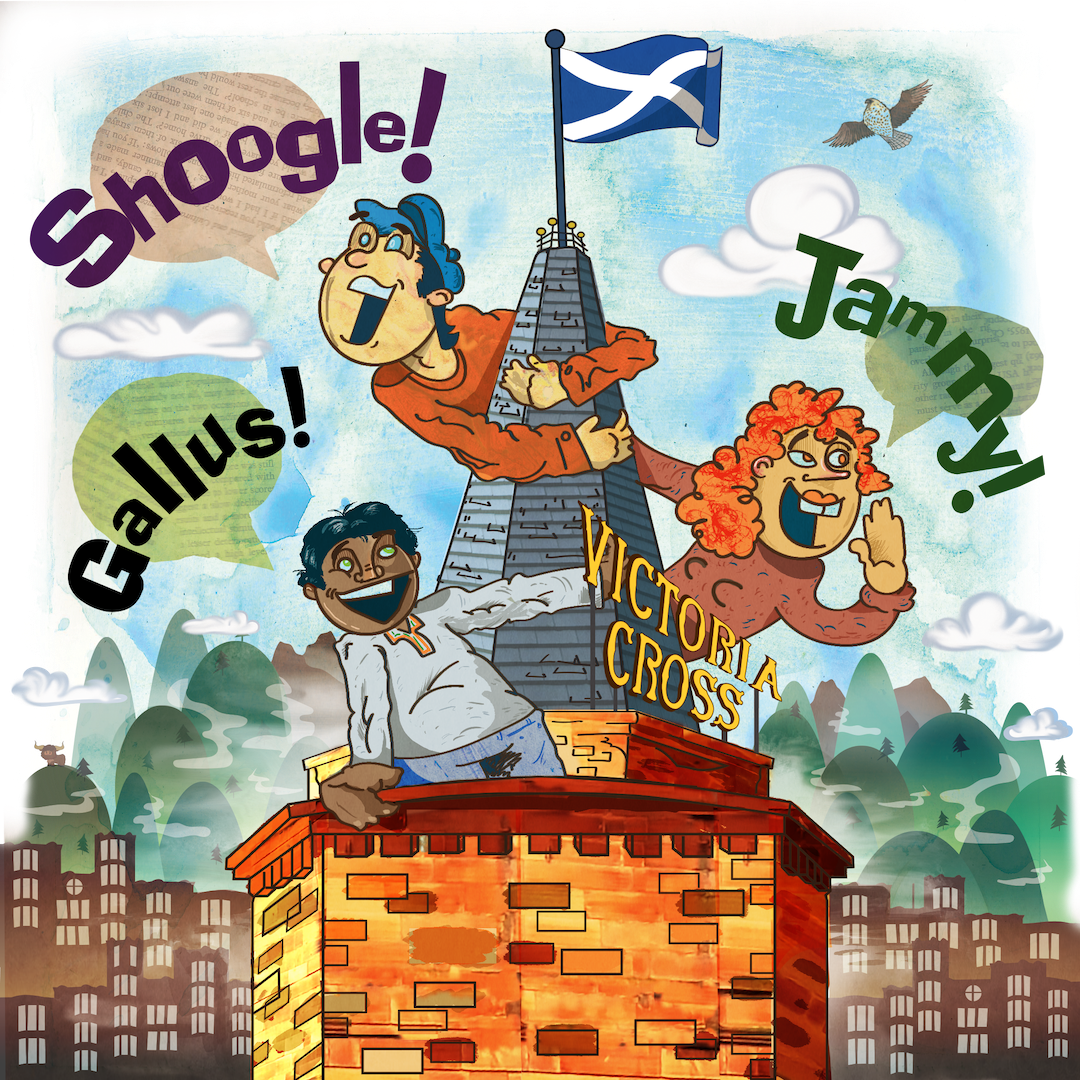
By Mikael Phillips | Illustration by Alistair Quietsch
Step oot oan tae Victoria Road any efternoon and ye’ll hear it - that gallus, ritsy rhythm ae Glaswegian Scots ringin oot between the fruit stauns and the coffee shoaps. Fir a generation or mair, folk were selt the lie that this way ae speakin wis jist “bad English," a disordered blether tae be dichted fae yer tongue at the school gates. But as ye turn the pages ae this special issue, we’re unpickin a different truth aw thegether.
This magazine is a song fir the many voices ae Govanhill. It’s a celebration ae a language that’s endured through centuries ae bein selt short. Maistly, though, it’s a hame for the way we actually talk when the ‘polite’ mask slips and the real us comes oot tae play.
I was brought up by the self-proclaimed and ever-iconic scheme maw – wee Tracy fae Easterhoose. She is the type that telt ye straight: comin fae where ye come fae is a gift, no a curse. "Talkin’ how we talk is an extension ae who we are," she’d tell me. “Don't ever change who yae ur."
Course, the wurld his a funny way ae tryin tae rale ye in. A mind comin hame efter ma first semester at Glesga Uni, my vowels suddenly stretched thin as a peerie-weerie thread and my consonants polished till they bled. I was slippin intae that ‘Glasgow Uni accent’ – that weird-like, mid-Atlantic hash ae English, American, and West End that seems tae infect folk the second they cross the threshold ae the cloisters. Ma maw took wan look at me, gied me that ‘maw stare’ and asked the very question that brought me crashin right back down tae earth “Why yae talkin like that, ya weirdo?"
And she wis right. That’s no me. And it never wis again. It’s the reason why, as a Scots playwright, I scrieve exactly how a talk. It’s an act ae defiance and a love letter tae the Scottish voices that deserve a bit ae room oan the stage, in the papers, and in the big hooses ae power.
When the chance came up tae mix ma love fir Scots wae the mag through the Scottish Book Trust’s publication grant – a jamp at it. Wit better way tae celebrate Scots than through a magazine that already celebrates the diversity of the Scottish people here in our neighbourhood. That’s why we decided that we wurnae gonnae try and decide oan an official grammar fir the Scots used throughout this issue, as there isnae an official grammar (yet?). So, each writer has written in their ain voice usin their ain wiy ae spellin and structurin to reflect the nuance of the Scots language itsel.
Fir the past ten weeks, a new Scots Scrieving group has been meeting every Tuesday in The Community Newsroom and online and has been a fair melting pot ae folk coming alang fae aw er tae talk, learn, and create in Scots.
We’ve spent a lot ae time flytin the steer ae writin in Scots, and realising just how difficult it is tae ‘unlearn’ the structures ae the British post-industrial school system when yer trying to tae write in yer ain tongue. That’s where the ‘proper’ way ae speakin was drilled intae us like a factory stamp.
Fir generations, we were telt ‘that’s no the right way tae talk, a judgement that forced us aw tae become masters of the code-switch.
We all do it. I’m guilty of it too. At home with the family, I speak exactly how I’ve been writing above, in broad Glaswegian so fast and thick that even friends of mine from Ayr or Dundee find it difficult to tune in. Even with other Scots speakers, it’s easy to shift into a more ‘generic’ language – the words stay the same, but the speed and tonality gears down so we can all understand each other. Take this paragraph as an example of how natural it comes to Scots speakers, and many people who fluently speak more than one language, to switch in and out of each.
While we’ve been bletherin away fir centuries, the ‘legal’ journey ae Scots is a mair recent fecht. Long ago, Scots wis the tongue ae the Royal Court – James IV. But efter the Union ae the Crowns and the Industrial Revolution, it wis pushed tae the edges. It wis branded a dialect at the workin classes, somethin ‘vulgar’ rather than a national tongue wae its ain grammar and soul.
The tide started tae turn in the the 20th century. Big names like Billy Kay, whose 1986 book Scots: The Mither Tongue, was like a revolution, helped us tae see that oor speech hud a lineage as noble as any other. Legally, the big moment wis in 2001, when the UK Government signed the European Charter for Regional or Minority Languages, finally givin Scots its place as a recognised language.
The push didnae stoap there. Activists and scrievers worked thegither tae form the Scots Language Cross-Party Group in Parliament. Now, in 2026, we’re lookin at the Scots Language Act which came intae affect in June 2025 and aims tae gie the leed the same legal protection as Gaelic.
However, in the legislation ae the act itself it states “Scots language” means the “Scots language as used in Scotland”Wit exactly is “the” Scots language? The act states the ministers must prepare a strategy by June 2026 oan how tae implement and support the use ae Scots across the country, but we don’t know wit that is yet.Part ae that legislation is tae support aw the dialects spoken in Scotland, but the question remains – how dae we pinpoint wit the Scots language is? And who gets tae decide that?
This isnae joost aboot signs oan the back ae buses – it’s aboot makin sure that the wiy we talk is respected in the classroom, the media, and the law. It’s aboot ensurin the next generation disnae feel like a "weirdo" for usin their ain mother-tongue.
In oor group, we asked the big question: What is ‘a’ Scots language? Is it Glesga? Naw. Is it Doric or Dundonian? Naw. It’s all ae them, and it’s mair besides. Scots isnae a museum piece tae be kept in a gless case – it’s witever we need it tae be.
Scots belangs tae everyone. In Govanhill, this is as clear as day. There’s a myth that ye need a certain passport or a thousand years ae ancestors in the kirkyard tae ‘claim’ Scots. We don’t gie a rats arse fir that. If ye live here, if ye breathe this air, the language is yours tae use and shape.
We see New Scots fae Pakistan, Syria, or the Roma community pickin up the local patter and weavin it intae their ain mother-tongues. Ye might hail fae Carnoustie, Liverpool, or Islamabad – if yer usin these words tae tell yer stories, yer jokes, or yer sorrows, then ye are part ae this language’s future.
As ye dander through the pages ae this issue, a want ye tae hink aboot yer ain code-switch. Think aboot the words that stick tae yer lips when yer ragin, when yer in love, or when yer tellin’a story in the pub.
We’re movin past the days ae ‘right’ and ‘wrang.’ We’re steppin intae a time where oor language is seen as the gift my maw always said it wis. This magazine is an invitation tae stoap ‘unlearnin’ and start shoutin fae the rooftops.
So, Govanhill... wit aboot ye? We’re aw ears.
The publisher acknowledges receipt of the Scottish Government’s Scots Language Publication Grant towards this publication.
