Tae speak withoot shrinkin
For writer Samar, one language feels like home; the other glows at a distance. In the space between Scots and Urdu, she reckons with loss and longing, exploring what it means to speak yourself into being and understanding that reclaiming a language isn’t just about fluency.
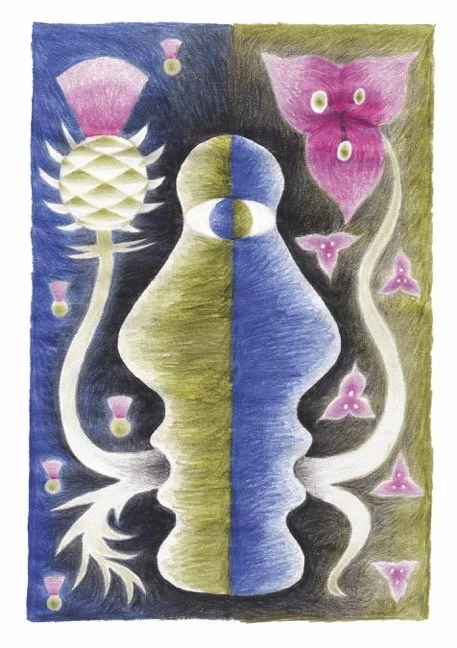
By Samar Jamal | Aled Haywood
It is through words that we can both hold our experiences and show them tae others. The make-up ae our language is a showcase ae our being – retelling, evolving and existing. So yes, this is a piece about language, but language, like for so many, is one facet ae ma identity.
A was born in Pakistan’s Punjab, in a wee village south ae Faisalabad. A short three years later, ma family and I moved tae Scotland, eventually settling in Wishae (formally known as Wishaw), where I’ve spent most ae ma life. The migration from Pakistan to Scotland entails the usual dilemmas ae diaspora. Unsurprisingly, one ae them is about language.
Specifically about two mother tongues – one that has always felt warm, familiar and another which glows brightly in the distance.
The former is aboot West Central Scots a grew up speaking – a language ae elongated vowels and harsh Rs, aeten reclaimed only as a caricature by the media. For me, Scots isn’t just about sounds but a memory ae the experiences that made me, that a hold dearly. The latter is Urdu, a language a never fully learned, which was never shared with me in full because it was expected to already be mine.
When a think ae speaking Scots, a cannae tell ye exactly where it began, but a can place where it started tae waver off; when a moved tae Stirling for university. A became friends with mostly international students and, knowing they hadn’t spent much time way people who sounded like a did, a toned the Scots doon. It felt like a practical decision initially, but it was when someone pointed oot that they (still) couldn’t understand me because a wasn’t annunciating my words that a felt really shattered.
At that time, a was just beginning to carve out a space that allowed me tae express parts ae maself authentically. So a swallowed my Scots even more, retreated tae a place that felt safe n socially comfortable, despite what it asked ae me. Looking back, the irony ae that isn’t lost on me – a was letting some parts of ma authentic identity flourish while drowning out others.
A few years later, a moved tae Glasgow, n eventually those friends moved back tae their home countries, but ma use ae Scots never really returned in the same way. It wasn’t until I was with the occasional person whose Scots rolled aff their tongue with ease that a felt its absence. It is often in the absence ae something that you really notice you once had something in abundance. Thinking back, it’s funny how hard it was tae lose Scots but how passive a felt aboot Urdu – the tongue ad spent my whole life being told already belonged tae me, despite it never feeling close.
A especially noticed the loss ae Scots when friends who a had been at high school with took the mickey out ae me: “Mate,you’ve goat a Glasgow Uni accent”. “Naaaaw, wit a riddy”, a thought – a was pure ashamed. Thinking back tae that, it wasn’t just about how a sounded but the association with people whose reasons for their “Glasgow Uni accent” were so distinct fae mine. What they were hearing was an ensemble ae stripping n kneading parts ae maself tae fit in. It felt like an erasure ae identity, layers that had been bred from growing up in a cooncil scheme. Now here a was knackered, being policed again. A was scrambling tae retrieve my Scots.
I’ve also witnessed the other end ae it, the shock some people have at hearing a person ae colour with a thick Scottish brogue. I’ve seen the discourse on TikTok around hearing Black people speaking thick Glaswegian (though I’m not sure how much ae that response is from Americans, influenced by their lack ae exposure to the breadth ae Britain's Black community). As much as it’s intended as a celebration ae diversity, the shock feels jarring to me. When I’ve faced that response, a wonder if people consider that the South Asian community has been part ae Scottish history for decades, with migration tied to colonialism. If not, that reaction can feel lit an ignorant shock, an erasure ae history.
In some senses, a can understand people thinking, Why’s this lassie speaking lit at?”
Growing up in Wishaw’s Craigneuk, a could count on one hand the number ae households fae BPOC backgrounds. So few, we seriously stood out when we moved, welcomed with oor windows being pelted with eggs.
What also feels uneasy is that a often find, between the lines, it is riddled with assumptions. To be shocked by how a sound, which would happen more often when I spoke more Scots, can feel like a projection ae a narrative ae who a am, who someone expects me to be.
A think that narrative can begin the moment dialogue begins; speech is an initial point ae connection. A realised how often I’ve felt a had tae step forward with the other person's comfort in mind, like ensuring a don’t let the slang slip in front ae middle-class people in certain spaces, an exhausting process requiring me tae mould maself into spaces a don’t fit.
A think this is also about the access to spaces where Scots would be spoken. There’s an intersectionality that a find missin from many working-class spaces, and the impact ae that is two-fold; few working-class BPOC folk in those spaces, and secondly, a feeling ae isolation when we do enter them.
So there’s a deep-seated sense ae belongin with Scots. Belongin, which also comes from access. I’ve had access tae Scots most ae my life, or at least been adjacent to it. I’ve understood its layers, from its comedy tae its class discourse, and ano where in this city I’ll be more likely to hear it.
Whereas with Urdu, a don’t have that understanding. I know it’s a language ae depth and beauty, and yet it’s never felt fully reachable. The desire for closeness to Urdu isn’t just about understanding but expanding. There’s a desperate desire to cling to Urdu as a vehicle to expand my understanding ae ma Pakistani culture.
Growing up, my mum would encourage me to speak Urdu instead ae Punjabi (which is what we always spoke at home) when I’d call my relatives in Pakistan. It was considered the formal, respectful language, unlike Punjabi, which was seen as too boisterous, too animated.
Ad stutter ma words, forming clunky sentences, speaking with an awkwardness that deprived everyone ae a conversation with any substance. A felt it was something to perform properly or not at all.
As a grew older, a began rejecting the request tae speak Urdu with family members, having never seen the merit ae it. N importantly, understanding the classist roots behind its encouragement. A didn’t realise at the time that the language that felt closest to Scots wouldn’t be Urdu at all, but Punjabi. I embraced my limited Punjabi.
Something about speaking it reminded me ae Scots. Its roaringness and ability to encapsulate intensity, as far as I knew (largely in its vulgarities). Every time I watch Bend it Like Beckham, the line “Chak de patte!”, which roughly translates to “Lift the floorboards,” will always equate to the Scottish refrain and energy as “Here we f***ing go!”
But much ae the culture that I want to connect with isn’t written in Punjabi but in Urdu and it was when I found a stack ae letters written in Urdu from my dad, that the desire tae learn Urdu grew – to not only understand the depths ae its flowering ghazals (poetry) but tae savour a time capsule ae someone no longer here. To understand a world that is my own, that I often feel removed from or distant. Learning Urdu is as much about remembering as it is aboot cultivating.
So how do you flip the script? How do ye reclaim a language that, over the years, ye lost – and another ye never fully held? With Scots, I think that it’s about cultivating malleable spaces that don’t ask me tae perish parts ae maself. I know these spaces exist because most ae the people closest tae me don’t speak Scots. Still, there are parts ae ma identity that they know in their fullness, beyond language. There's also always space for me to code-switch in a way that doesn’t leave a tinge ae sorrow. Especially because some feelings are too enormous for English to encapsulate, like telling someone off – “get him telt!” – it carries the doing and having done, sandwiched between a gentle, firm scolding.
A remember years ago, watching Limmy skits and thinking, “A cannae show this to anyone, they’ll no get it, they’ll no understand the comedy gold ae ‘gies yer laptop’”. I know it’s a bit trivial but ye wanna share parts eh yer “culture” with the people closest to you. Eventually, a did show it to a close friend. They were really confused initially but once I translated, they got it and “Gies yer laptop” or any mention ae Yoker were staple monologues. I still introduce Limmy to folk, it's reasons teeter between “This will solidify our friendship” to “You’ve just moved to the dear green city, here’s a taste ae it”.
With Urdu, I’m still figuring it out. It’s a harder one tae grapple with since I don’t have many people around me who use it regularly. I think it goes back to access, not just ae the language. Reclamation would look like a few things. Firstly, by connecting with people in Pakistan. People who are connected to the culture, as well as those who are interrogating the country's systemic and cultural inequalities, class issues and are working towards inclusiveness that upholds and celebrates working-class roots. That means meeting people who can share parts ae the culture that I’ve yet to absorb. A also understand it’s a lifetime ae discovery – learning and unlearning. And after 15 years, it probably starts with a trip back tae the homeland.
