Commonwealth Games and walking tours – highlighting Glasgow’s colonial history and sporting culture
Glasgow Radical Tours and Invisible Tours’ latest walks take visitors on a meander through the city’s streets – highlighting its colonial past, sporting legacy and culture as the Commonwealth Festival approaches. From Glasgow’s Green historical link to sports to the corner of Nelson Mandela Street – a nod to Glasgow’s anti-apartheid movement.
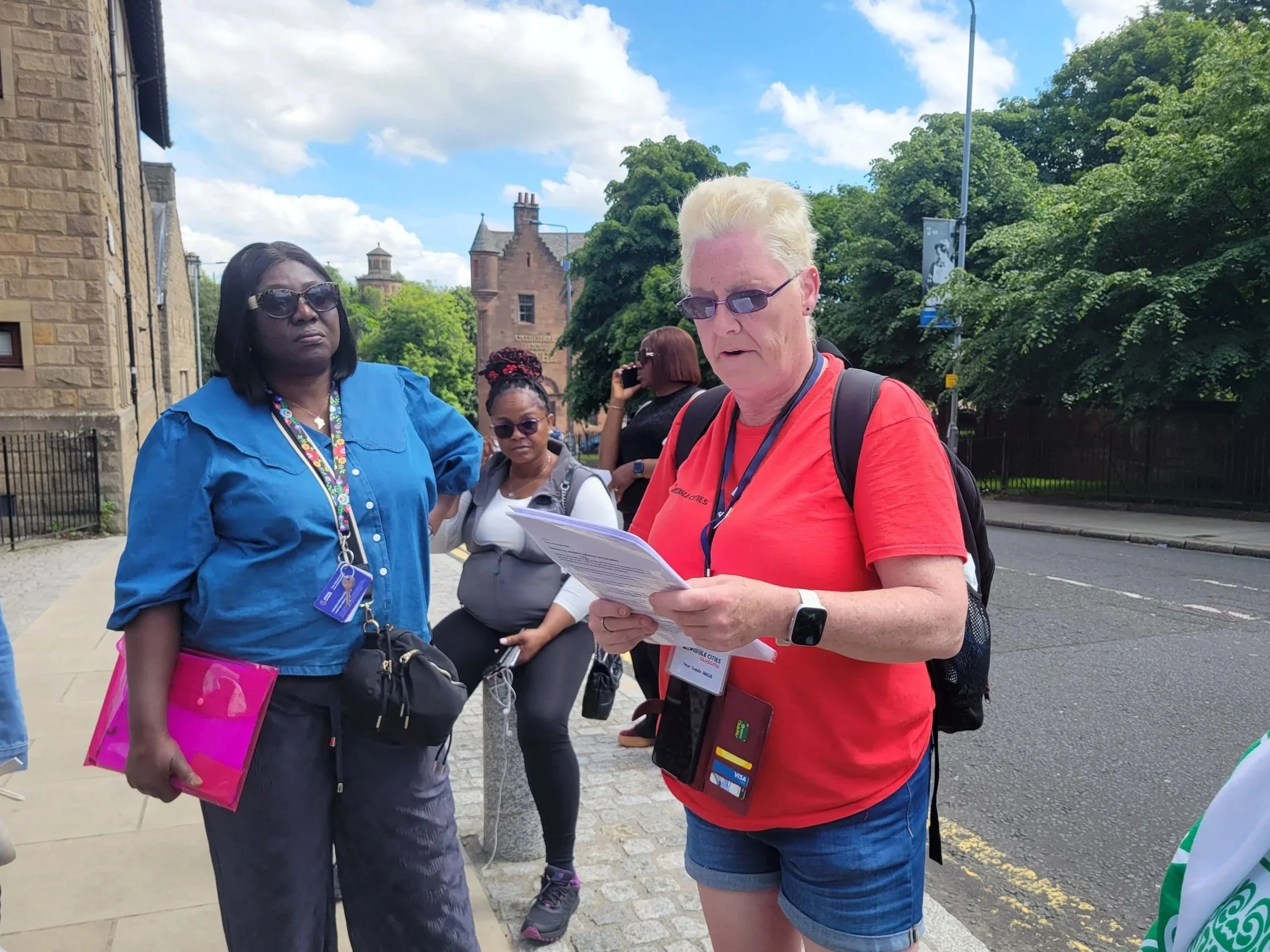
Invisible Cities leading a tour
By Emma Brown | Photos by Emma Brown and Invisible Cities
How much do you really know about Glasgow’s history?
As part of the 2026 Commonwealth Games festival, two groups are leading free tours that approach Glasgow’s history of sport, culture, and colonialism from unique perspectives.
Radical Glasgow Tours, run by Southsiders Katherine Mackinnon, Henry Bell, and David Lees, hosts a “Glasgow, sport and the Commonwealth” walk across Glasgow Green.
Bell told Greater Govanhill that the tour emerged from two ideas that the group had been thinking about for a while: the role of sport in socialist organising and Glasgow’s legacy as a city of empire.
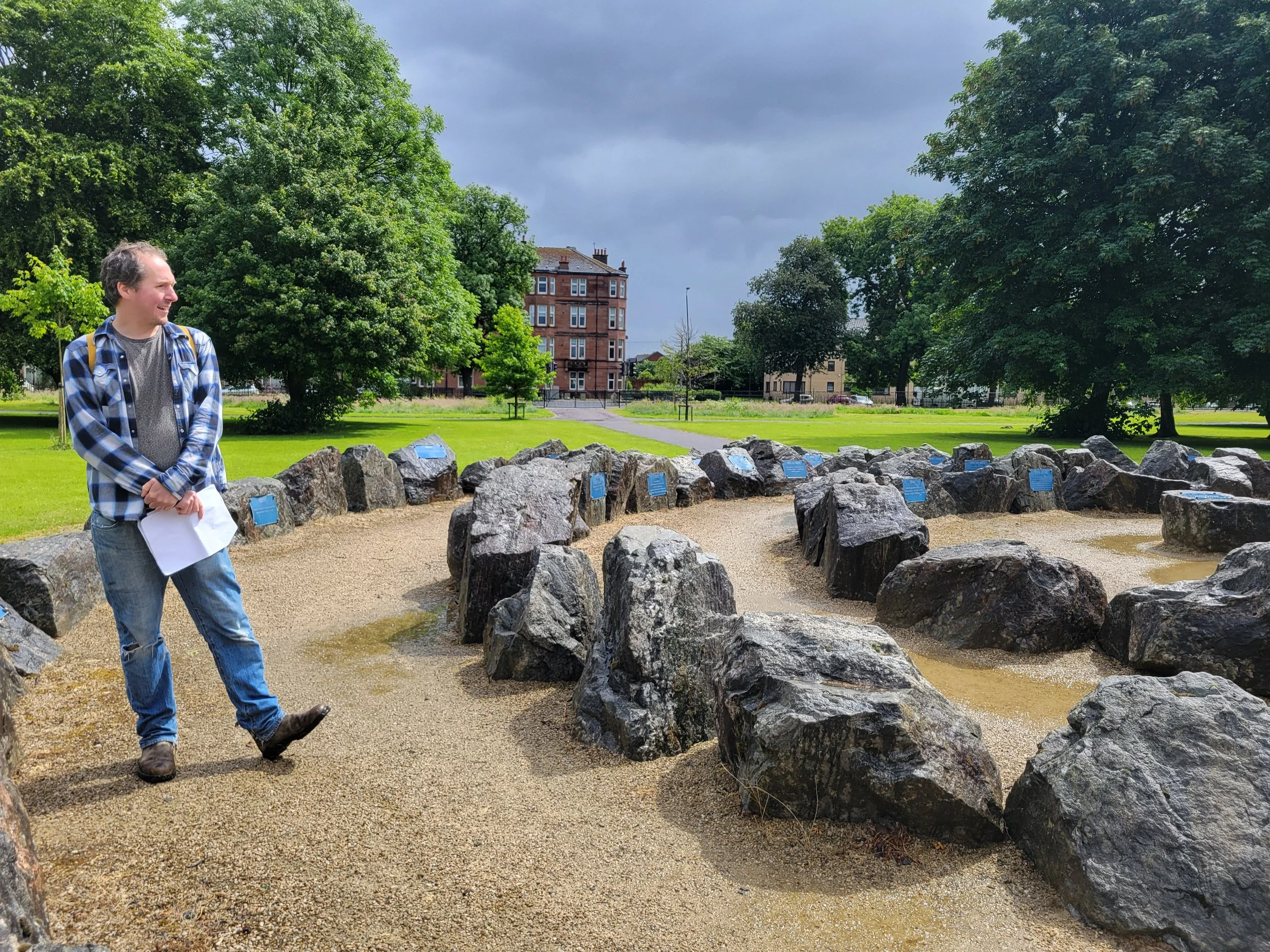
Harry Bell from Glasgow Radical Tours at the Time Spiral sculpture in Glasgow Green
Notable stops on the tour include the Doulton fountain, which exemplifies the colonial hierarchy of the British Empire, the Clyde Tidal Weir to discuss swimming and the industrial era, and the football pitches to recall a 1977 campaign for Scotland to boycott a football match against Chile due to the Pinochet dictatorship.
Invisible Cities, a social enterprise which employs guides with lived experience of homelessness, has also crafted a special Commonwealth Games tour walking from Cathedral Square to Nelson Mandela Place.
The tour visits several murals of Glaswegian symbols by artist Smug, including St. Mungo, St. Enoch, and “Fellow Glasgow Residents,” which depict the various animals found in Glasgow parks. Guides also touch on Glasgow’s role in the Trans-Atlantic Slave Trade by explaining not only how the tobacco lords commemorated in the Merchant City made their wealth, but also recounting Frederick Douglass’s 1846 visit to Glasgow, where he delivered a speech at City Hall.
Tour guide Angie McTague, who leads several Glasgow tours, said she always tries to have a laugh with her groups and enjoys the opportunity to meet people from different backgrounds. She’s excited that the Commonwealth Games will bring many new visitors to Glasgow.
For Bell, the Commonwealth Games are a chance for reflection on Glasgow’s role in the British Empire, and how its legacy still impacts Commonwealth countries today.
“Glasgow is a city built by empire,” he said. “Obviously the Commonwealth Games is inevitably going to be tied to soft power and international relations, and Radical Glasgow Tours hopes to both be in useful dialogue with it, but also a thorn in its side to some extent.”
Zakia Moulaoui Guéry, founder and CEO of Invisible Cities, agreed that it’s important to address the darker side of the city’s history.
“The Commonwealth Games bring people together for a very positive reason,” she said. “But I think that's why it's important to tie in things that are maybe not as positive, but ultimately a part of the history here.”
She explained that Invisible Cities chose to end their tour at Nelson Mandela Place, named while the South African activist was still imprisoned, to celebrate what has already been done to recognise resistance against colonialism.
Both of these tours are able to be offered for free thanks to funding from the Commonwealth Games 2026 festival. The tours run until the first week of August, and can be booked on each organisation’s respective website below.
