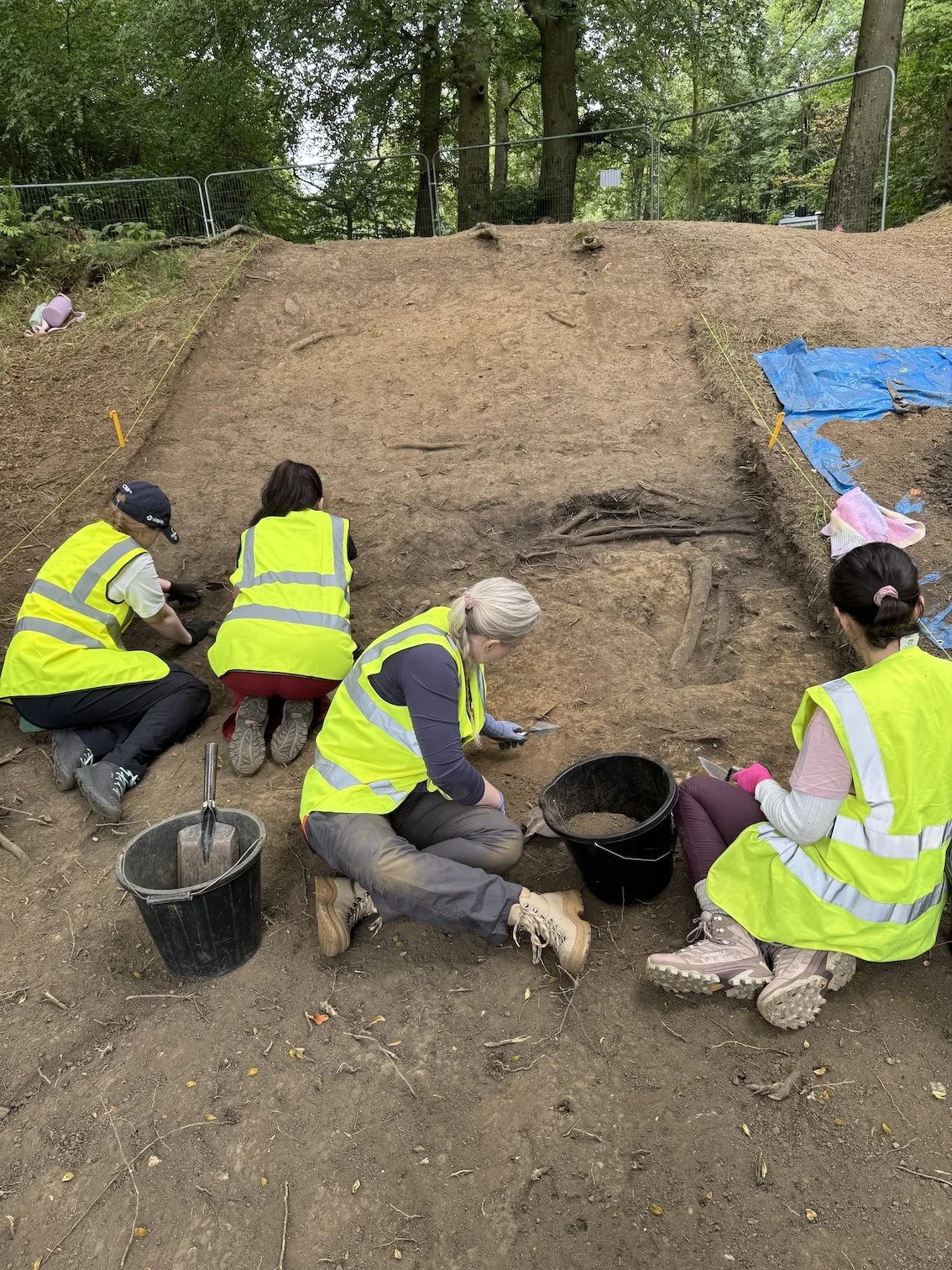
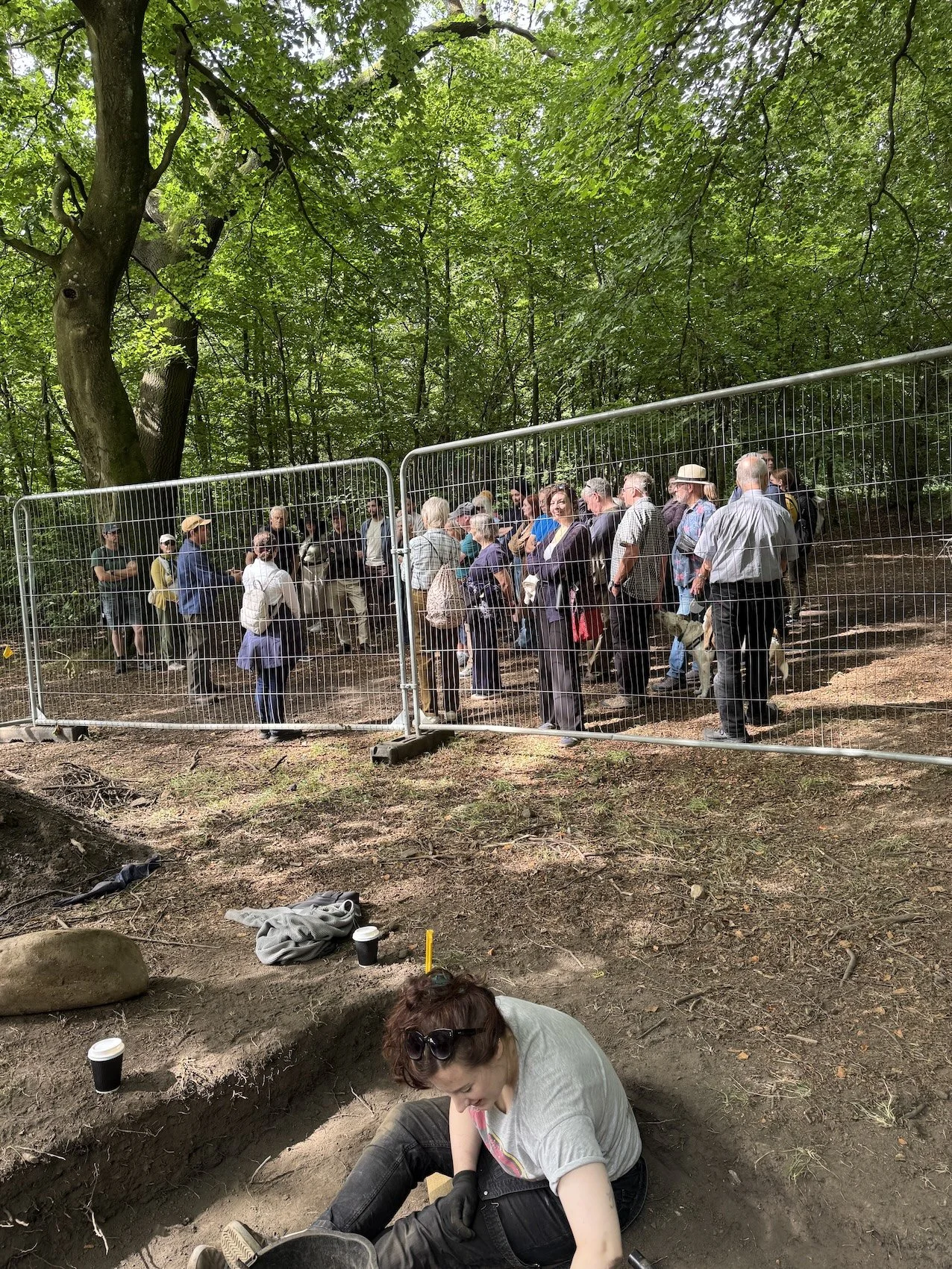
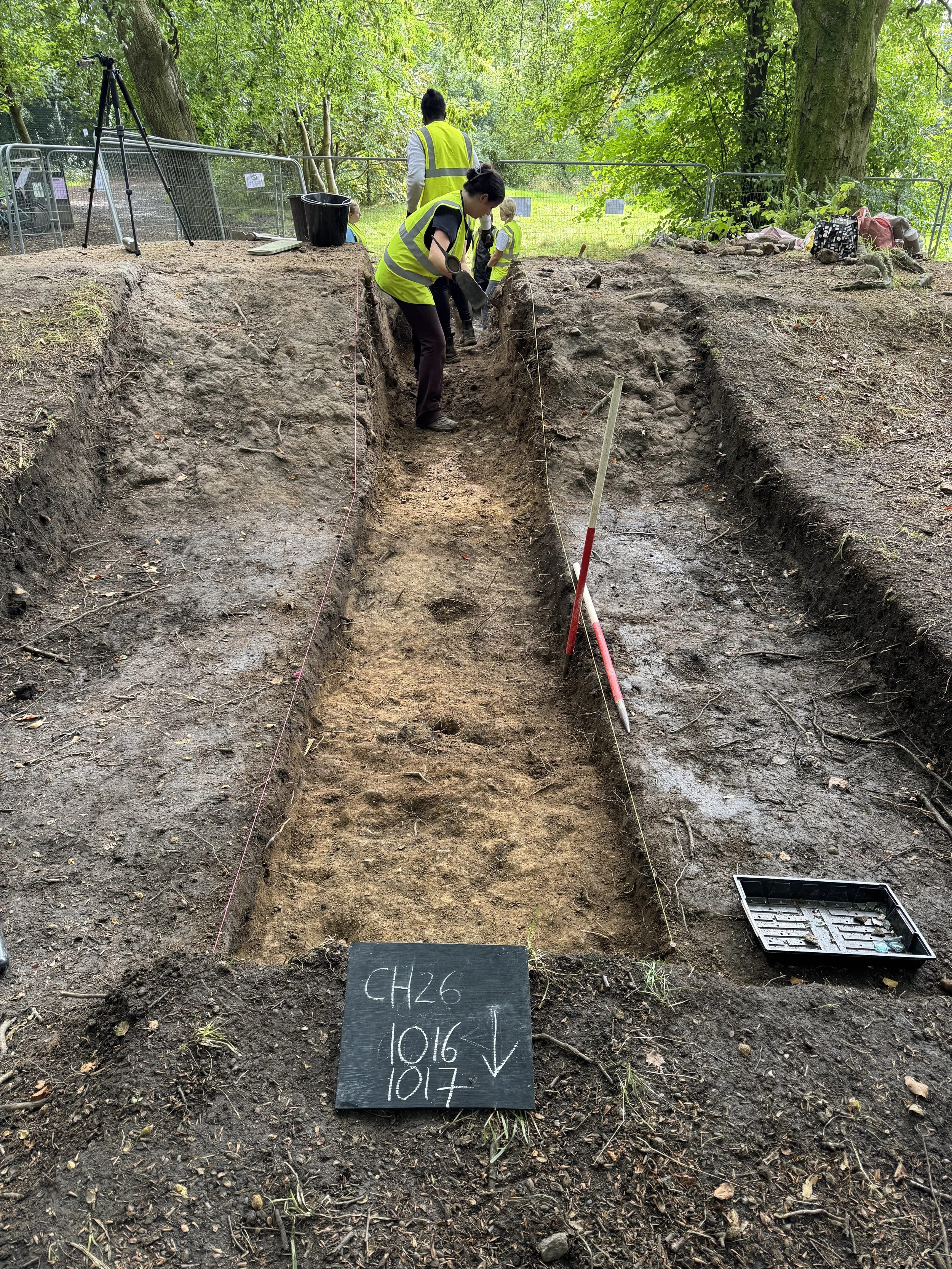
Archaeologists are trying to unearth what lies beneath Queen’s Park, inviting the local community to an excavation that uncovered items that could make Southside the site of one of Glasgow’s oldest known human settlements. Margot Leys speaks to the organisers, who share how community digs can help people connect to their neighbourhood’s past and present.
By Margot Leys | Photos courtesy of Professor Kenny Brophy, University of Glasgow
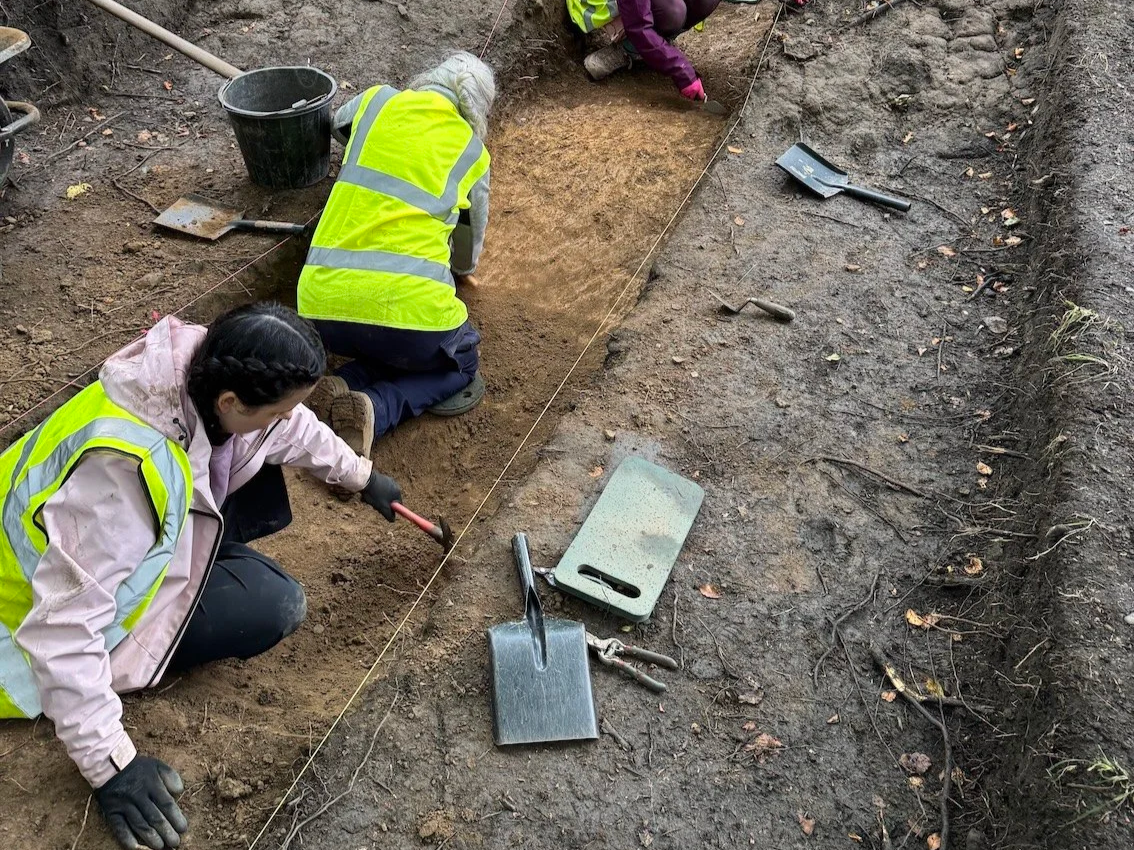
“It’s about helping people understand how they got to where they are. People aren’t always aware of what happened and how things changed”. This is the ethos of archaeology to Iain Wallace, convenor of Langside Community Heritage. Over two weeks in August, the organisation joined forces with Archaeology Scotland and the University of Glasgow to excavate the Camphill site at the top of Queen’s Park.
The third of such excavations across history, this one may turn out to be groundbreaking: discoveries were made that suggest this site dates back to the Neolithic period around 5000 years ago, which would make it the oldest known human settlement in Glasgow according to Iain. The questions “what happened that led us to this?” and “how to get the public engaged with this question?” are the foundation of current archaeological practice in Scotland.
Iain gives me a whistle-stop history of Camphill. In the 1860s, Pathead Farm was merged with the Camphill Estate to create Queen’s Park. In 1867, a four-week dig uncovered a ditch with a mound on it. Not much was thought of it. In 1951, a proper excavation of the mounds was made, unearthing evidence of human activity: bits of clay, fragments of pots. Nothing significant was found, but a picture was beginning to form of a potential human settlement from the Bronze Age.
With this year’s excavation, several trenches were dug out “like taking slices of a cake to see all the different layers” to pursue the goal of finding something dateable. The archaeologists struck gold; or rather, charcoal. In one place, a broken piece of what is believed to be a bowl was uncovered, with some bits of charcoal still stuck to it. This will be carbon-tested in a lab and can provide real insight into when this site was active.
The other thing that was found was some polished stones, smoothed off at the end and rounded. These are believed to be tools or weapons and suggest a settlement earlier than the Bronze Age, as stone is still being used. All of these are significant steps in dating the initial Camphill settlement.
“The thing I enjoyed most was seeing the smile on the professor’s face that they had found what they had set out to find.” Iain is referring to Professor Kenny Brophy from the University of Glasgow who helmed the project alongside Eddie Stewart at Archaeology Scotland. As well as the joy of finding such crucial artefacts, a sentiment shared by everyone involved in the excavation was the joy of seeing so many members of the public get involved.
“A crucial part of archaeology today is engaging with the public”, Professor Kenny Brophy says. Kenny fell into archaeology at university, where he found a community of interested and interesting people. This sense of togetherness is key to the essence of a dig. “People are talking together – it’s exciting, feeling part of the process”.
Kieran Manchip was once a student of Kenny’s and is now Project Officer at Archaeology Scotland, overseeing the New Audience Project which aims to widen community engagement in archaeology. “The Camphill site is a significant place for people in their daily lives”, he tells me. “It’s this mysterious, enigmatic part of an otherwise busy park which I think interests a lot of people”.
That’s an understatement. Across the excavation, there were 456 site visitors. Their Open Day on 29 August had over 850 members of the public come to have a look. 2248 hours of work were put in by 105 volunteers.
Kieran adds: “If you’re part of the process, you’re part of the narrative”. This echoes something Iain told me about archaeology helping to “develop a sense of ownership of the past and the surviving elements of history”. When people have this sense of ownership, they feel responsible for the area around them.
Ownership of the past also builds a sense of identity and belonging in the present. Iain feels passionately that archaeology “tells us what we were before we got here, and that then informs us how we got here. And it might through some interpretation, show us where we’re going next”. We’re all looking for a story that explains who we are, and places us in a context we can understand.
For New Scots, Iain says understanding the heritage of a place helps with integration and navigating what your future life might look like or fit in the broader culture. For dyed-in-the-wool Scots, preserving the old stories creates space for new ones to mix in. Amongst the medieval clay pots and the (potential) Neolithic stones, a plastic tram token from the 50s and various generations of Buckfast bottles were uncovered. Years of history blending together into one melting pot at the top of Queen’s Park, connecting us to our past and anchoring us to our present.
Kieran told me that the project was oversubscribed from the start (for anyone feeling that they missed out, I was reassured that there are plans to return to the site next year).