From matchmaking to made-to-measure: Inside the fabric shops of Cathcart Road
In Glasgow’s Southside, Ferhia Fabrics and neighbouring shops on Cathcart Road brighten grey days with vibrant South Asian fashion. For nearly 50 years, these family-run businesses have served as cultural hubs, blending tradition, community, and craftsmanship while adapting to rising costs, gentrification, and the shift to online retail.
Words and photos by Alice Austin
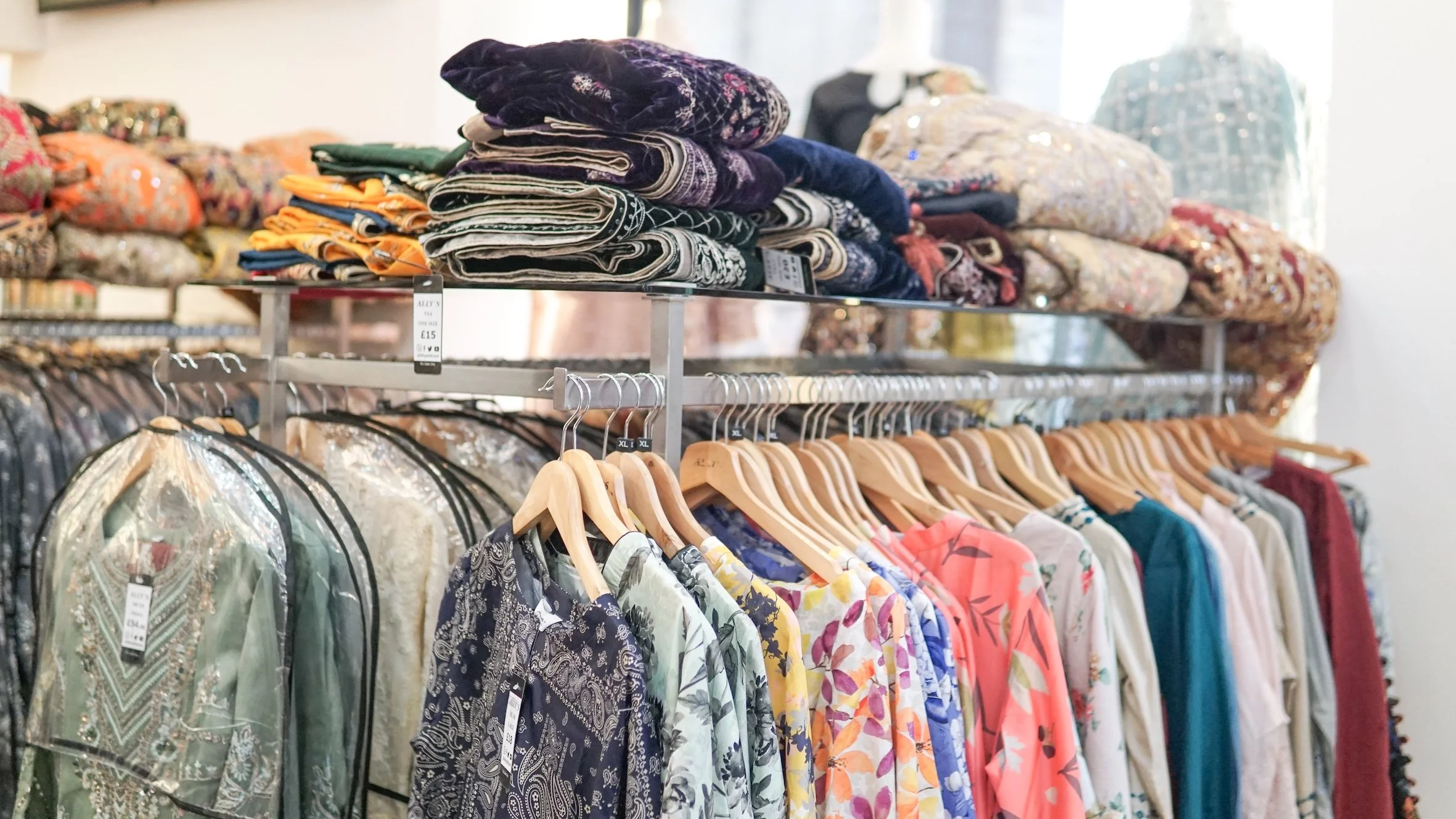
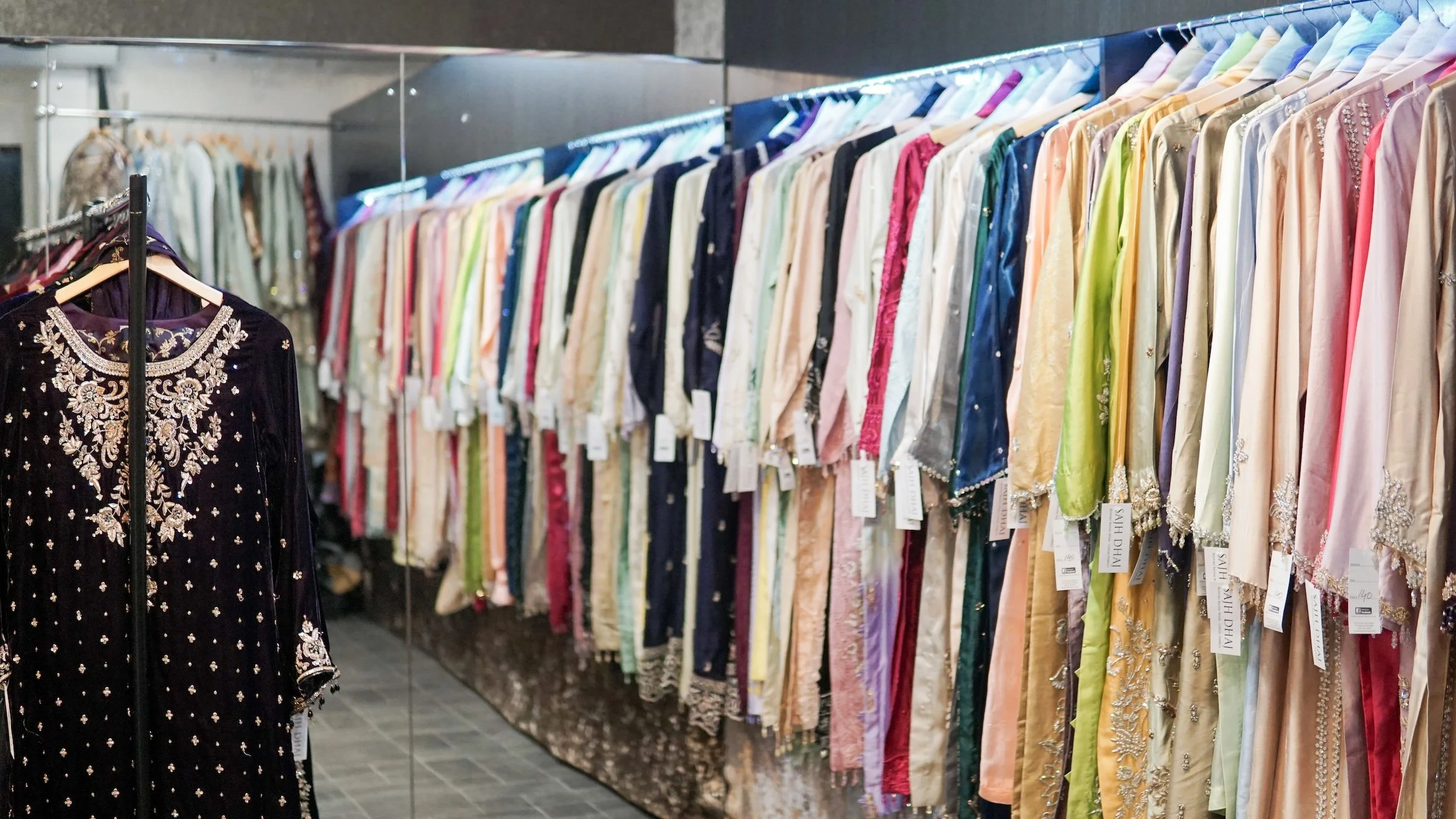
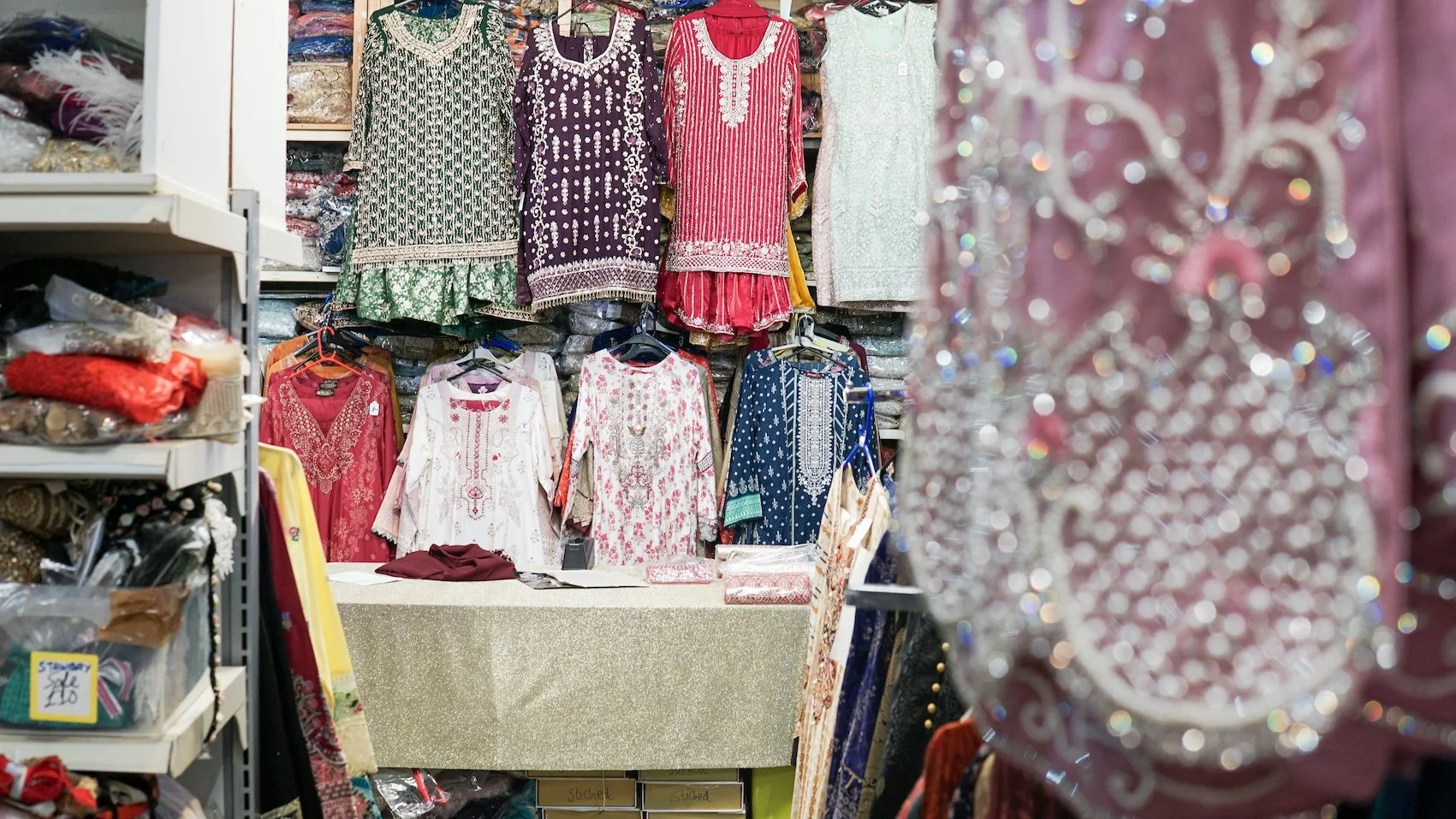
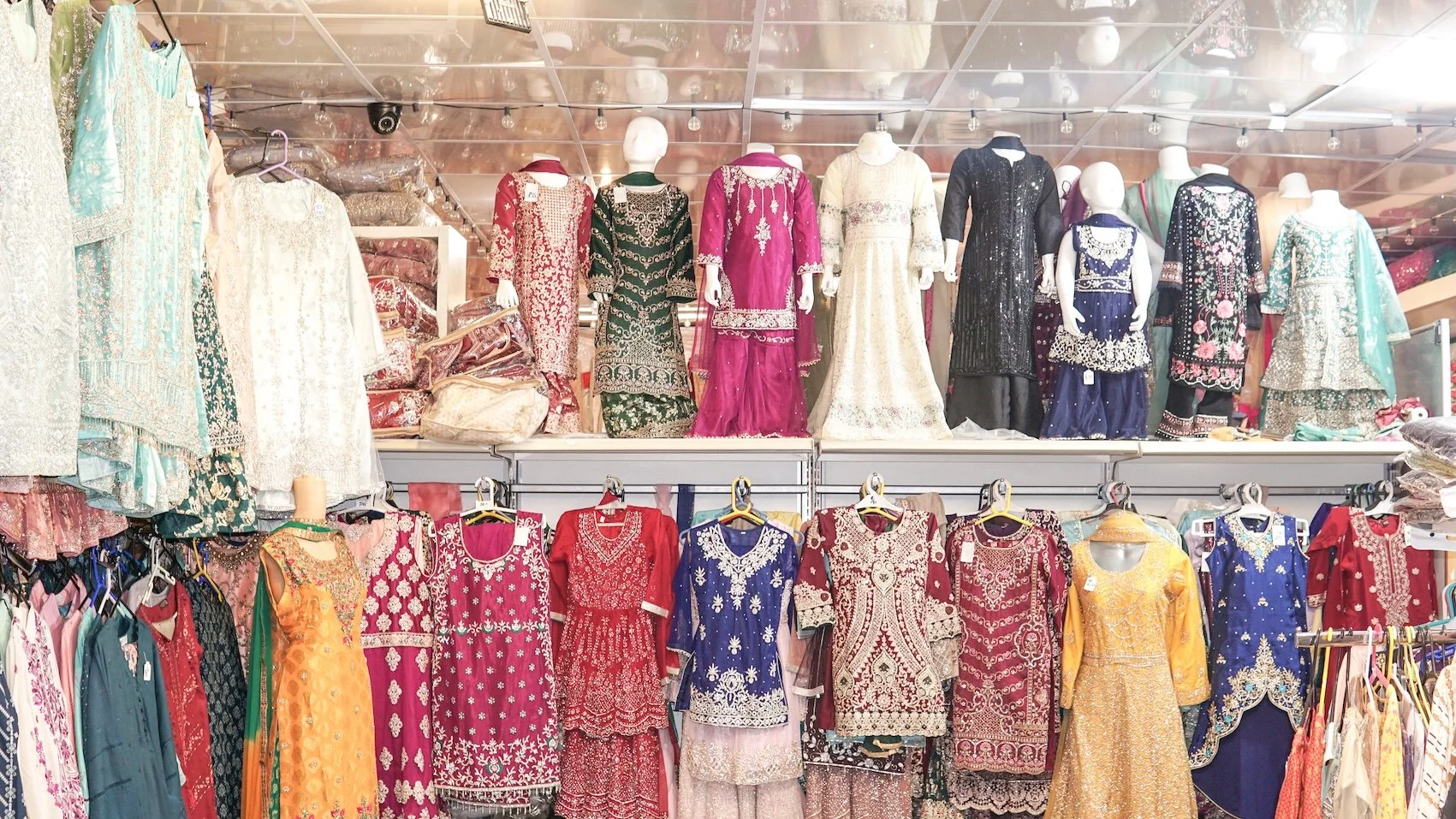
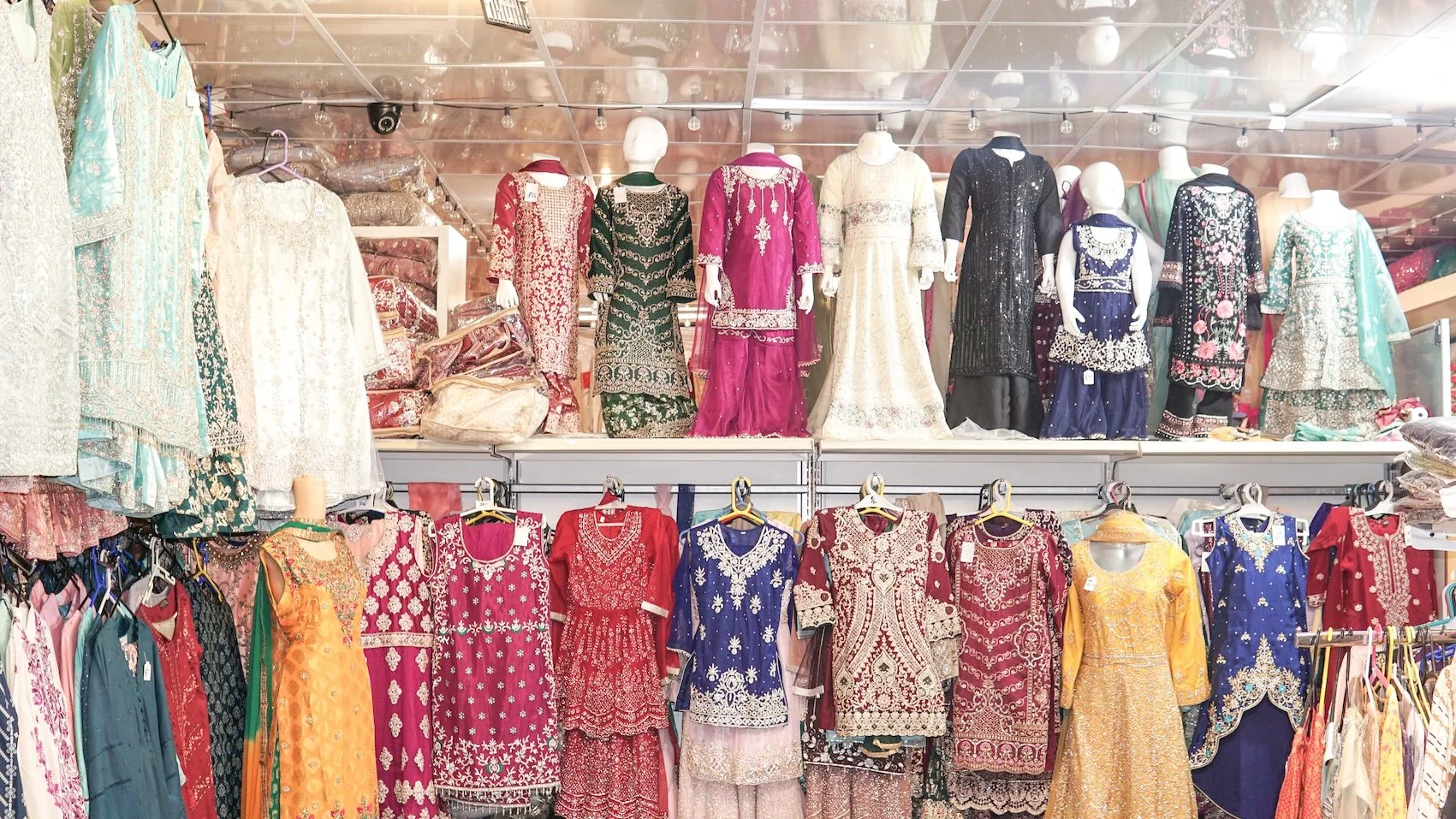
It’s a dreary Monday afternoon on Cathcart Road. The streets are damp, the sky is thunderous, and a fire engine has blocked off half the street for some unknown reason but walking into Ferhia Fabrics is like walking into beams of sunshine. The bright lights illuminate rails of dresses, gowns and fabrics in hundreds of colours. Some sparkle with diamond finishes, others pop with subtle embroidery, all of them the antithesis to the bleak October day outside.
A woman in a bright silk veil sits in a wheelchair listening to the radio in Urdu, her name is Tasneem Shakoor and she founded Ferhia Fabrics almost 50 years ago. Along with a handful of others, Tasneem transformed this unassuming street into Scotland’s go-to destination for traditional South Asian casual and occasion wear.
As she listens to the radio, her son Naveed walks around the shop adjusting the dresses, telling me all about the family business. “My mum opened this shop in 1978,” he says proudly, “she started selling fabrics in a bedroom in our house on Daisy Street, so it was a shop by day and a bedroom by night.”
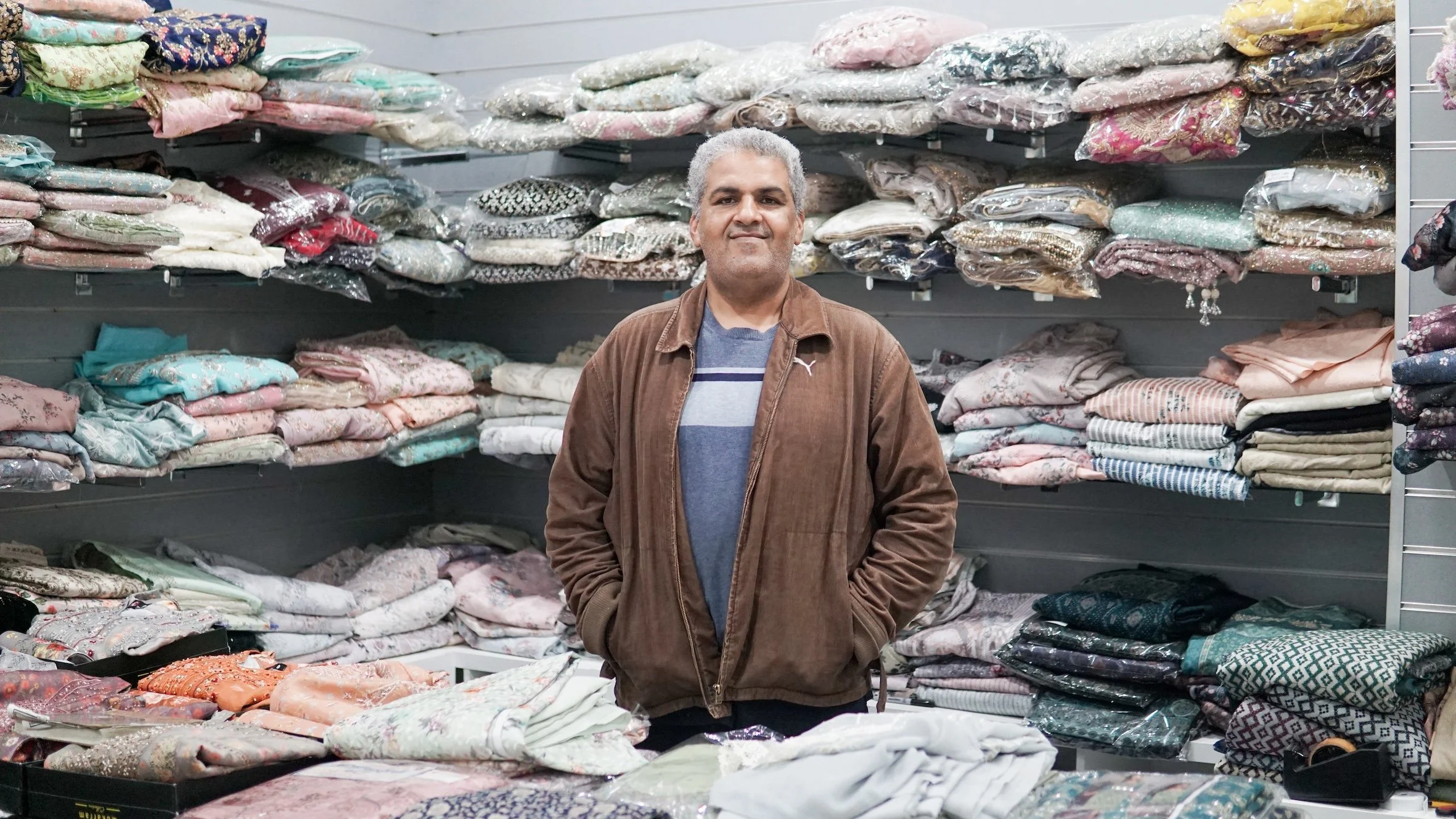
Naveed Shakoor Ferhia Fabrics
From the very beginning, Tasneem’s shop served a purpose beyond selling clothes. It became a place for Glasgow’s recently immigrated South Asian community to gather, socialise and stay connected to home.
“There used to be a Pakistani bank next door called the Muslim Commercial Bank,” Naveed remembers. “So the husbands would go into the bank and the women would come in and shop.”
Ferhia Fabrics’ customer base is multicultural and multilingual. You’ll hear a jumble of Urdu, Punjabi, Pashto and Romani on this shop floor. Sikh people from the Punjab region in India shop here, as do Muslim folk from Punjab in Pakistan. The Afghan community comes here too, as well as Slovakian and Roma customers on the hunt for cardigans for winter. The lines and land masses that divide these cultures don’t exist in Govanhill.
The neighbourhood’s undergoing dramatic changes. In March, Scotland scrapped rent caps, flooring some residents with unmanageable rent hikes. This, alongside the cost of living crisis, has impacted all of the fabric shops on Cathcart Road.
“It’s all going online now but we aren’t going to do that,” Naveed says. “The older ladies in their 50s, 60s and 70s pick the fabric and get it stitched to the right fit and size.” It’s difficult to sell made-to-measure clothing online – plus the shop serves another purpose. “My mum’s old friends come here all the time,” Naveed says. “I always laugh and tell her this isn’t a shop, it’s a community centre.”
Anti-racist campaigner and activist Zamard Zahid previously wrote a first-person account of the role her mother’s shop, Fabric House, played in the South Asian community. She shared the story of Bibi, who made the journey from Multan in Pakistan to Govanhill in the 1960s. Not long after, she was widowed with three young children to raise. Fabric House became her place of solace, community and comfort.
“There were no services,” Zamard tells me. “These women were very isolated in their tenements in Govanhill. The fabric shops did what the government should have been doing. They became hubs for the South Asian community.”
In recent years, the rise of the far right is impacting everybody. In September, a man threw a pole through a mosque window in Clarkston, terrifying children praying inside. “A young girl was racially abused while she was leaving school in Newton Mearns,” Zamard says. “So there's definitely been an impact but not everybody reports things to the police. Our community tends to think it's going to take too long and it's better to keep quiet and continue.” At times like these, community is everything, so the fabric shops are just as crucial now as they were in the '60s.
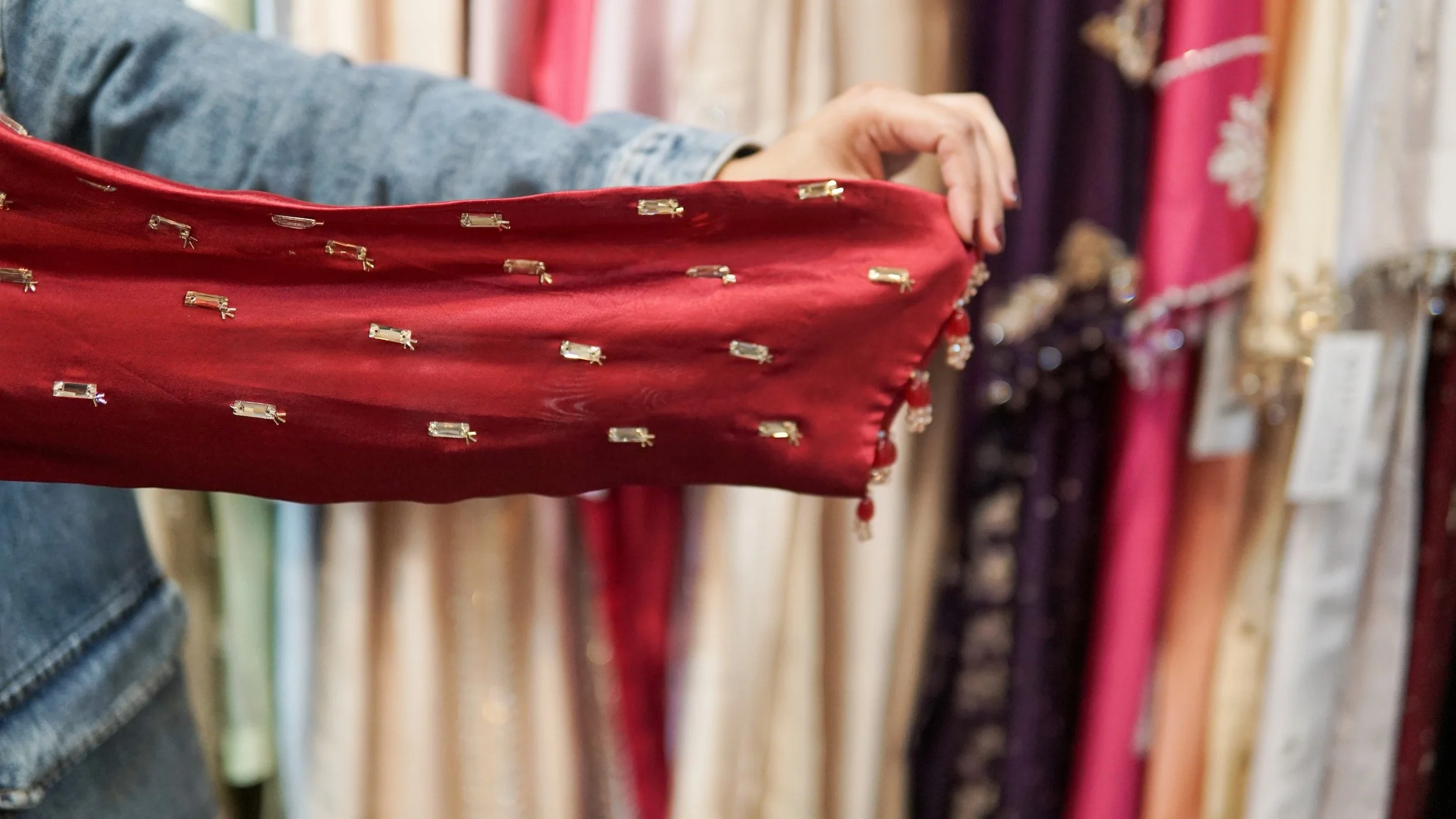
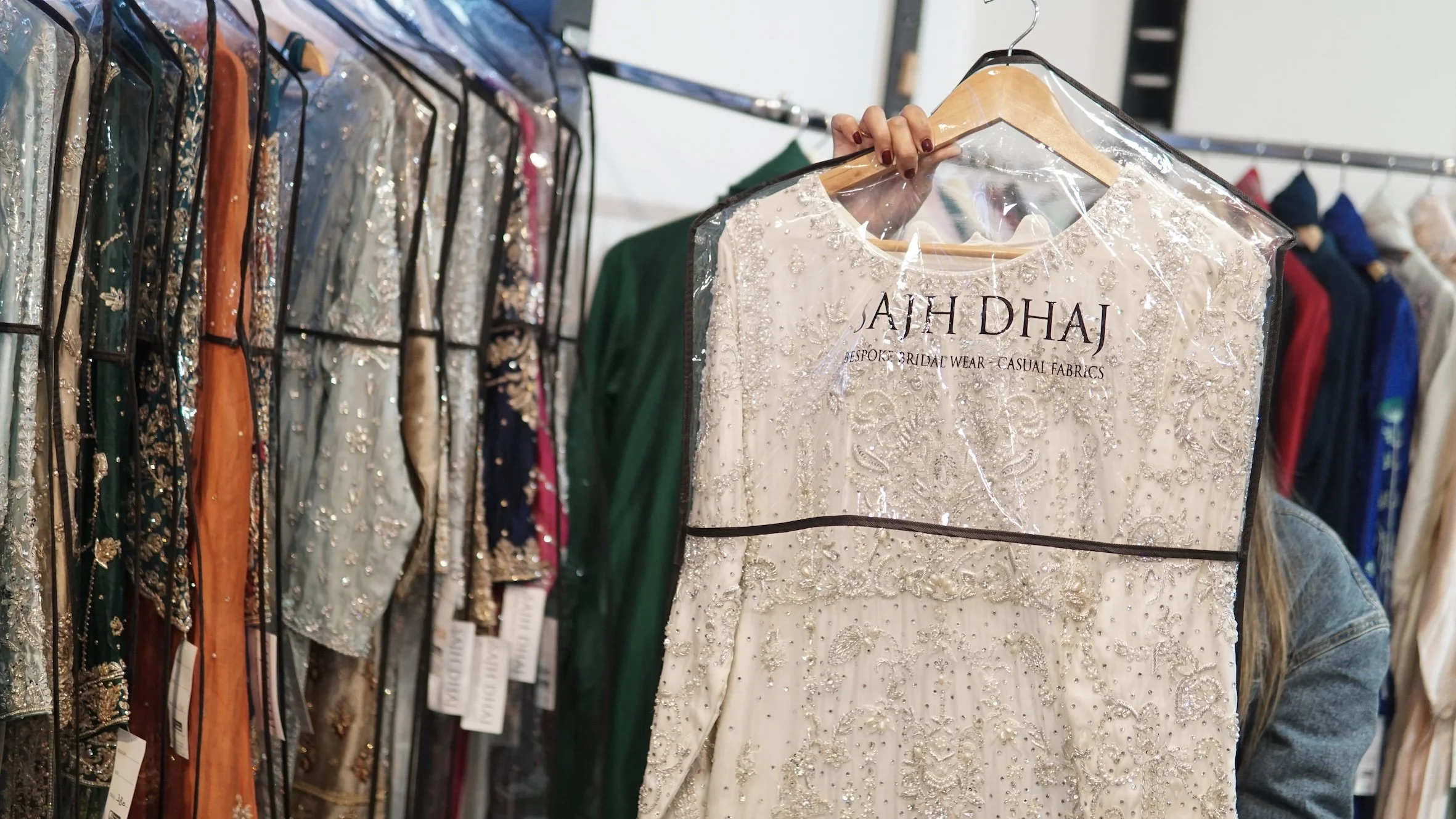
A few feet away from Ferhia Fabrics, on the other side of Cathcart Road, you’ll find Sajh Dajh, a bespoke bridal wear and fabric shop. Inside, retail assistant Shazia gently attaches crystal embellishments onto the sleeve of a bridal gown using a glue gun.
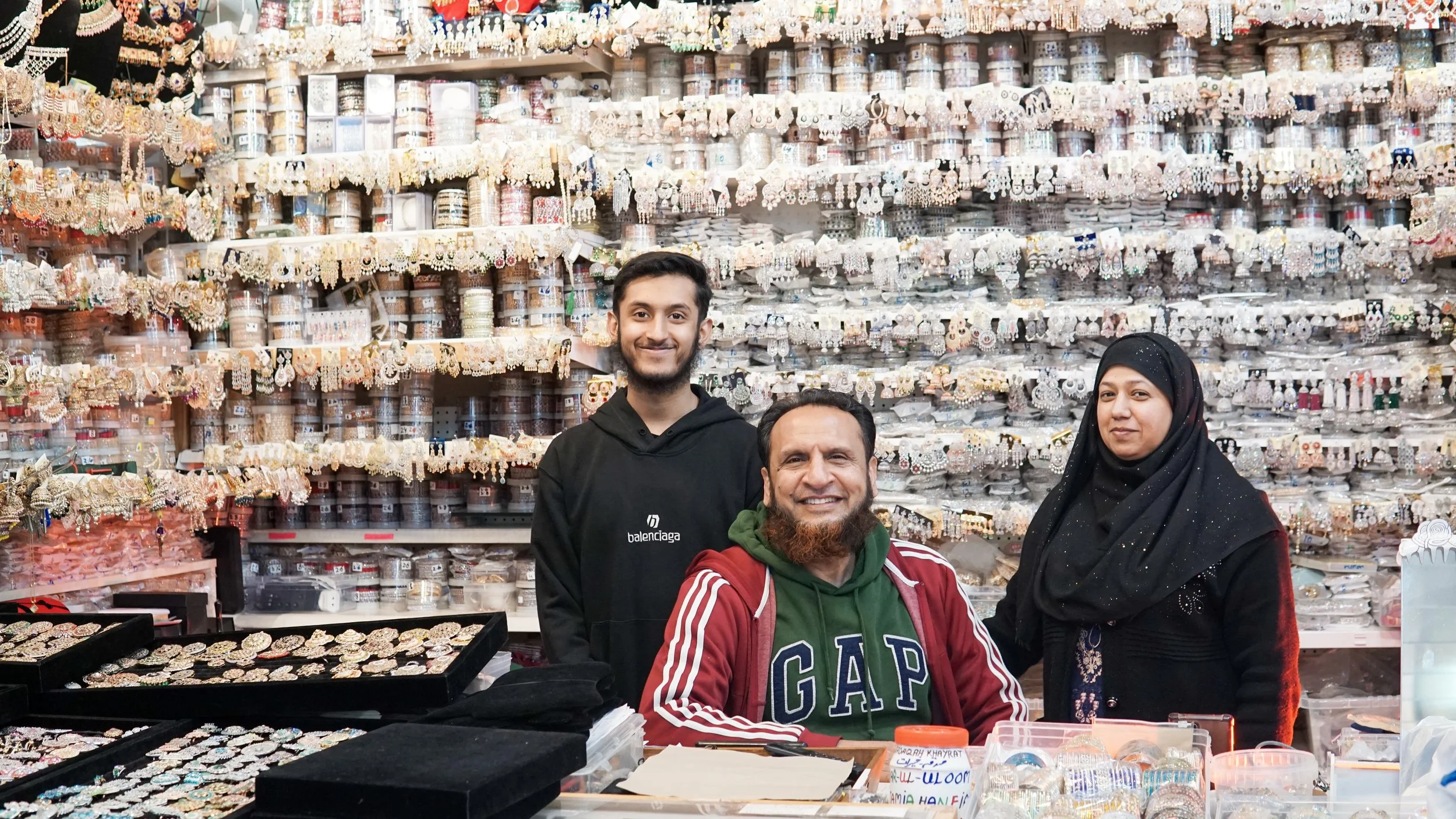
Haseeb, Shafiq and Shazia Ahmed at Lalli Fashion
“We’re a bespoke retailer, so people come here and we take their measurements and they can choose their colours and fabrics,” Shazia says. “Then we send all their requirements to Pakistan and the orders get made over there.”
Buying a dress here doubles up as an intimate exchange. The gratitude generated by this service is showcased on a shelf in the back room, which is crammed full of thank you cards. “Thank you for making Maria look and feel like a princess at all her functions,” one card reads. “All of our outfits were as we wanted. You were so kind and patient throughout the whole picking and fitting process.”
Wedding season is over but Shazia says that business is still blossoming; mostly through word-of-mouth recommendations. “Our customers come from all over,” she says. “They come from Edinburgh, Dundee, and Falkirk to shop here.”
Govanhill’s demographic is changing. Property prices in the Southside have surged in recent years. As the neighbourhood becomes more desirable, commercial rents increase too – making it harder for the fabric shops to break even. Still, Cathcart Road remains the shopping destination for South Asian occasion wear in Scotland and the shopkeepers I spoke to don’t plan on going anywhere.
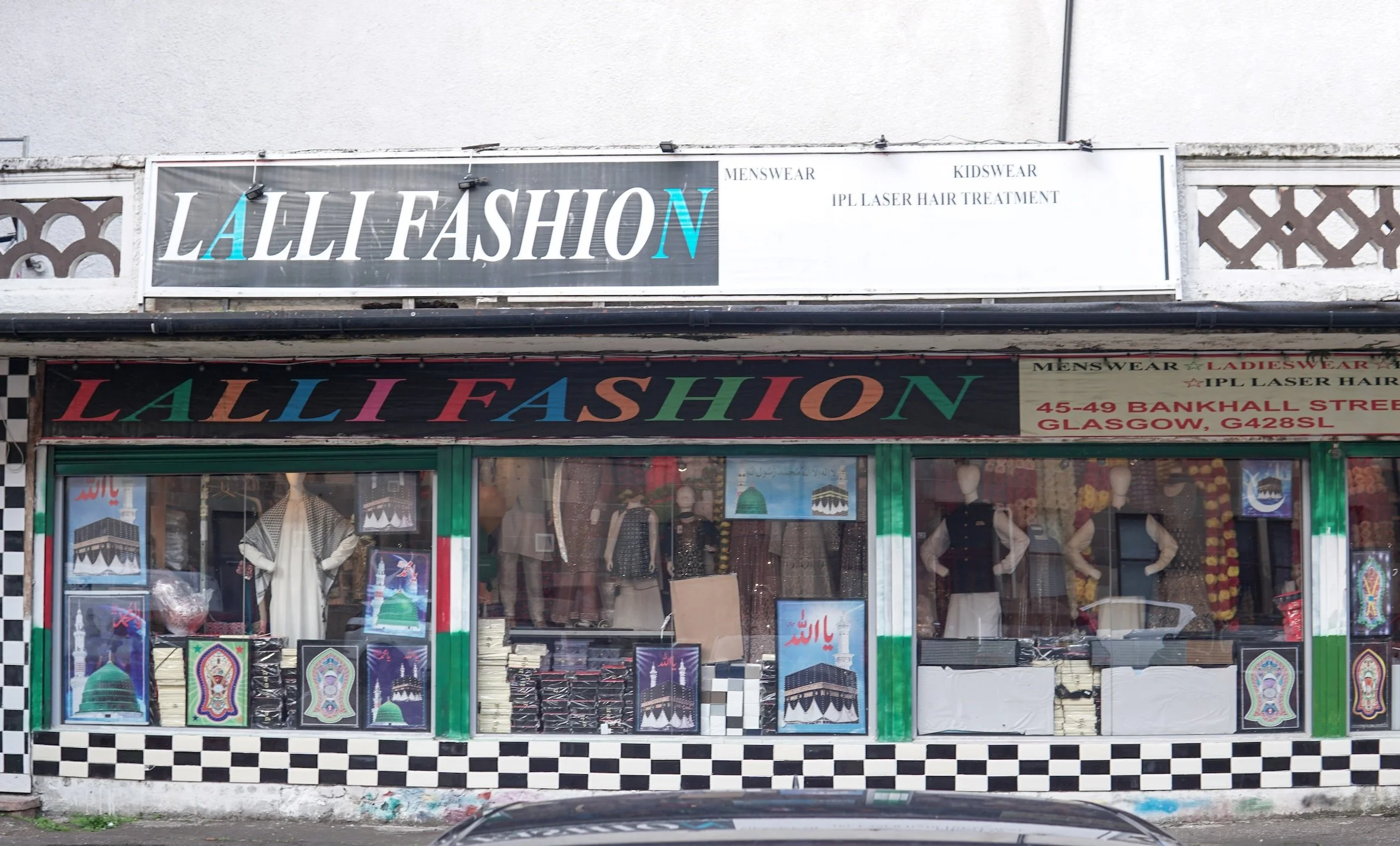
Lalli’s Fashion House is one such example. The Ahmed family moved to the former Govanhill Picture House from their shop of over 20 years on Cathcart Road in 2019, and it took six months for them to empty it of squatters, trees and weeds. Now they have an expansive and glorious shop that sparkles with walls of jewellery, shoes and fabrics. It’s one of the few places in Scotland where grooms can shop for kurta (tunic), so they always have footfall. Though this is also partly because they’re responsible for some of the weddings.
“A parent will come in and give us their phone number, age, sect, caste, and we’ll match them with someone with the same background,” Shafiq, the shop owner, tells me. Their role is simply to pass one parent’s phone number to another. They said this has resulted in multiple happy marriages in the British Pakistani community, where parents often take the lead in finding a suitable partner. “Last week one couple we introduced had a baby,” Shafiq says proudly.
While traditional matchmakers typically charge each family a fee, Lalli’s Fashion asks for nothing in return; except perhaps for the couple to buy wedding outfits at their shop. “Our intention is to do a good deed for the community,” says Shafiq. But not all the fabric shops are interested in this arrangement. The staff at Ally’s, which sits on the corner of Cathcart Road and Bankhall Street, are often asked to act as matchmakers but choose to stick to the clothing business.
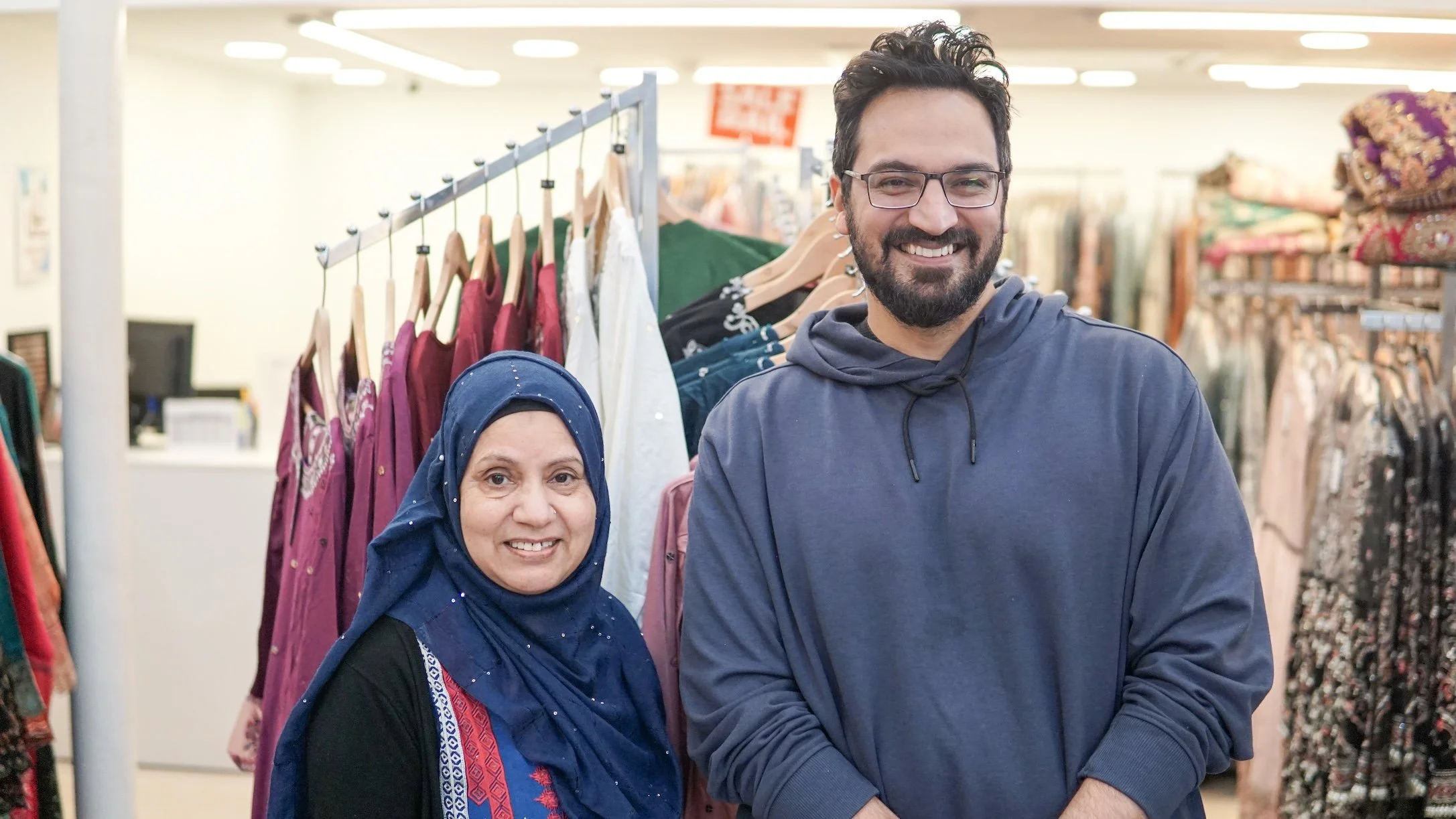
Fakhra and Kazim Ally’s
Ally’s is the first UK branch of a well-known Pakistani dress shop, with a store in Lahore open since 1990. It’s a family-run business, with the majority of their clothing produced and designed in-house and today brothers-in-law Kazim and Zafar work the till while Zafar’s mother, Fakhra, serves customers.
Despite the strength of their brand, Kazim says it’s not easy to make sales these days. They opened their store just before the COVID-19 pandemic, and since then they’ve had to get creative to stand out.
“We started our website during lockdown,” Kazim says. “We can cover the whole of the UK this way but not many shops are doing it because it’s hard to sell unstitched clothes online. So we spend on marketing and are very competitive on pricing.”
With costs increasing, occasion wear is sliding down the list of household priorities. "People want to eat first and buy clothes afterwards,” Kazim says. “Their budget is spent on rent, groceries, electricity, council tax.”
These shops are about so much more than profits and margins. They are a key part of the fabric of Scotland’s South Asian community. They’re a place to gather and connect. These shops are an exchange between Govanhill, India and Pakistan. Fabrics are carefully chosen, measurements noted and the details sent off. A week or two later, a package arrives tailored to fit like a glove, and carrying the essence of home.