Jeremy Sutton-Hibbert: on photographing community resistance
Jeremy Sutton-Hibbert’s photographs document major Southside protests, including the No M77 protests, the initial stages of the Save Our Pool campaign, and the more recent Kenmure Street protest. Through his conversation with aspiring photographer Ilaria Lipperi, he reveals the importance of locality, community ties, and the surprising international resonance of grassroots activism.
Interview and portrait of Jeremy Sutton-Hibbert by Ilaria Lipperi | Other photos supplied by Jeremy Sutton-Hibbert
Jeremy Sutton-Hibbert grew up in Ayrshire and moved to his birth city, Glasgow, in his early 20s. While he’s travelled the world since then, for the past 13 years he’s called the Southside his home.
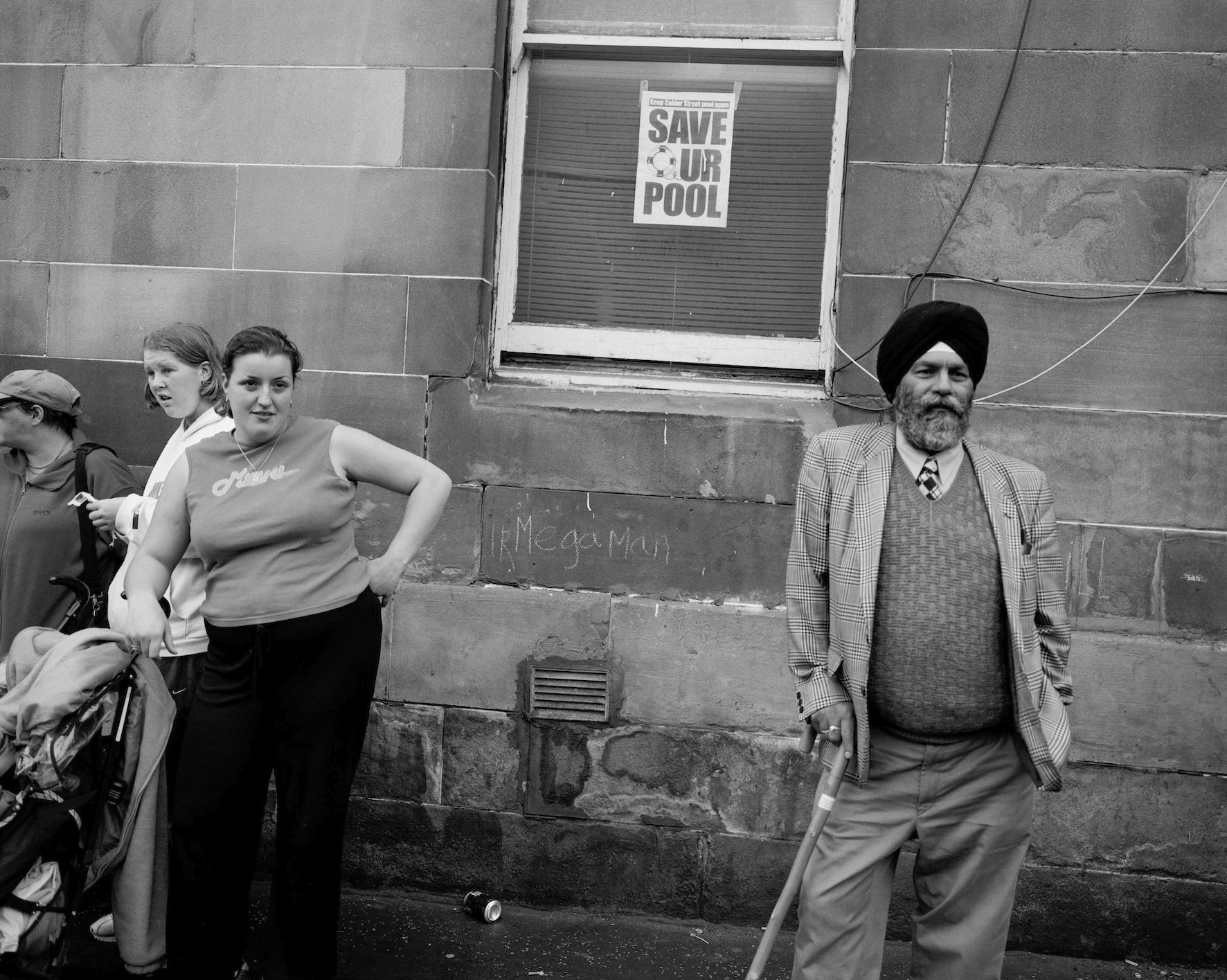
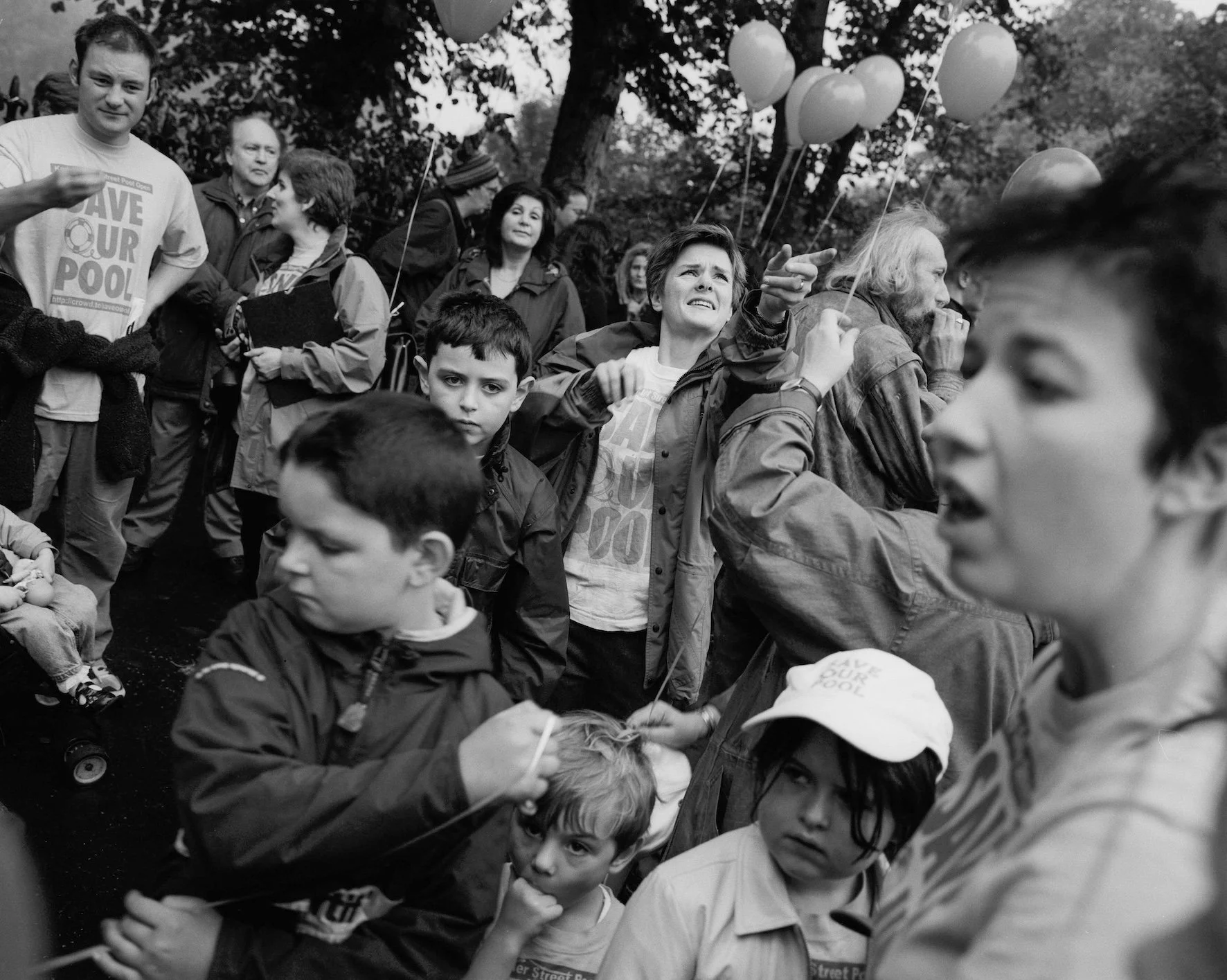
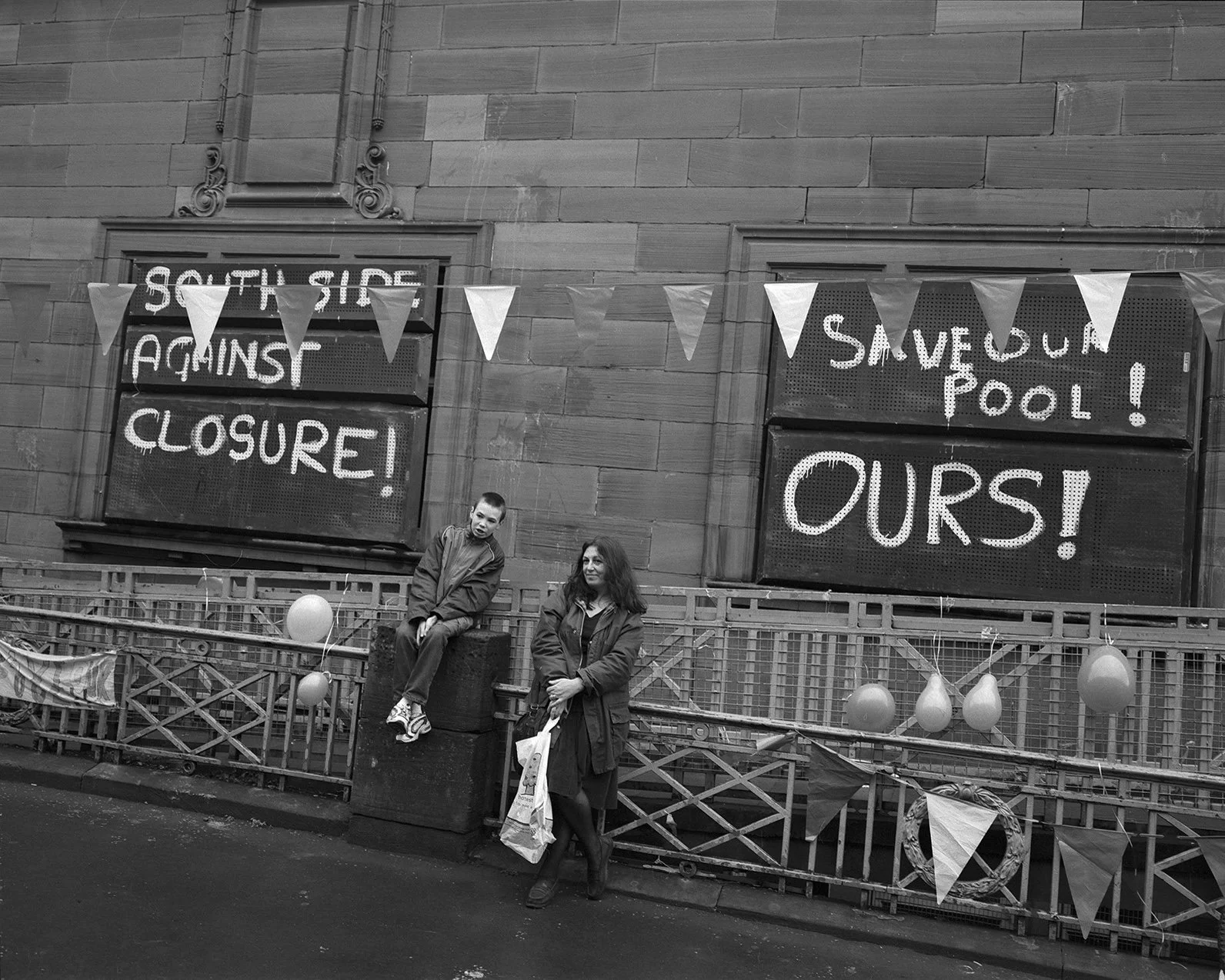
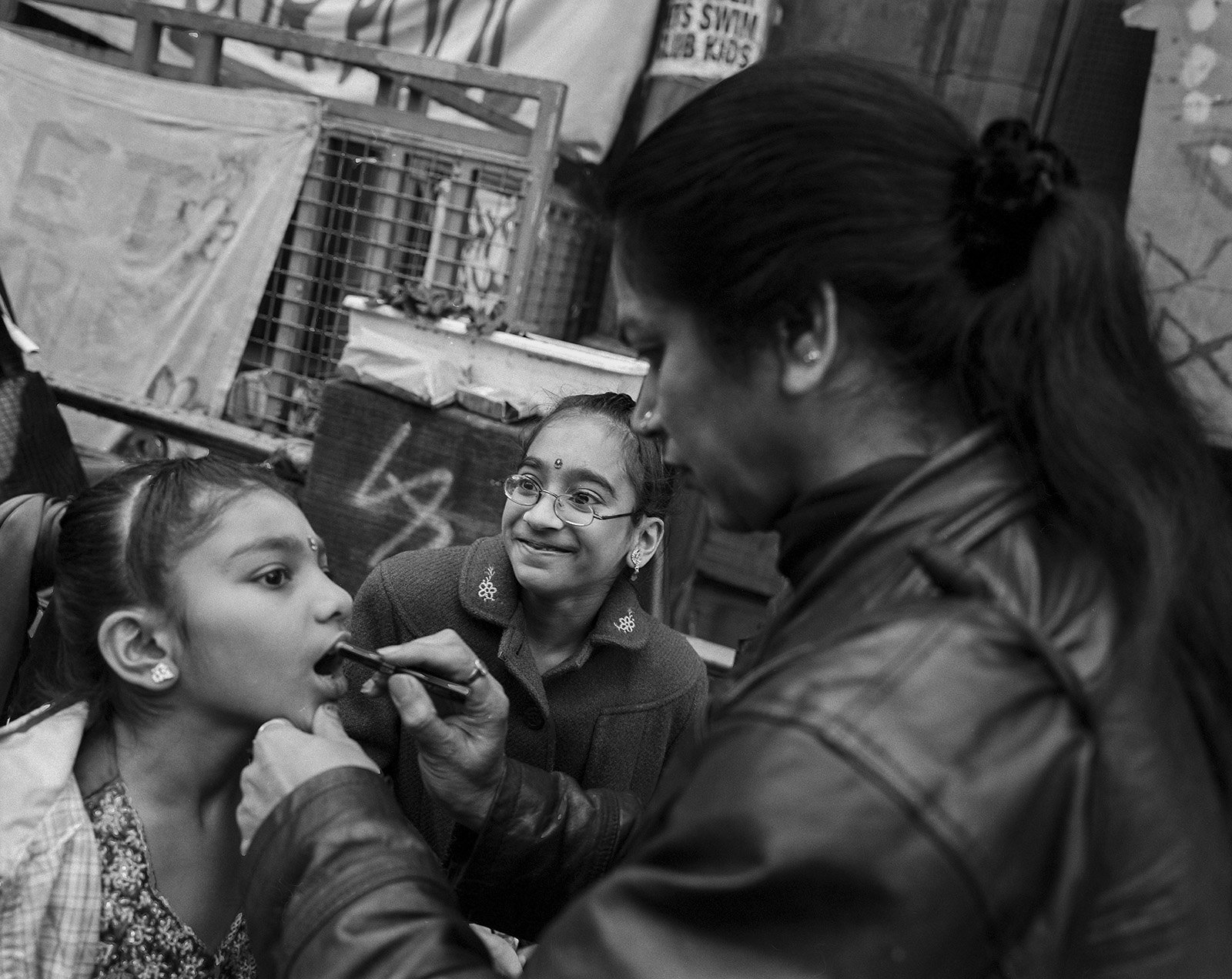
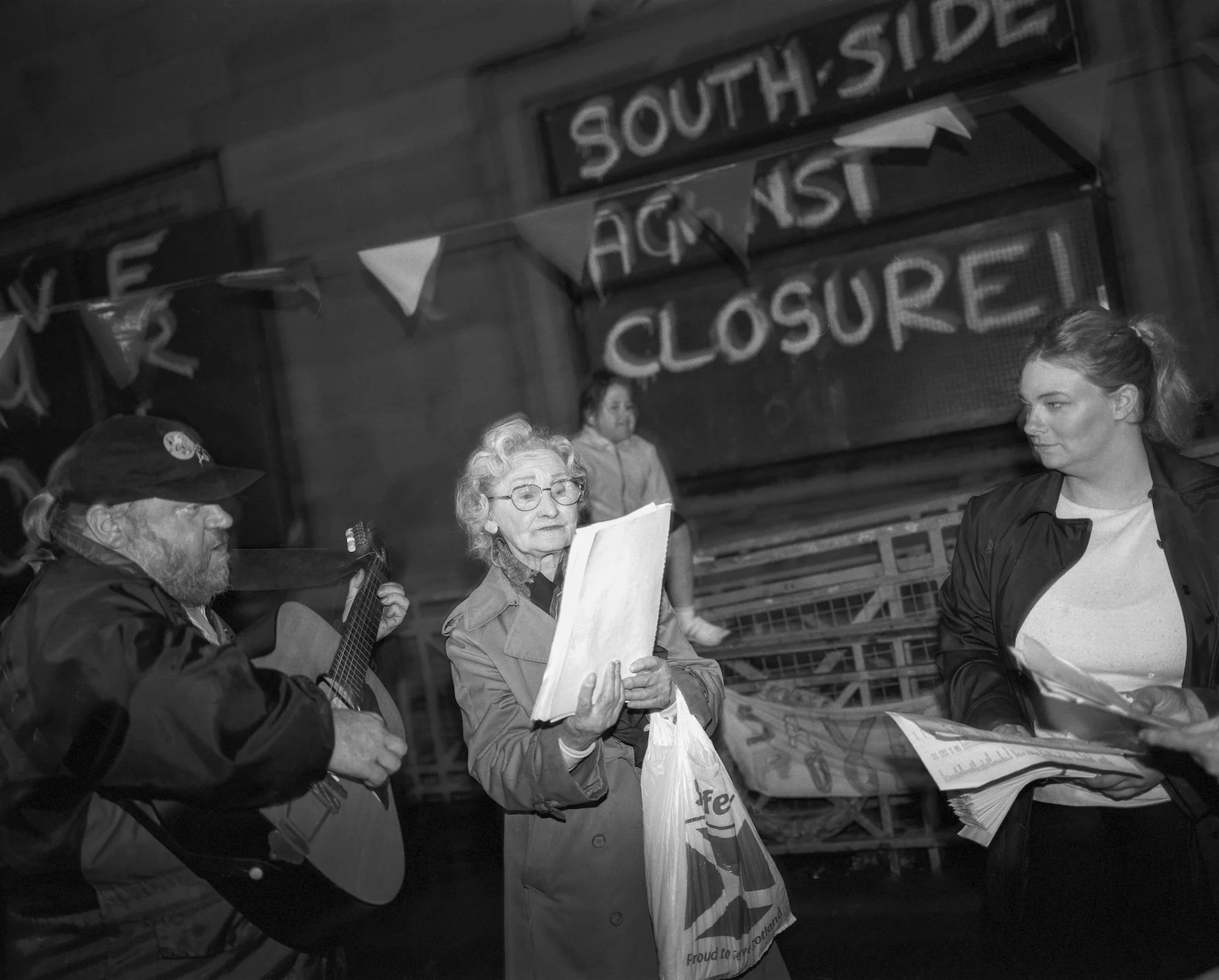
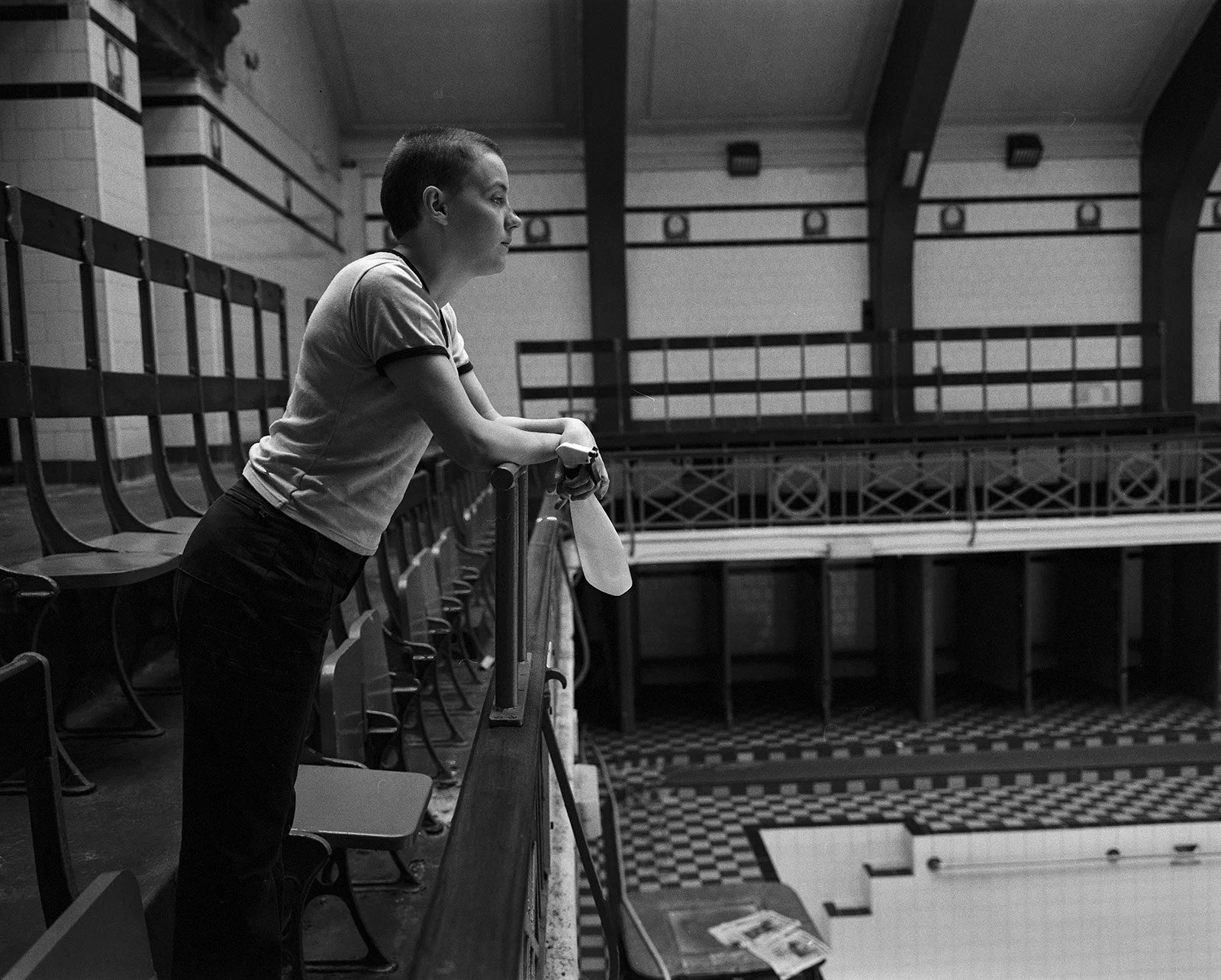
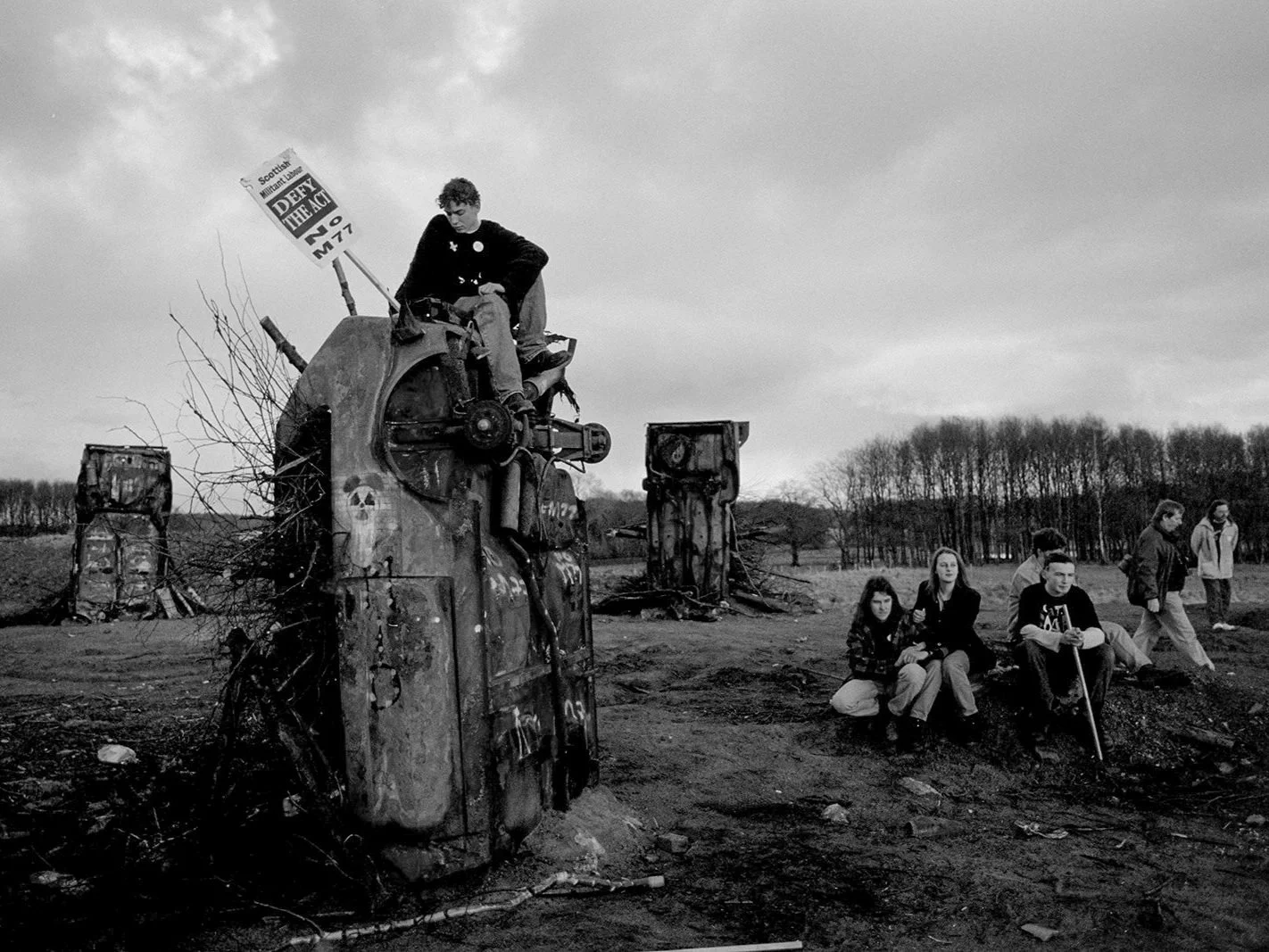
Over the past decade, he’s photographed key sociopolitical protests in Glasgow’s Southside, including the No M77 campaign, the initial stages of the Save Our Pool campaign, and the more recent Kenmure Street protest—all of which feature in a new set of zines he has published.
As an aspiring protest photographer myself, I wanted to understand what it means to document events of such relevance and the impact it has. What emerged from the interview is the importance of locality, the embeddedness of these protests and Jeremy’s life within the Southside community, and the astonishing international reach and resonance of these protests.
How did you get into photojournalism, and why are you still so passionate about it after so many years?
I studied photography at the Glasgow College of Building and Printing, the building with the pink top facing George Square. I always wanted adventure and I always wanted to travel.
After college I got a job as an assistant photographer in London and, while I was doing that, the Berlin Wall came down and communism began to fall across eastern Europe. As that was happening, I was sitting in an office, thinking, “I want to be out there photographing.”
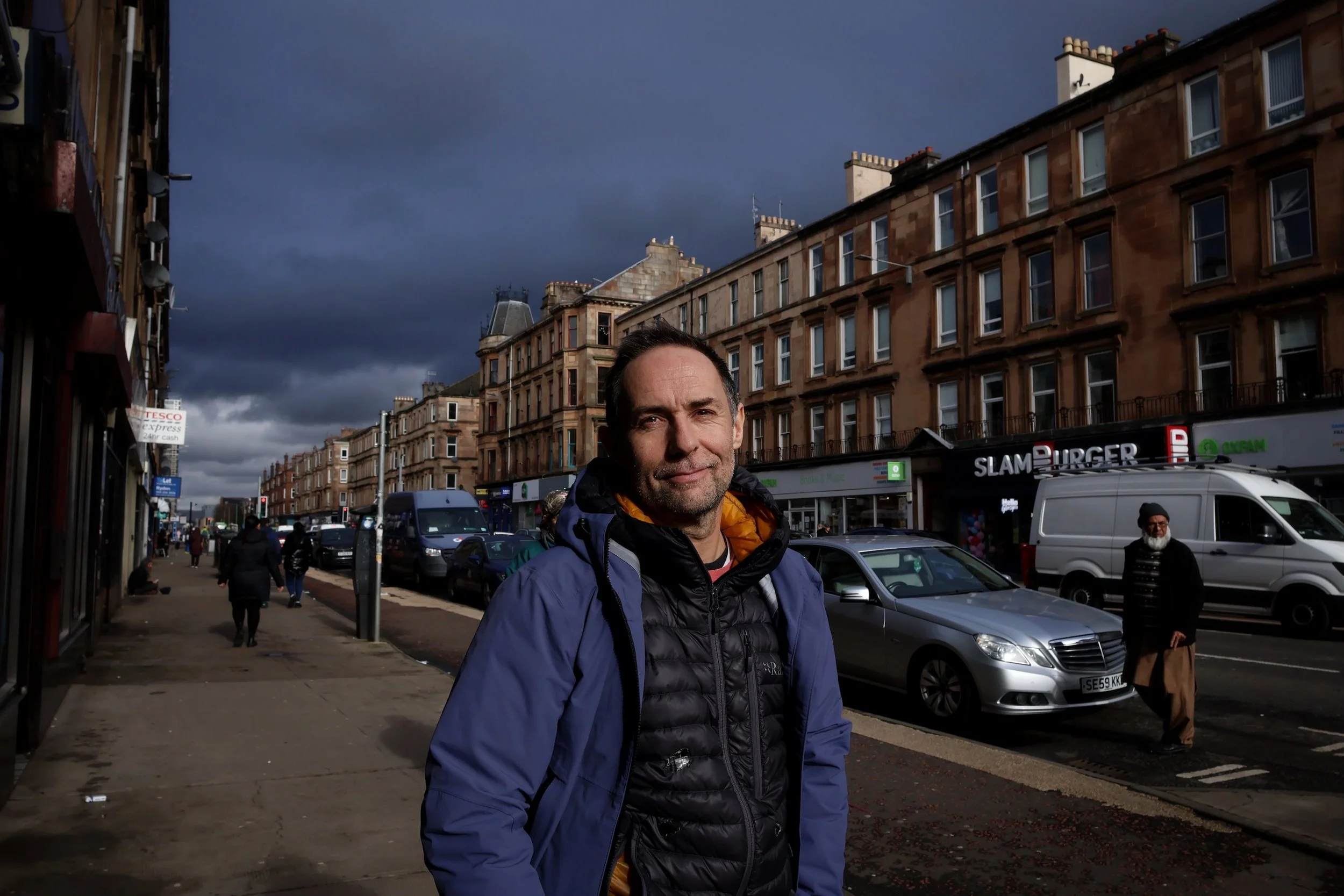
Jeremy Sutton-Hibbert
I eventually got redundancy from that job. For most people redundancy is bad news, but for me it was really good as they let me go and gave me money. With that, I went to Romania in 1990, a few months after the revolution, and that’s when I really started working as a photographer. The pictures that I took that year won the Ian Parry Award Young Photojournalist Award.
I then started working for newspapers and magazines and it’s just what I’ve always done since. Photography, to me, has been a great way to travel, to see the world, to meet people, to learn about different cultures and different issues, and I guess that’s why I’ve always been so passionate about it. When you can make it work, it’s a great job to do.
You’ve documented very important political moments for Glasgow Southside, which people still relate very deeply to. What was your relationship to what was happening?
I feel remarkably fortunate as a photographer to have experienced a little bit of each of them. But that doesn’t make me an expert on these protests or campaigns. I was never part of the campaigns; I always approached it as a news job or as something that was happening in my community that I wanted to photograph.
How I approach it is by following a will to get out and learn about the world, learn about the people and communities. So I guess that’s probably why I attended that No M77 demo, and then went out to Carhenge at Pollok Estate.
Those protests gained a lot of media attention at the time, especially the Pollok Free State, and went on to become well regarded in the environmental movement. It is sometimes only with time that such a protest becomes even more significant, more iconic—and the images I took gain greater relevance as documentation of the events.
For Govanhill Baths, I was living in Mount Florida. I first became drawn to the area because of some negative graffiti. That provoked my interest. I asked myself, “Why is that there?” so I started going more to Govanhill to photograph.
The Save Our Pool protests had begun. But in 2001, I had many assignments abroad, so I didn’t get to photograph the actual occupation of the Baths building. But the campaign to reopen the Baths was still going on, as it is to this day, so I documented that.
I photographed many events of the campaign. By meeting people through these protests, I also got access to enter the building and see it from the inside.
I made contact with the activists on the picket outside the pool, photographing them and then ultimately going inside the Baths building with them one day, to see the empty pool and what remained. I remember the activists being passionate about saving the building. There was a defiance, a commitment—there still is.
All three shoots came about from an inquisitiveness for what’s around you, about the world and the community. Is there a moment that started the process of these zines, and why now?
I’ve done a whole series of zines. Last year I did 10, which were quite popular. People found them interesting, and they were on a variety of topics, including Glasgow’s shipbuilding, Harris’ tweed industry, a couple of stories about Shetland Islands, and then I took a little break from it.
This year I wanted to do some more. I guess what kickstarted these latest zines was the inclusion of the No M77 / Carhenge photo in the Resistance photography exhibition at the National Galleries in Edinburgh.
Five years after the Kenmure Street protest, how do you think the documentary about it will be received?
Firstly, I’m yet to see the film itself, but I think with all the attention on ICE in the USA, on how the Trump administration is treating people, deporting and detaining them, people may look back to Kenmure Street as a precursor, a forerunner of community resistance against such deportations.
The same way that we see protests in Minneapolis, for example, Pollokshields was doing it five years ago, facing up to the Home Office.
I think it also builds into the story of Glasgow as being a welcoming place, standing up for the rights of people, of strong activism and fighting for people’s rights in general.
Glasgow has such a strong political and creative history and identity. How do you see the role of photography in supporting activism and challenging injustice?
I think photography definitely has a role in documenting and raising awareness of activism. Photographers, in my opinion, should ideally always strive to be impartial, and document what they see perhaps without becoming part of the campaign themselves.
That's my point of view, though—some photographers do want to be part of the campaigns and processes as well. By getting that work seen, that's how injustice can be challenged. It keeps it in the public eye.
If these things don’t get photographed, don’t get published, don’t get seen, then it’s very easy for things to happen and go unnoticed, then no one gets to know about it.
You’ve been talking a lot about the community around you. What kind of response and engagement have you had specifically from Glasgow Southside?
People have been engaging with these zines because some of the work is old, and perhaps it brings back memories. The images document times when there were no mobile phones capturing every moment, every angle.
I think another role of the photographer is to make sure you look after your work, you archive it, keep it safe. Sure, everybody on Kenmure Street that day had a phone, took pictures and put them on social media. But in 30 years’ time, how many of those pictures can you find? Have people backed them up onto hard drives? Have people archived them? Probably not.
Carhenge was in 1994, so for 32 years those negatives have been looked after and kept safe.
The responsibility of the photographer is to make sure that the work can be found 10, 20, 30 years later. And that’s a big reason I’ve been doing these zines.
Now that my archive is held at the University of St Andrews, doing these zines is a great way for people to access my work, for them to find my archive.
Many of my Kenmure Street zines have been bought by people from the community, from Pollokshields, and a few have been sent to Kenmure Street addresses. That is always great to see, that the work is going back to the communities the images came from.
Find out more about Jeremy’s work and purchase the zines at jeremysuttonhibbert.com