Carved into history: preserving uncomfortable heritage
Thirty two wooden doors from Govanhill Baths hold decades of names, memories, graffiti and community tensions. As part of a University of Glasgow placement, museum studies students helped conserve and catalogue the doors, confronting difficult questions about what community archives preserve, whose voices they represent, and how histories can be remembered.
By Darragh Maguire | Photos by Open Aye participants
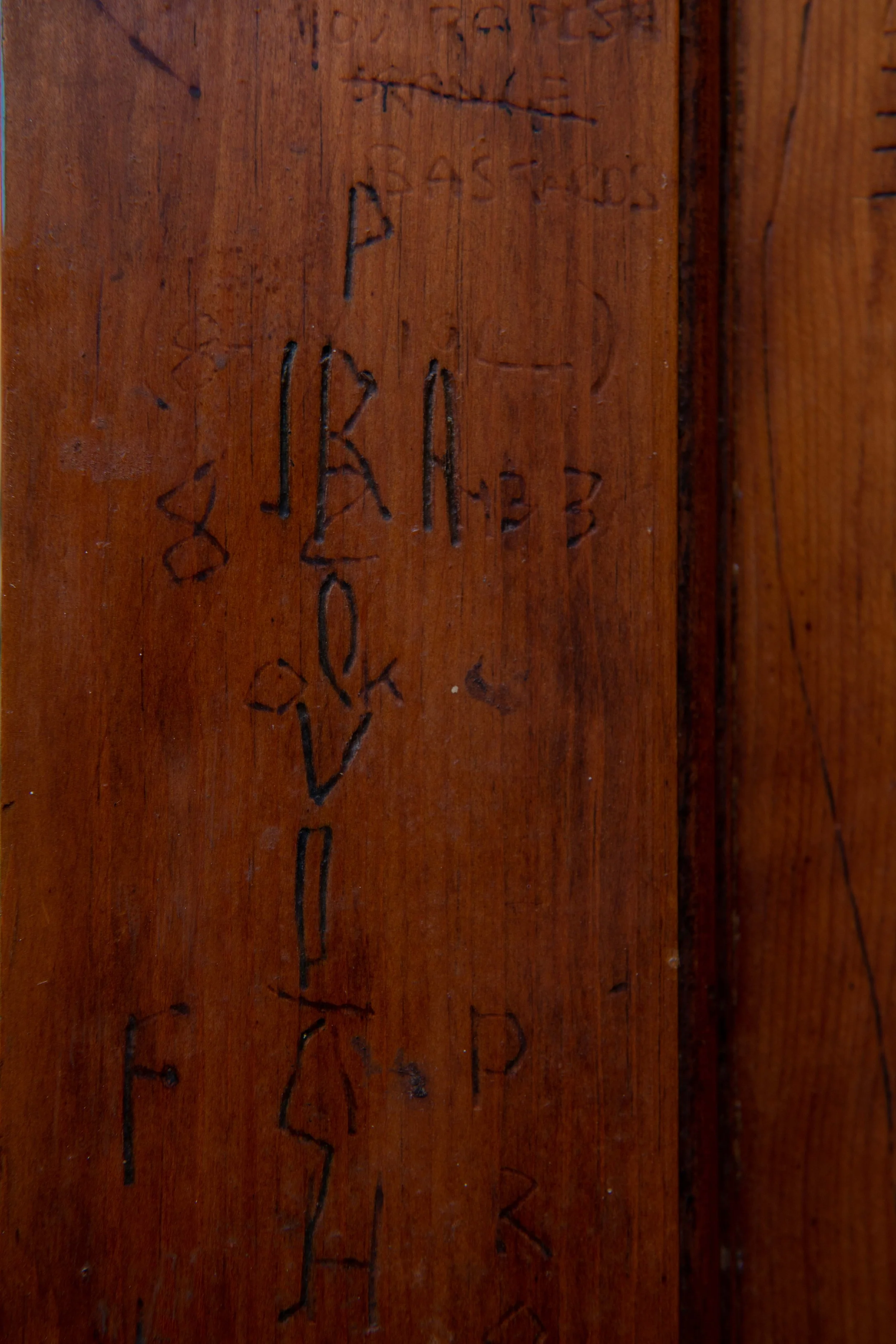
When we think of an archive, we often picture filing cabinets, rows of shelves and dusty tomes. So when a visitor to Govanhill Baths wrote “Tom Roberts 1985” on the back of a door, they could never have expected their graffiti to one day become part of the community’s heritage.
Sixteen years later, Govanhill Baths was closed by Glasgow City Council. The resulting activism, protests and occupation transformed the building—and everything in it—into a symbol of resistance and Govanhill’s community spirit.
In spring 2023, alongside three other University of Glasgow Museum Studies students—Tom Hawkins, Steven Huo and Marissa Trimble—I undertook a work placement at the Govanhill Baths Community Archive. Through conservation, cataloguing and digitisation, we helped fulfil the archive’s mission to make accessible materials reflecting the wide range of activities that have taken place in the Baths over the past 100 years.
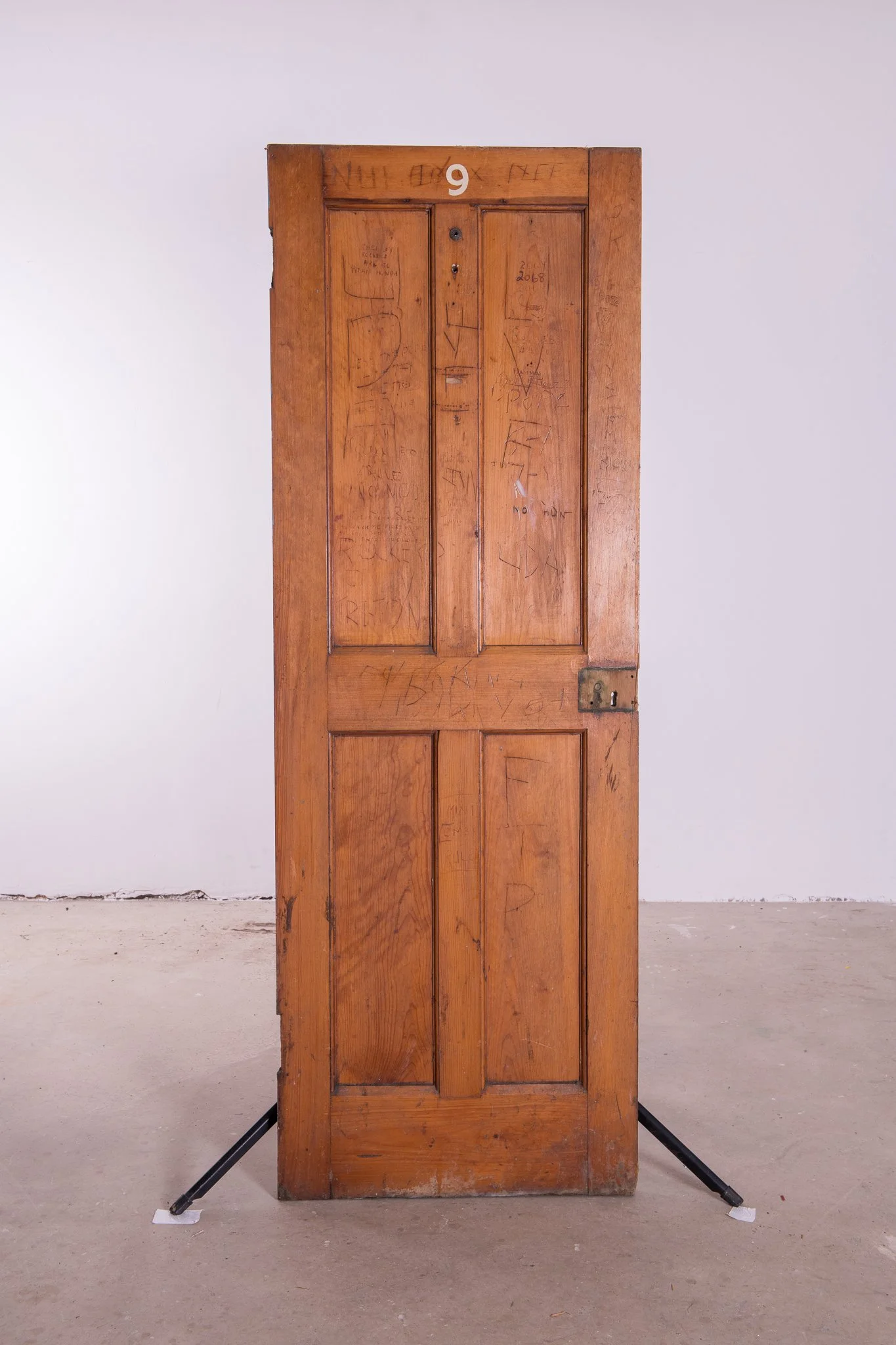
One group of objects we worked with was a collection of 30 wooden doors from the old slipper baths in the original building. These private baths were an important local amenity, particularly because some Govanhill flats lacked hot running water until the early 2000s.
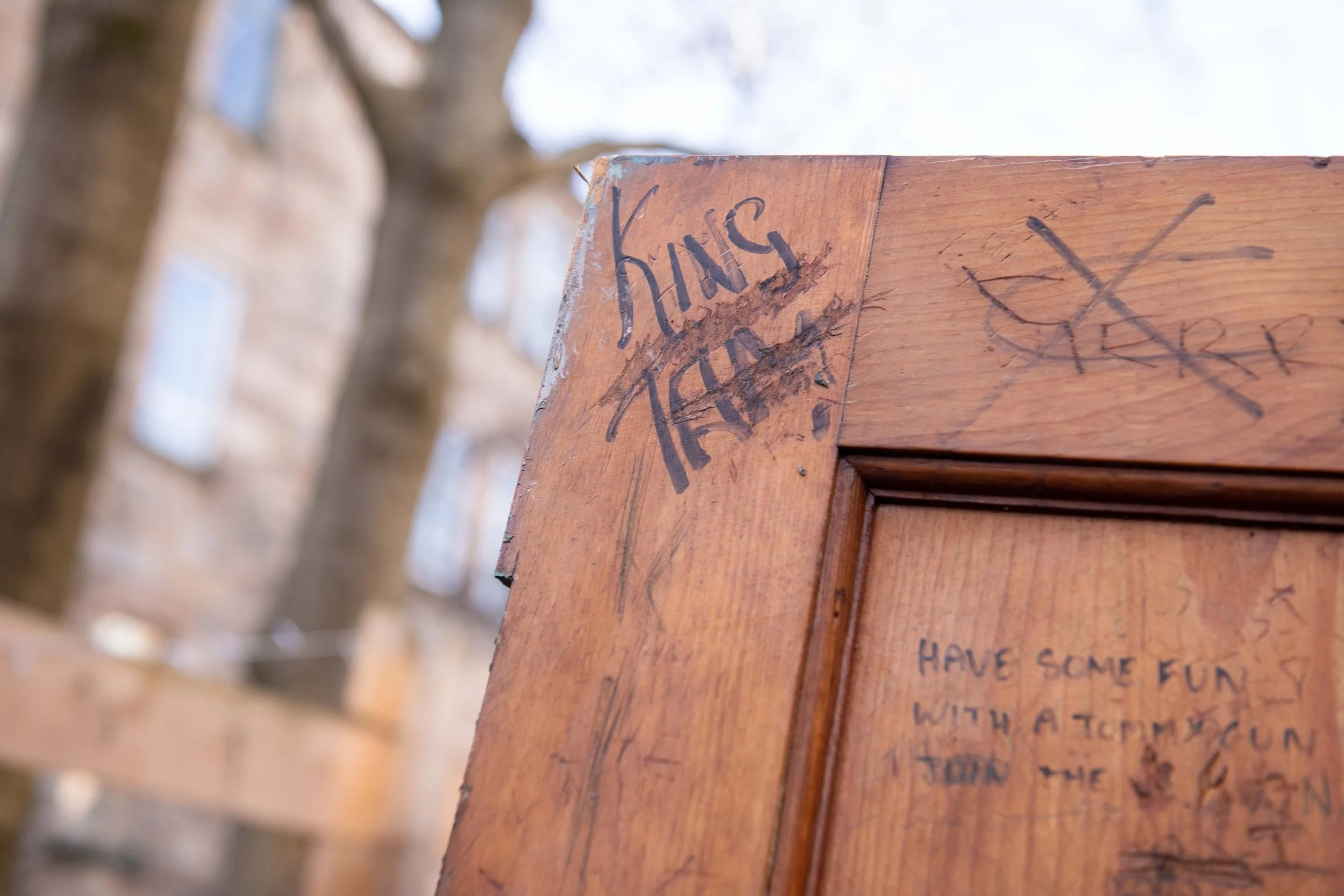
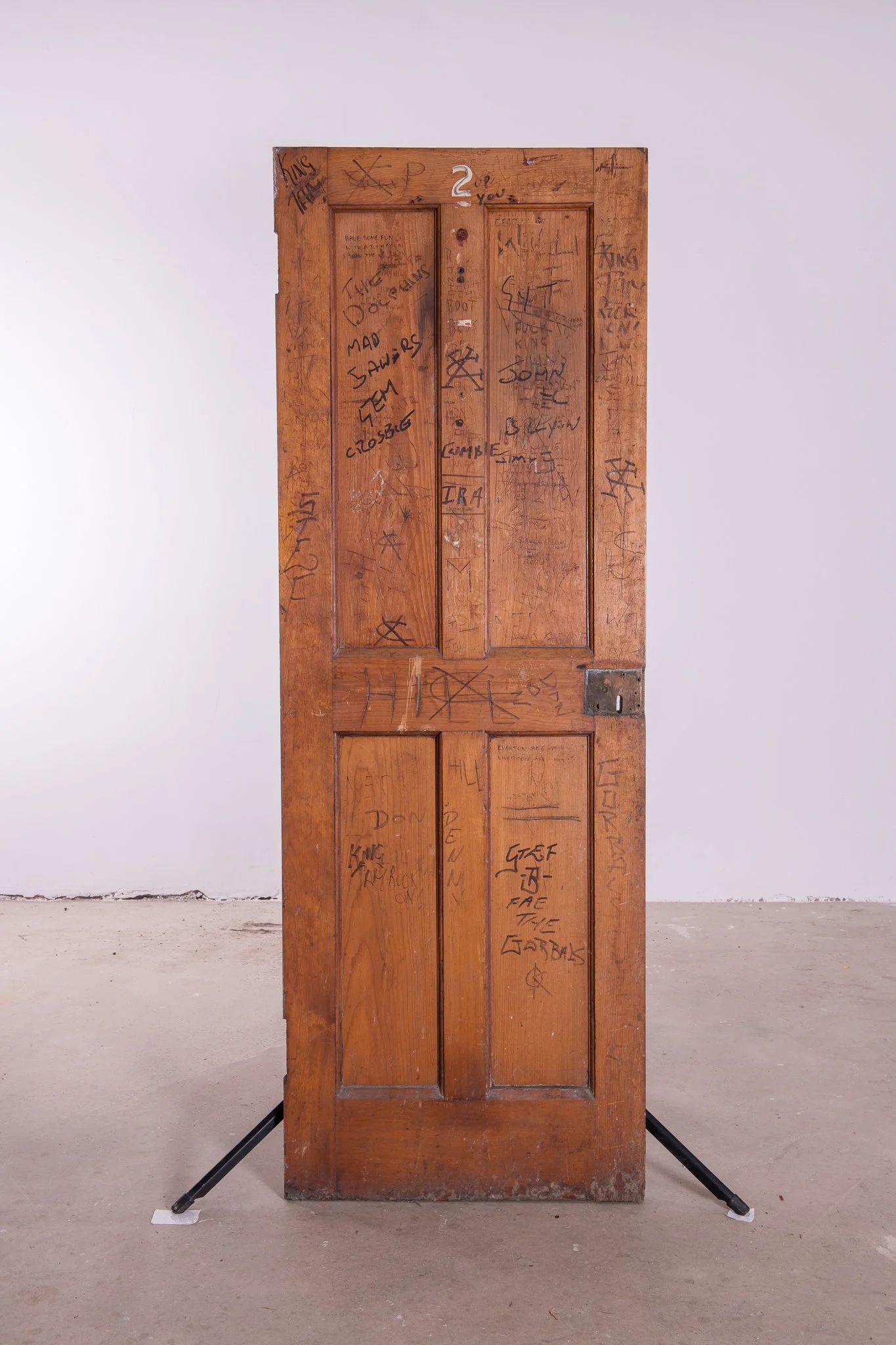
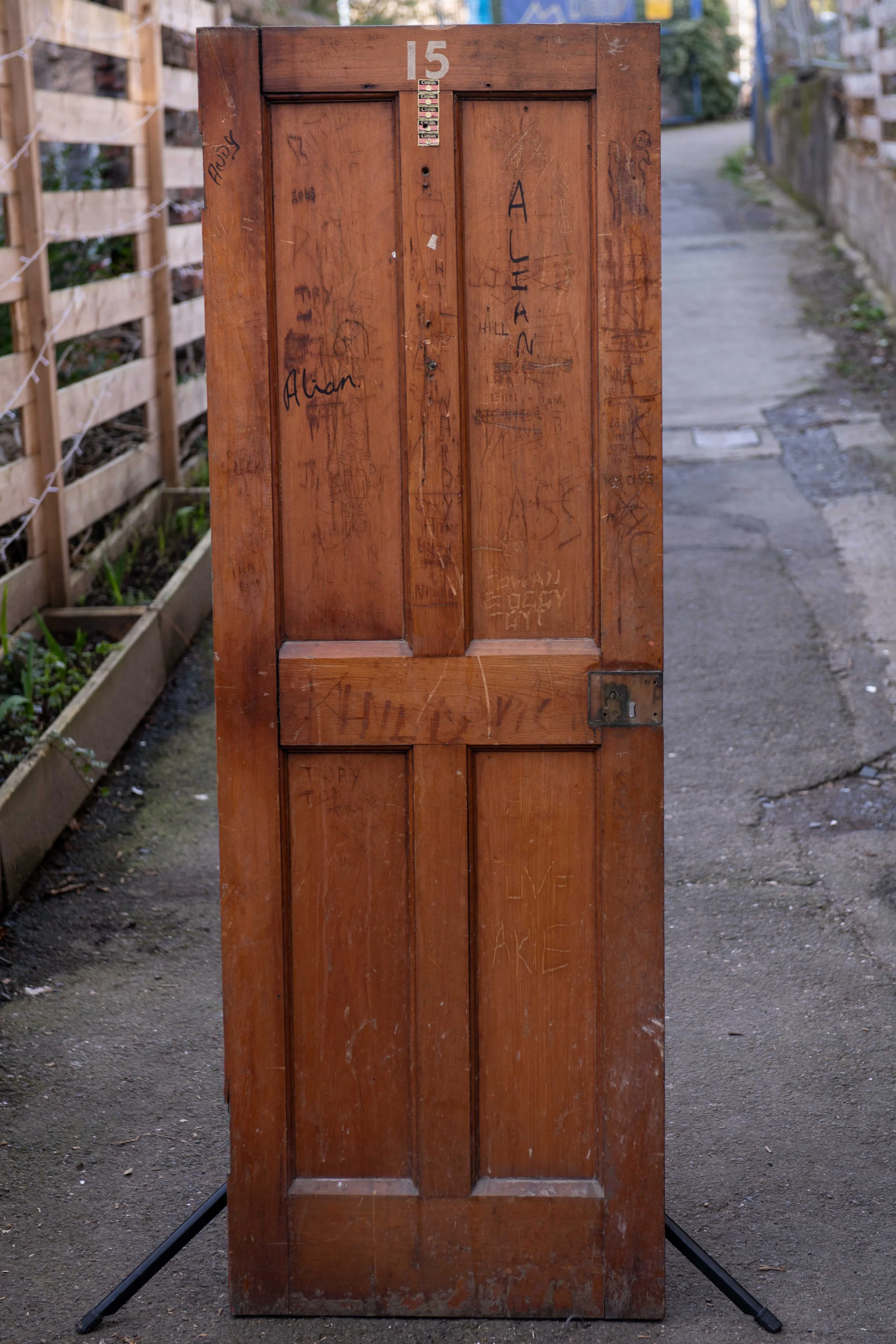
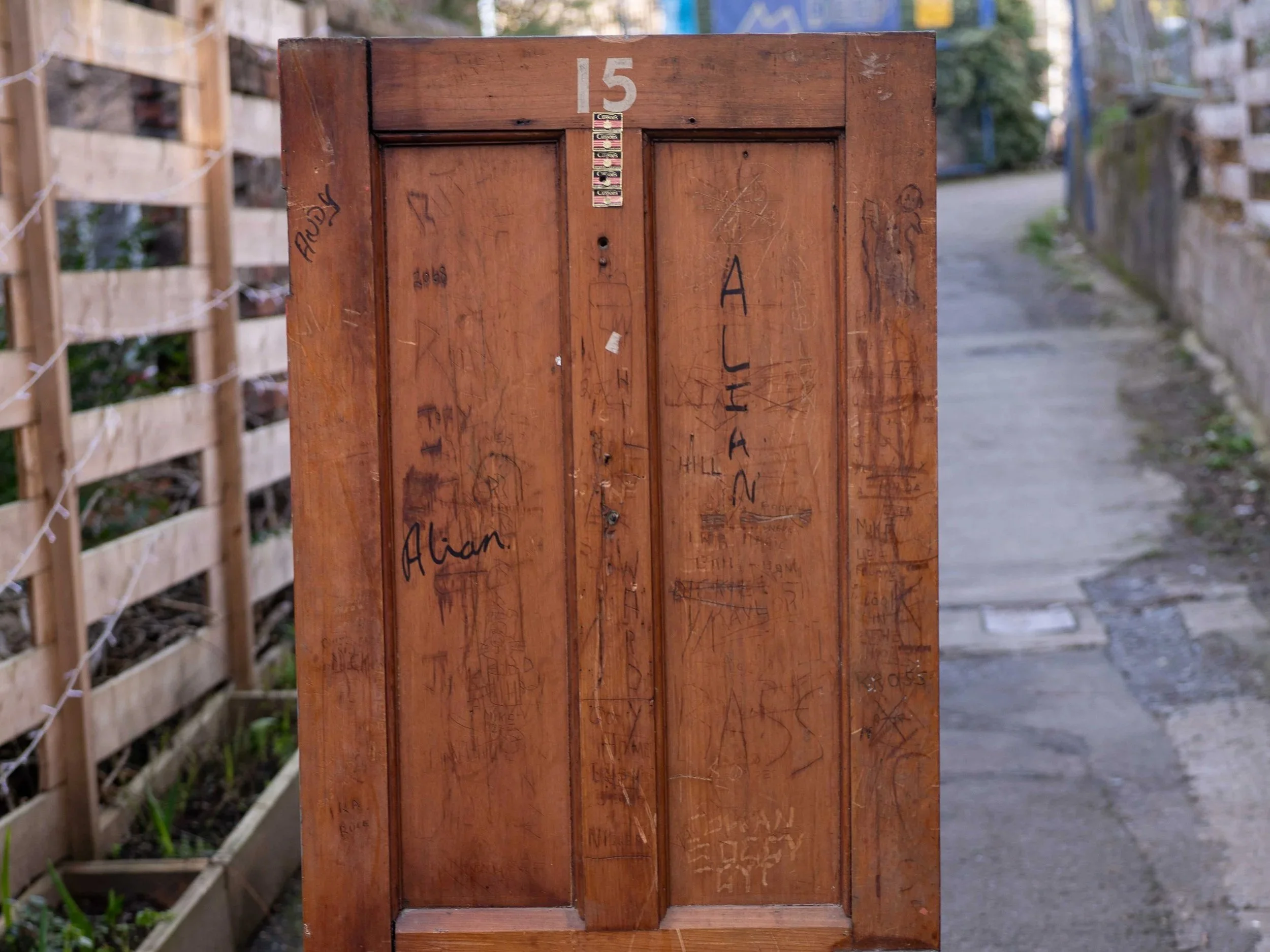
The doors are curious objects because they are covered in graffiti. Much of it is harmless, recording people’s names, dates and places around Govanhill. However, a substantial amount is sectarian, reflecting Glasgow’s history of tension between Protestant and Catholic communities and the presence of a large Irish community in Govanhill.
Antagonistic phrases aimed at the Pope and King Billy are common, alongside references supporting paramilitary groups such as the IRA and UVF. Elsewhere, racist and homophobic slurs appear among the more nonsensical markings. Much of this hateful language is strikingly similar to language still used against marginalised communities today.
It could be argued that offensive content does not belong in a community archive and that the graffiti should therefore be erased. However, as community archivists, we have a responsibility to provide as truthful a representation as possible of the heritage we preserve. Not preserving these objects would erase part of that history, whether or not we find it uncomfortable.
We must also consider not only the people who created the graffiti, but those who read it. Hateful messages directed at your own community could make you angry enough to respond, or make you feel unwelcome in your own neighbourhood. For others, however, such messages may have created a sense of belonging. Bathhouses have historically been meeting places for queer men, and suggestive graffiti suggests Govanhill Baths may have provided an informal third space for a marginalised community.
Our project began by cleaning dust and mould from the doors. This was a slow process, as we needed to avoid removing any graffiti. Immediately, we faced questions about our responsibilities towards the objects and what was important to preserve.
Why protect the graffiti but not the mould that had grown from the steam of countless baths? Was the dirt accumulated over decades not also part of the story?
Ultimately, we realised that what we were interested in conserving was not simply the doors themselves, but the voices of the people who had written on them.
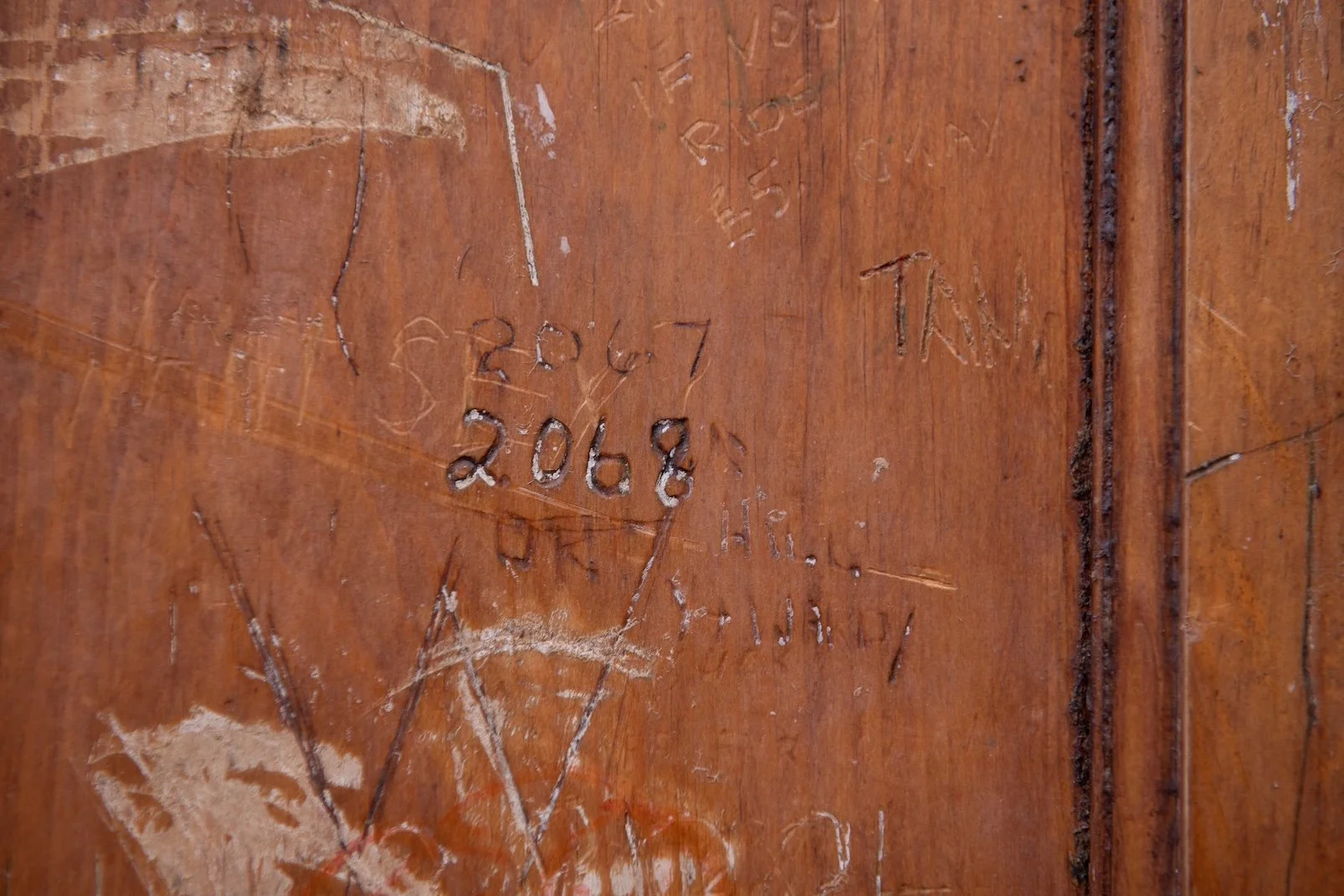
Once cleaned, we photographed the doors with assistance from Becky Duncan of Open Aye, who was documenting the restoration of Govanhill Baths. We spent considerable time examining the graffiti and selecting memorable, humorous and particularly significant examples. Our aim was to create photographs detailed enough for viewers to experience the graffiti for themselves.
We also photographed close-ups of names, dates and particularly creative markings. One person calling themselves “King Tam” wrote and dated their name at least fifteen times over a decade, from “Tam ’79” to “Tam ’88.”
Even some of the sectarian graffiti displayed creativity. On door 16, the number was adapted by both sides of the community to create “1916”—the year of the Easter Rising—and “1690”—the year of the Battle of the Boyne—resulting in the accidentally inclusive “191690.”
The final stage was cataloguing the doors and transcribing the graffiti. This was difficult because we were no longer simply documenting hateful language; we were writing it down ourselves.
We assigned tags to make the material searchable in the database, using subjective terms such as “sectarian”, “offensive” and “vulgar”. This highlighted our role as potentially biased actors within the archive.
Should we use subjective terms if our goal is to remain objective? Ultimately, providing content warnings for potentially harmful material was more important. The process also made me reflect on my identity as an Irish person and how I might interpret graffiti targeting Irish people differently from other material.
It demonstrated that complete impartiality is impossible, but that acknowledging our own positionality is essential.
This returns us to the question of why the graffiti should be preserved at all. If the content is harmful, would it not be better to focus on something less uncomfortable?
For me, the answer is that graffiti itself is worth preserving. No matter how crude, it is a form of art and self-expression. For better or worse, these people chose to make their voices heard.
Community archives are not simply about objects; they are about the people who used those objects. These doors are primary sources left behind by the people of Govanhill.
I remember a member of Govanhill Baths Community Trust visiting us while we were photographing the doors. He asked to see door number 15—the door to the bath he had used regularly.
Watching him touch the door, as if saying, “There it is, that’s the door I looked at all those years,” was an important experience. Although he declined to say whether he had written any of the graffiti, it made me realise how tangible these doors were as pieces of community heritage.
Now that the graffiti has been transcribed and catalogued, the doors will remain preserved in their original state. Once the Baths reopen, they will form part of a display in the new community archive and museum space, in what was once the Steamie.
It is not only the responsibility of a community to protect its past heritage, but also to foster inclusivity and participation in the present. While we must acknowledge the more uncomfortable truths of our history, these doors offer an opportunity to transform something that once represented tension within the community into something that celebrates its diversity.
This article was originally published in 2022 as part of Govanhill Baths Doors Open Day Exhibition in 2024 and has been updated for publication in Greater Govanhill magazine.