Telling Bel’s story: new documentary on the life and music of Beldina Odenyo
A powerful new documentary currently touring independent cinemas brings together Beldina Odenyo’s music, words and memories to tell the story of the formerly Govanhill-based musician known as Heir of the Cursed.
CW: This article contains reference to suicide
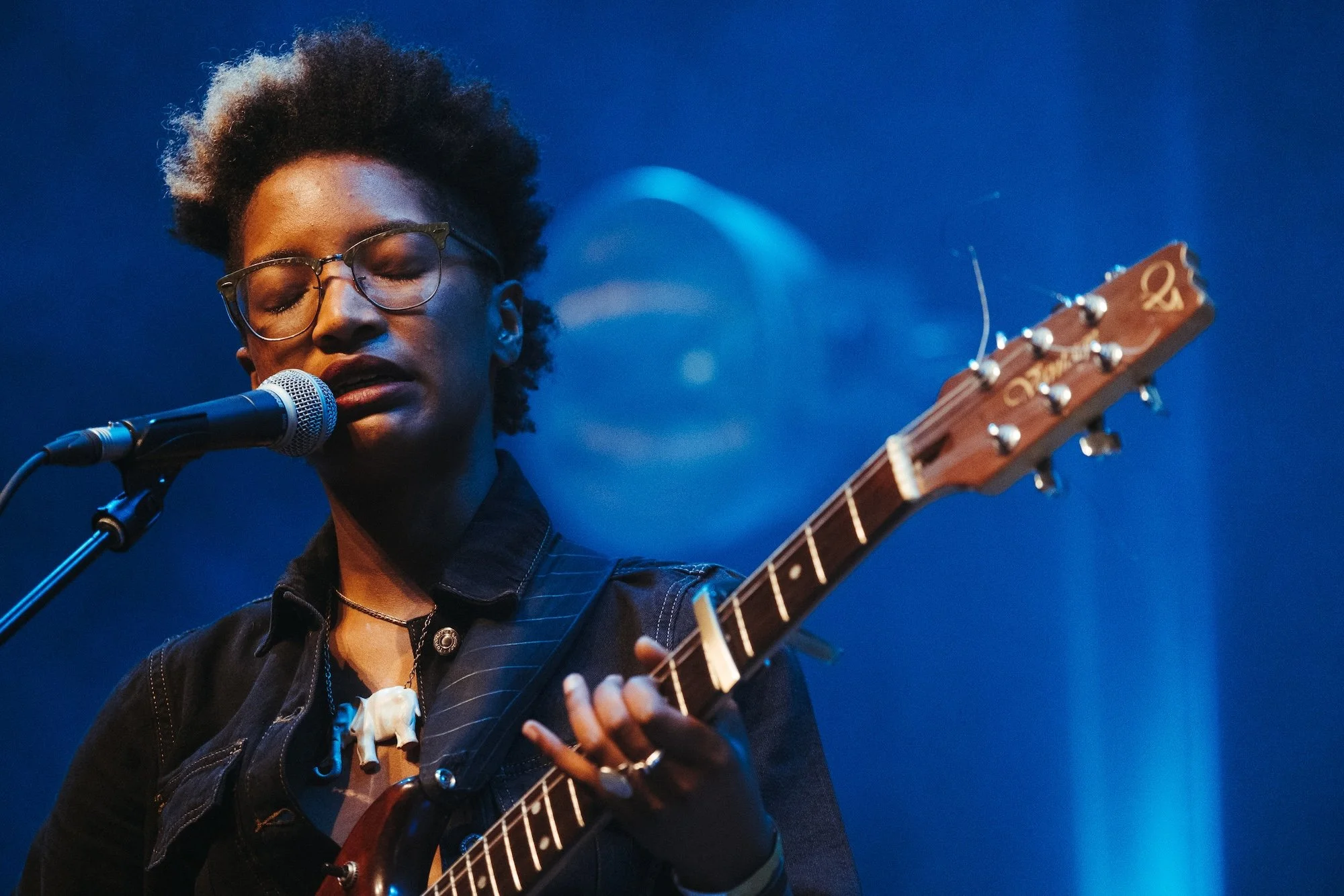
Beldina Odenyo performing at the SAY Awards in 2019 | Photo by Euan Robertson
By Rhiannon J Davies
“Performing was about being able to express myself and tell a story. I wasn’t really listened to. I didn’t really talk or express myself. I held a lot of things in. Getting up and singing about it – or writing about it – was much easier.”
Beldina Odenyo – Bel to her friends and family – started gigging aged 11. By the time I interviewed her over the phone in May 2021, she was performing under the moniker Heir of the Cursed, singing about her pain, grief and experiences in a distinctive deep voice, often described as haunting and powerful. Through music, she told her story – and people couldn’t help but stop and listen.
Who gets to tell the story, and how they tell it, matters. It’s a line I often use when talking about this magazine. It’s why, when I interviewed Beldina for Issue 3, we published her quotes without narration – her story in her words, accompanying a striking black and white portrait taken by Simon Murphy.
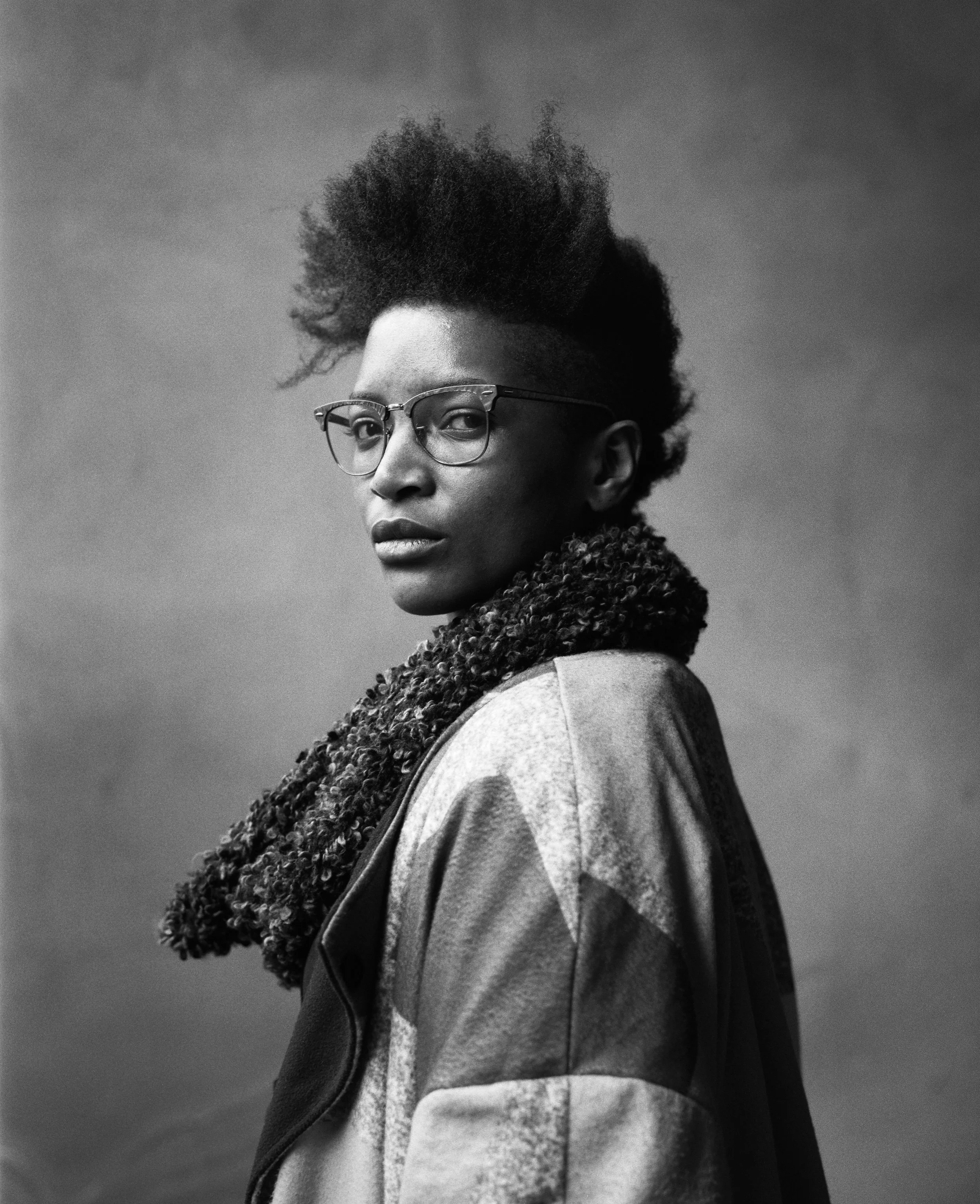
Beldina Odenyo aka Heir of the Cursed | Photo by Simon Murphy
Behind the Portrait with Beldina Odenyo from Issue 3
The country had been locked down for most of the previous year and not being able to perform had hit Beldina hard. She told me she had pivoted to working more in theatre and writing:
“I miss being on stage. For me, it’s therapy really. Not being able to have that release or flex that muscle has been difficult. I did some online gigs, but as time wore on, I found it draining. Not having that immediacy, the exchange. When you finish, you're just back in your room alone.”
Six months after that interview, just as her music was starting to be heard by more people and she was being tipped for much bigger things, Beldina died by suicide.
She was 31.
She left behind boxes of notebooks, diaries, and hard drives of recordings, bequeathed to her older sister, Leah McAleer, a GP based in rural Renfrewshire, with a cautionary note: ‘Don’t read them unless you’re prepared for what lies within…’
What happened to all those stories now fell, in large part, to Leah. Buried amongst them was a digital folder marked ‘Passable Demos’ – songs Beldina had recorded in home studios in Govanhill and Paisley. Not able to let them remain on a laptop, Leah set out to release the album that Beldina never did.
Produced with the help of various musicians and industry professionals, Heir of the Cursed’s eponymously-titled debut album came out last year – as a beautifully-presented 12-track double vinyl. It was launched at a mesmerising show in the Mackintosh Church on 30 August 2025 – what would have been her 35th birthday.
Over the course of an emotionally charged evening, musicians, poets and writers who knew Beldina took to the stage to read and sing her words, backed by an assembled supergroup led by Joe Rattray. Her absence was felt painfully by those packed in the pews.
Govanhill-based poet and activist Jim Monaghan was a close friend of Beldina’s. He opened the night, visibly emotional as he read one of her poems. Remembering the evening, he told me:
“The album is just incredible. I think they’ve done a brilliant job. It’s absolutely representative of her. The launch gig was beautiful, but I was really struggling.
“We did this share circle before it started, asking, ‘What are you bringing to this? How would Bel see it?’ And I just thought, ‘Oh my God, if Bel walked in right now and we were having a fucking share circle, she would call us all wankers and hippies.’ That’s what got me through it – thinking of her sitting in the front row tutting and rolling her eyes.
“And who knew Leah was such a fucking good singer?”
As well as hosting the evening, Leah took to the stage to sing Chasing Ghosts, the third track on the album. Beneath giant portraits of Beldina, she stood in a floor-length green dress, one hand tucked into her pocket, and sang:
From the back of your head
You look like my sister
The curls and the waves
And the mist around your shoulder
I wanna call you by her name
So you can be her just for the day
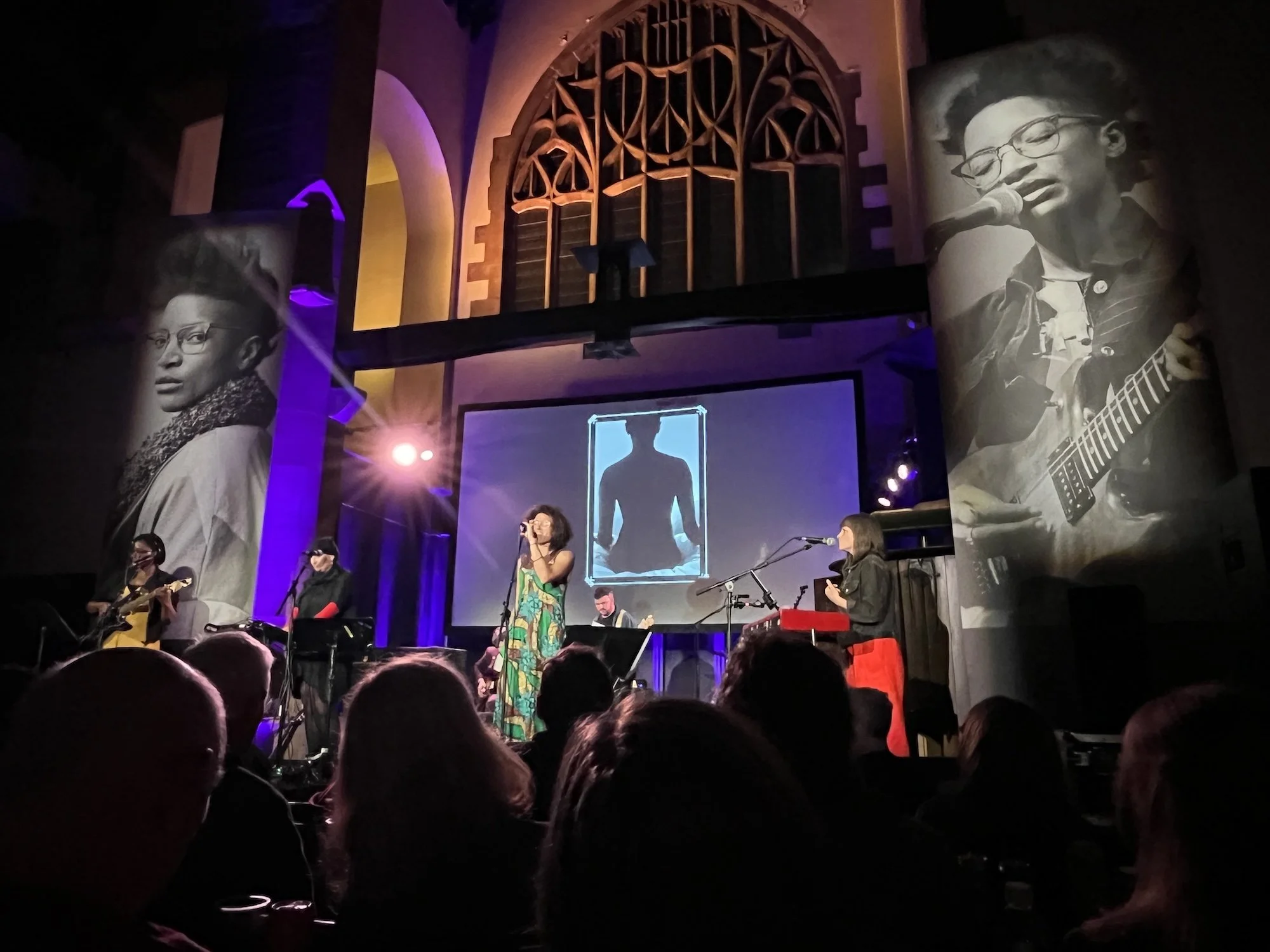
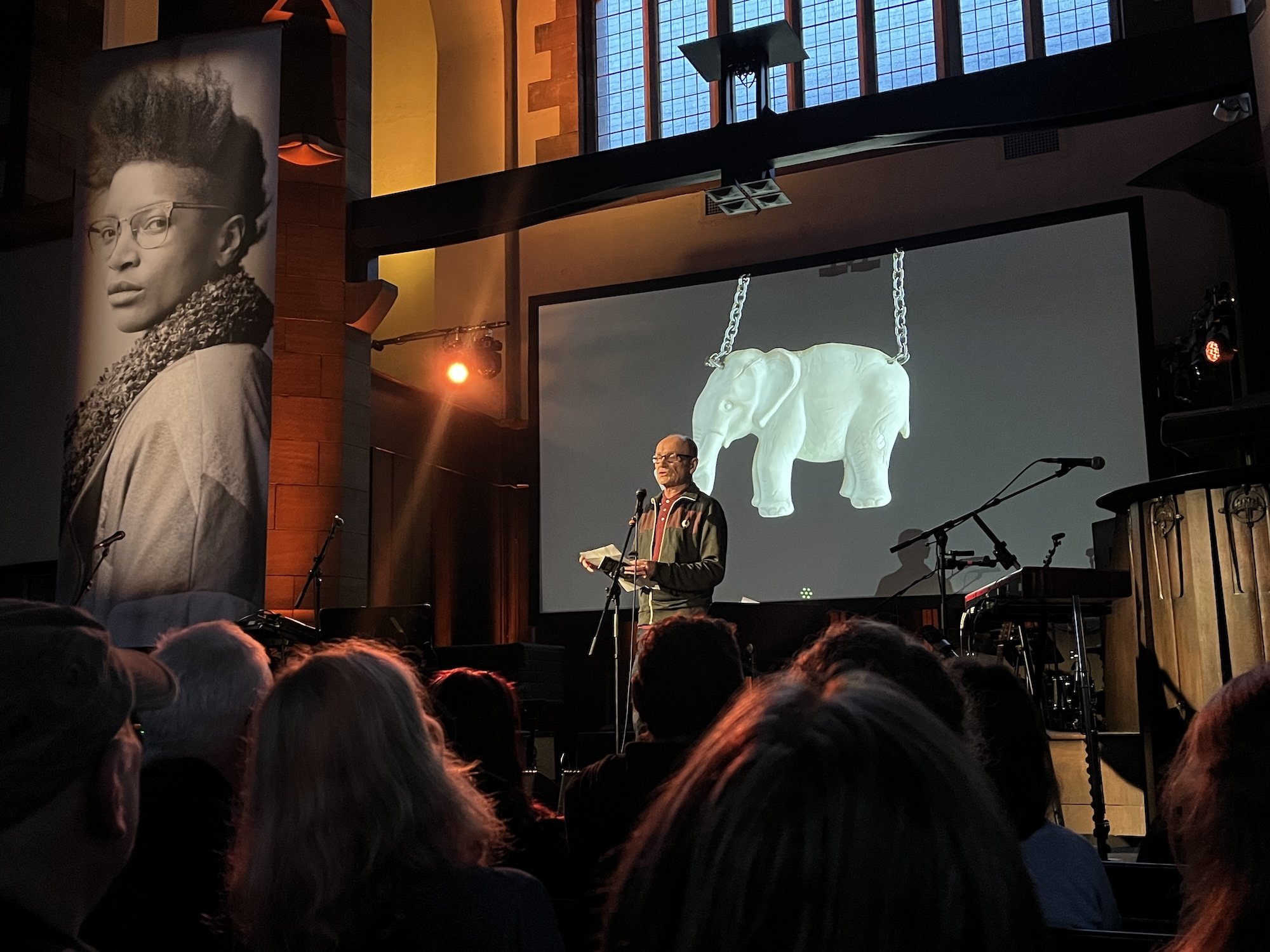
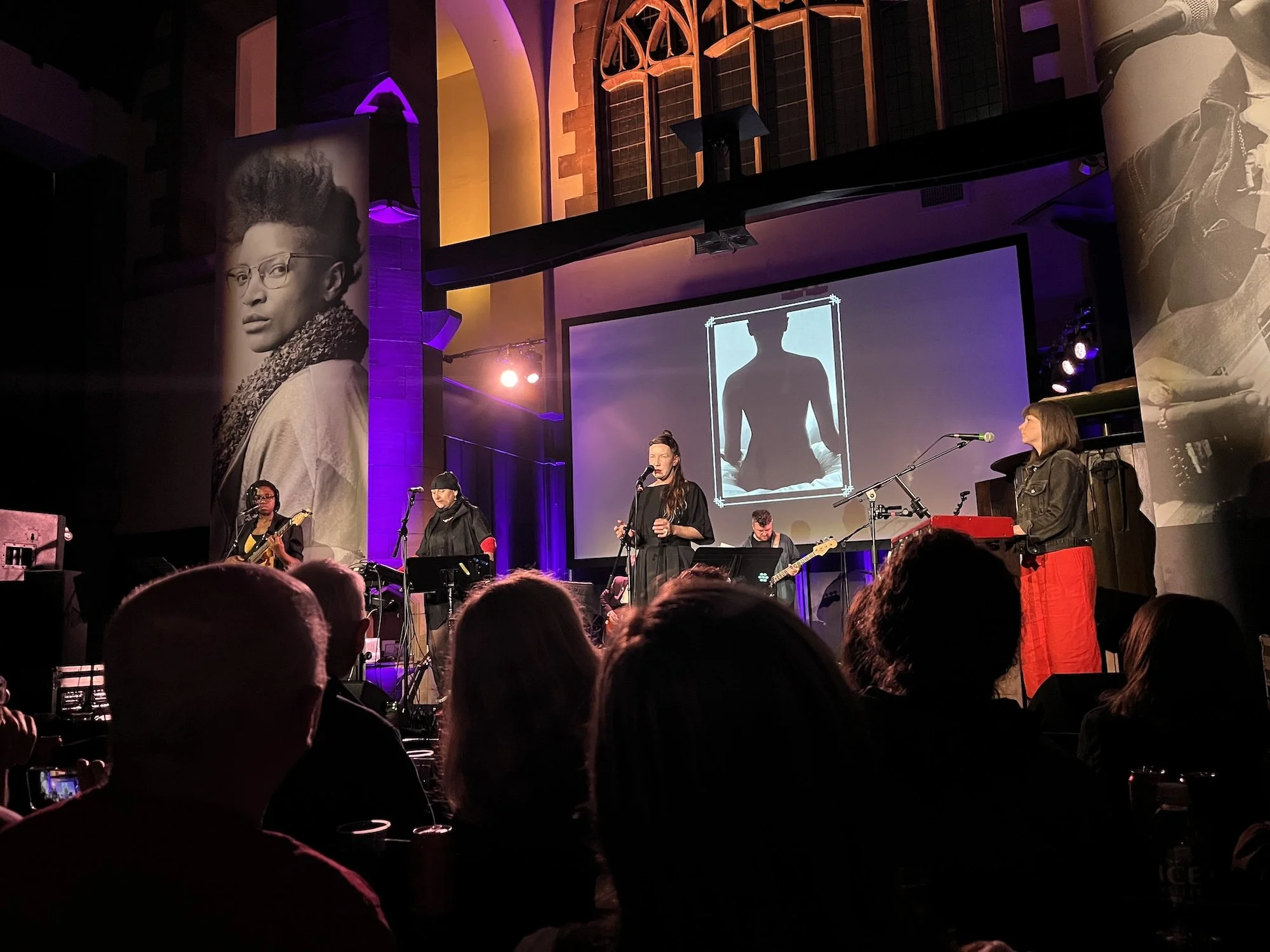
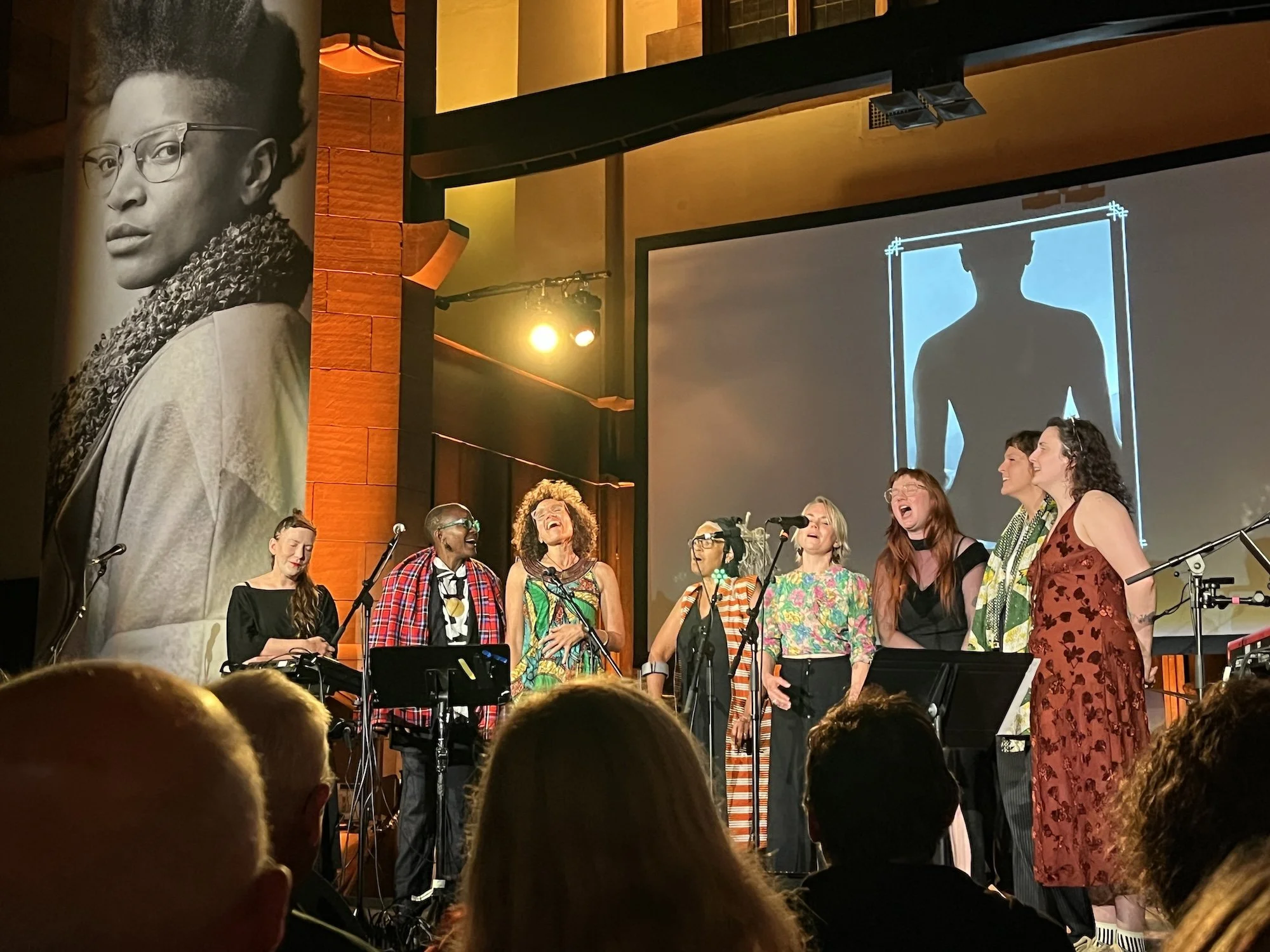
Leah McAleer, Jim Monaghan, Kathryn Josephn and the Cursed Choir perform at the Heir of the Cursed launch event | Photos by Rhiannon J Davies
Almost exactly one year later, Leah and I sat on a wooden bench in her front garden. Her three-year-old daughter interrupts us from time to time with requests for juice, or a push on the swing in the crab apple tree across the street.
I asked Leah what it had been like to sing her sister’s song that day.
“When I first heard that song, I thought that she’d written it about our older sister Cathy [who died at a young age]. I was in floods of tears listening to it. It was only a few months later, we were up at Kelburn [Festival] having one of those late-night heart-to-heart chats, and she went, ‘No, Leah, I wrote that for you.’ And I was like, ‘Fuck, no you didn’t. You wrote that for Cathy.’ And she was like, ‘No, I wrote it for you.’”
“When I worked out that the album launch had to be live – because live music was her thing – I felt like I couldn’t really ask someone else to sing that one because it was so personal. And whether it was about me or whether it was about Cathy, it was about our sisterhood.”
“It took a lot of coaching... But it was really cathartic... Over all the years in which I watched her sing and got so much joy and this kind of warmth and light... I just used to feel that in my heart when she sang, like all the broken bits just all glowing and feeling that old sense of healing and connection. To be able to sing her song for her felt really important.”
When I asked what she hoped would happen next, she told me she struggles with making decisions because it’s not her music – not her stories to tell: “What I really love... is thinking, ‘Okay, this album is going to another human being, and they’re gonna sit down and listen to it, and they’re gonna tell their friends, or they’re gonna sing this song...’ That’s what I want… that’s the sort of life I want them to have.”
Who gets to tell someone’s story when they’re gone?
The album was not to be the only way for Beldina’s songs to reach the world.
Not long after she died, Leah asked her friend, award-winning documentary filmmaker Lou Lockwood, if she’d make a music video for one of Bel’s songs using clips that had been collated by friends and family – to be shown at a memorial service.
Lou had never met Beldina or seen her perform but, watching the clips, she told me she cried her eyes out: “I was just like, ‘Oh my God, this footage is just unbelievable. She’s unbelievable. Something has to happen with this.’”
“It was that selfie recording [of Hold the Mirror], the one with the orange wall with the fan behind her – that’s the one that I watched first in my shed. And I was like, ‘Oh my fucking God… That raw talent, in a little selfie phone footage. Fucking brilliant. And really powerful.”
Lou had previously made films about other artists including Frida Kahlo and Amy Winehouse and the short film planted the seed for something bigger. So about a year later, when Leah told Lou she was working towards finishing Beldina’s play releasing her album, Lou asked how she would feel about a documentary. Leah said she was immediately on board:
“I couldn’t have distilled Bel down into 90 minutes. I just trusted Lou. From my perspective, what I wanted was people to see her, to see Bel, and to hear her voice. That was the crucial thing – to be able to bring together people that loved her and flesh out who she was in a multidimensional way.
“But I’m also aware that Lou had a film to make that other people wanted to watch. It’s not for me to say what parts of her life make the most compelling story, really, because I’m too close.”
When I asked about her motivation, Lou said she shared Leah’s determination to get Beldina’s work out into the world, saying: “She should be fucking global.” The result is a compelling 92-minute documentary which premiered at the Edinburgh International Film Festival to five star reviews.
Bel, from Hopscotch films, was directed by Lou Lockwood, produced by Sarah Howitt and edited by Audrey McColligan. It tells the story of Beldina, her life and her music, but also follows Leah as she takes on the task of bringing her sister’s work into the world.
But how do you tell the story of someone who is no longer around to have a say in how they are portrayed? And who are you telling it for? Lou reflected:
“I’d like to think Bel. My heart tells me Bel. Obviously, Leah is my friend, and I have a huge amount of responsibility towards her too.”
“I’ve made a few documentaries about people who aren’t here anymore. Whose story is it when somebody’s gone and they have no control over it? I feel a strong sense of responsibility.”
To make the film, she immersed herself in what Beldina had left behind: “I’ve read a lot of her diaries and songbooks, saw the videos, chatted to everybody about her, and everybody comes at things from a slightly different perspective. You get a really, really deep understanding of somebody when you dive deep into all of that without ever having met them. It’s a very weird thing, actually...
“And then obviously it’s through my filter, so it’s my take on things, isn’t it? I don’t know how you avoid that, though. I feel like you can’t – you can just acknowledge it.”
For Leah, there was something valuable in Lou being able to do what she couldn't: work through the mass of material and speak to the different people who had known Beldina.
“After she died, I just wanted to go out and speak to everyone and hear what she was like for them. But you can’t... The fact that Lou’s been able to go and gather all that together and make an actual archive of everything – that’s incredible. It’s such a special thing to have someone offer to do that.”
The resulting documentary is a patchwork of past and present – teenage video diaries, professional recordings of her live sets, interviews with those who loved her, and selfie clips.
But Beldina also tells her own story – through recordings of interviews she had done, including for Greater Govanhill, of which Lou said: “Your phone interview was so incredibly important... I went through every interview – all the interviews she’d done – and it was the most honest and the most revealing.”
The life behind the music
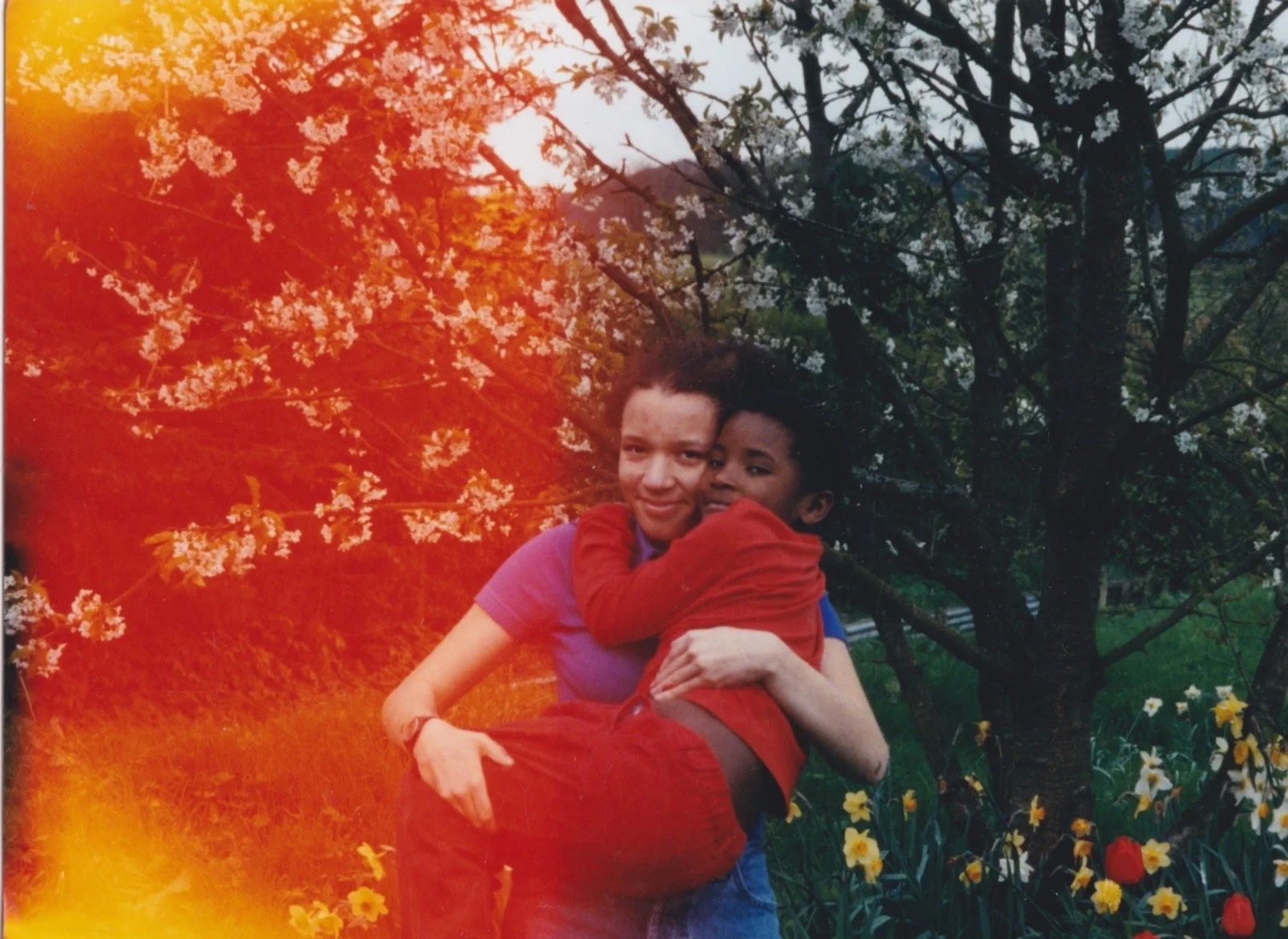
Beldina with her older sister, Leah
When we spoke in 2021, Beldina began her story in Kenya: “I grew up just outside a city called Kisumi in the north-west of Kenya on the shores of Lake Victoria – or the Nam Lolwe is the actual name, not the colonial name. I lived there with my mum and brothers and little sister. I didn’t know my dad until he came to meet me when I was seven and then three weeks later I was in Scotland.”
The film pieces together this sudden upheaval through old photographs and interviews with family members, adding context to Beldina’s words. The result is one of its most affecting sections, revealing the devastating consequences of leaving her mother and moving to Scotland at such a young age.
She told me: “I grew up in a little ex-mining village – Kirkconnel – where dreams go to die… It was pretty grim – very backward, very racist, very isolated. We were the only Black family around and I was the only Black kid in school.
“It coloured things. It did affect me deeply growing up. A lot of it was very visceral and very physical. But it depends how you let it frame you, how you let it affect you. I certainly don’t want to be bitter. They were children and they were ignorant. They were misinformed.”
The film doesn’t shy away from heavy themes, delving into trauma, racism and mental health – but it is cut with light too: the joy Beldina felt for music, for her friends and family. Selfie clips show her dancing and posing, drinking and smoking, laughing and smiling.
As an adult, Beldina lived in Govanhill for a number of years and it features in the film as a positive part of her life. Speaking about the area, she told me: “I lovingly call it Scottish Harlem. It’s got this vibe about it. Very eclectic and edgy. There’s always something going on. It encompasses everything about Scotland in one square mile.
“My partner and I would do the Govanhill samosa tour. You can get the most incredible food and meet the most incredible people. I love McNeill’s pub – it’s an incredible place to spend a day in, playing music in there, picking up a guitar and having a pint of Guinness at 2pm and then leaving and bumping into someone going let’s go to the Dance Hall.
“It’s a really beautiful neighbourhood and it's one of the first places I’ve lived in Glasgow that I felt visible but not watched. I’m just another brown face here. And that felt very liberating.”
Many people around Govanhill have memories of meeting Beldina in one of the local pubs and of the good times they shared. “I can’t stress enough just how good company she was,” says Jim. “I could smile and laugh and cry all at the same time when I think about it, just spending any kind of time with her.”
Leah smiled when I told her this: “It was always amazing spending time with her and seeing her perform or just hanging out or going dancing, all these wonderful things. It was always brilliant being together. But she maybe had about a seven percent turn-up rate.
“It took me a long while to come around to getting over the disappointment of if she didn’t show or she couldn’t come – and not take it personally. And then eventually I was like, but when she does, when she’s there, it is so good. And there’s so much love and joy and fun and laughter.”
“She was such a great sister and aunt, a generous, warm friend. This huge spirit, really strong and really certain, in a lot of ways that I admired, because I was never very certain about anything. And driven as well, incredibly driven and determined.”
An irrepressible talent
Beldina’s musical talent was obvious from a young age. She told me: “I’ve always loved singing. I always sang along to the radio. I tried to harmonise. I got my first guitar when I was eight. It’s the same guitar I play now. I love the tone of it. I love the shape of it. It’s never let me down. It feels like my armour.”
In her teenage diaries shown in the film, she speaks about her ambition: “I want to be a musician, to be famous, I want to show the world my skills.” Clips of her performing at age 14 show a talent and maturity way beyond her years.
Leah said: “Once she’d picked up a guitar and worked out that’s what she wanted to do, she really didn’t deviate from that. She didn’t ever take a kind of safe route of a ‘proper job’.
“All of us were raised in that kind of sense that anything creative is a hobby. You need to go and find something that will support you reliably... And Bel was like, ‘Absolutely not. I’m not going to go and do something that is not what I actually want to do. I’m going to make music. I’m going to write poetry.’”
The most arresting clips from the film are of Heir of the Cursed performing, emotion pouring from her. “It’s more than goosebumps when she sings,” Leah says in the film. “That sound that comes out is the purest expression of what it means to be broken, and what it means to survive.” There are sets for Sofar Sounds and Celtic Connections, but one in particular stands out. She performed Kathryn Joseph’s song The Bird at the Scottish Album of the Year awards, just two weeks before she died.
She sweeps across the stage, cloaked and barefoot, drink in hand, before casting the cloak aside to reveal a shimmering gold dress.
Speaking about that gig, Jim said: “I find that one really difficult... ’cause I think it was her arrival, if you like. The way she performed, the way she moved about the stage... was kind of saying, ‘Here I am. Look at me. I’m the next big thing’... But also now, in retrospect, was she saying goodbye?
“Nobody I knew who was there that night thought anything other than, ‘Oh, she’s the next big Scottish name’. And I know record companies right away were thinking, ‘Who is she? Is she signed? Let’s sign her.’ It was an incredible performance.”
In the film, this performance feels like everything has been building towards it: Beldina commanding the stage, the crowd cheering as she appears on the cusp of the success she had worked towards for years. Then the sound abruptly cuts to silence, the screen to black. The pain of this memory is shown in close-up on the faces of those who knew her. The text on screen reads: ‘Two weeks after this performance, Bel took her own life.’
It’s a devastating moment that lands an emotional gut punch, but as heartbreaking as it is in parts, Jim is clear that the film is ultimately a celebration. “It is an introduction to her work. It’d blow you away. If you’ve never heard of her, you’d think, ‘Oh my God, how have I not heard of her?’”
Leah feels similarly: “The focus of the film is not really about her death, it’s about her life... I’m really keen for her not to be seen as this tragic figure, ’cause she wasn’t. She was a fucking hero and an amazing talent. And everything that she achieved in her life... is hugely important and valuable... not to be overshadowed by tragedy and trauma.”
Leah also hopes the film might prompt a wider conversation about how people working in creative industries are supported.
“I think our support for people in creative industries is inadequate. It’s almost like an archetypal story of the suffering artist, but artists should not have to suffer. It is a job, and it is a vocational job, but there’s no need for people to be suffering. I think we’ve designed systems that don’t support people.”
For Lou, understanding Beldina’s life is important to understanding her music. She hopes the film will bring Beldina’s music to a much wider audience. “I want to hear it on the radio. I want to hear people singing her music in the street.”
But she describes what she ultimately wants people to come away with as “heartbreak and awe.”
“The feeling that I had early doors was the same when I finished: ‘Oh my God, what a fucking tragedy.’ But also, ‘Oh my God, she is amazing.’ Present tense. Still is. The footage is still there. The music is still there... she can live on through her music and what she’s left behind.”
Buy the Heir of the Cursed album on CD or Vinyl here.
Upcoming screenings of Bel
Glasgow Film Theatre | 10th*-17th September | tickets here
Robert Burns Cinema | 16th September* | tickets here
Montrose Playhouse | 18th September |
Dundee Contemporary Arts | 18th, 20th, 21st and 23rd September | tickets here
Cromarty Community Cinema | 20th September tickets here
Macroberts Arts Centre, Stirling | 23rd September*
LAS Port Righ | 26th September
Home, Manchester | 30th September
Sea Change Film Festival | 18th* and 20th* September on Isle of Seil & Isle of Tiree | tickets here
*indicates post-show discussion scheduled
More venues to be announced in due course
If you have been affected by any of the issues raised in this article, you can contact Samaritans free, 24 hours a day, on 116 123. You can also find a wider list of mental health services and resources, including support for people working in the creative industries, on Creative Scotland’s mental health resources page.