Living between two worlds: Reflections on Kashmir
A personal reflection on Kashmir, weaving together memory, conflict, and identity, exploring the everyday realities of fear and displacement alongside the region’s natural beauty, culture, and resilience.
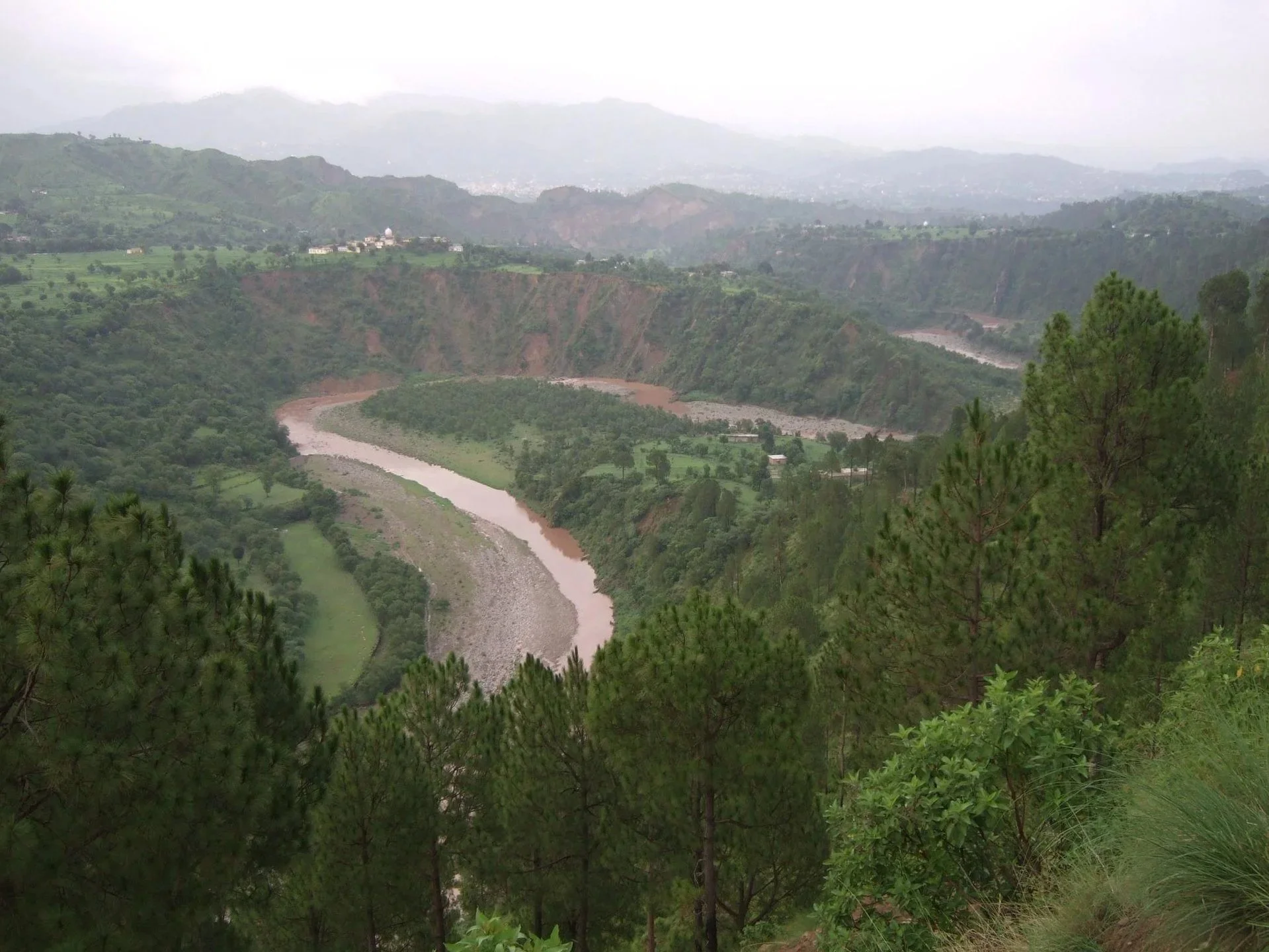
Kotli District Azad Kashmir
By Farhat Rashid | Photo by freakymangoe sourced from Wikimedia Commons
I am originally from the state of Jammu and Kashmir and have been living in Glasgow since last year. The people here are polite, loving, and caring. They spread happiness and smiles, giving a sense of peace and belonging that is hard to describe.
Kashmir is controlled by three different countries: India, which controls the majority of Kashmir, including Jammu, the Kashmir Valley, and Ladakh. Pakistan controls Azad Kashmir and Gilgit Balistan and China controls areas in the northeast, which include Aksai Chin and Shaksgam Valley.
I belong to the Kotli district of Pakistani occupied Kashmir. Its beauty is enhanced by its location on the banks of the Poonch River, home to many historical and attractive sites. While the place we live becomes our country, the place we are born and raised remains in our memories.
This is the first year we have lived peacefully. Daily violence in Kashmir, along with people’s helplessness and compulsion, often makes me impatient. In such circumstances, I feel it is my responsibility to inform society about the ongoing situation. Perhaps my efforts are small, but they give me some satisfaction that I have contributed in my own way.
When I ask people about Kashmir, they share interesting views. Many want to experience its beauty, yet say visiting feels dangerous. For locals, the danger comes from agencies and forces that have turned the region into a battlefield since 1947, where enforced disappearances are common. The fear of war can be more painful than war itself.
In my family, this is the fourth generation growing up with bomb blasts and the fear of the armed forces. Kashmir is blessed with natural beauty, yet it lacks prosperity for all. Life and honour are not safe. Basic needs remain unmet. There are resources but no rights, assemblies but little authority, rulers but limited power.
Policies of divide and rule continue, aimed at controlling people and protecting occupiers’ interests. The use of force breeds hatred, leading to resistance. Recent movements across Jammu and Kashmir reflect oppression, conflict, and instability.
Kashmiris are peaceful and value justice, yet face violence, sometimes for demanding rights, sometimes for challenging systems, sometimes under accusations. Kashmir is a paradise but its people face hardship daily.
Through my writing, I appeal to international human rights organisations, the British government, and especially the United Nations to ensure the right to self-determination for a peaceful resolution of the Kashmir issue, a conflict dating back to 1947.
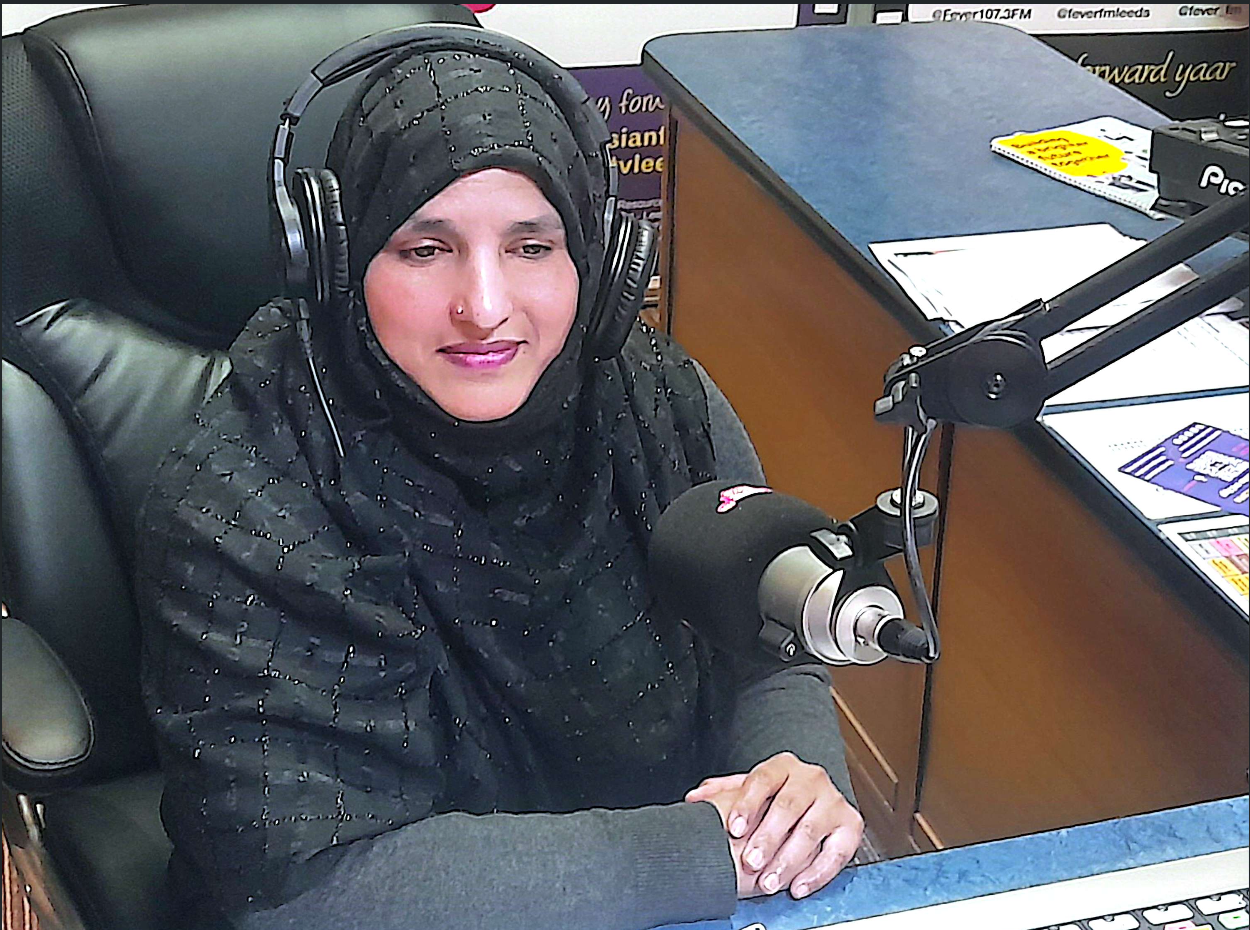
Farhat at a radio workshop
In Indian administered Kashmir, conditions are also difficult. Enforced disappearances, violence, and restrictions increased after the removal of Article 370 in August 2019.
Curfews, internet shutdowns, and force were used to control public reaction, leaving many injured or permanently affected. Excessive use of pellet guns due to which a large number of citizens being physically paralysed and some will be deprived of the blessing of sight for life. Leaders and civilians were detained, and daily life remains uncertain.
For example, reports and allegations from some sources claim that, on May 28, 2025, two brothers from Bagh district, Zarnoosh Naseem and Jibran Naseem, were killed in what has been described as a ‘fake encounter’ involving security agencies and local police. Their family continues to seek justice and accountability.
Similarly, in 2013, reports claim that freedom fighter and activist leader Arif Shahid was targeted in front of his residence. Global Voices reported that numerous youth are being offloaded from the plane by PIA during the flights, who had supported the ongoing fundamental rights movements in the state.
Last year, famous Kashmiri journalist Sohrab Barkat (who was on his way to attend a United Nations conference) was arrested; he claims this was not only because he covered the ongoing protests but also because he exposed the state’s tyranny and excessive use of force to the world.
As a result, a strong public reaction began to emerge, which was suppressed by force. Those fighting for their freedom, including women, have also been imprisoned. Several youths were arrested and have faced forced disappearance during house to house searches. Women are the worst victims of foreign occupation, as sexual violence is used as a weapon of war by the occupiers against locals.
Despite these hardships, Kashmir’s natural beauty remains extraordinary and close to my heart. It is a land rich in resources, culture, and diversity and I want to share some of this with you.
Favourite foods and drinks
Kidney beans and white rice are popular dishes but cornbread, mustard greens and lassi also have their own unique taste.I cook chicken biryani once a week but my kids always miss their favourite – Kashmiri kulchas. It’s a delicious, bready bakery item, not found here. We eat it by soaking it in tea; it's a nice, healthy breakfast.
Another delicious dish which I miss a lot is Kashmiri pulao. Its main feature is the addition of saffron and the taste is sweet and salty.
Sugarcane juice, satosharbat, lemon sherbet and lassi are my favourite drinks. Kashmiri tea is my favourite. I drank a lot of it in Kashmir, but I don't know how to make it the same and I miss it very much.
Religions and Languages
Jammu and Kashmir is has different religions, colours, races and cultures. Famous religious groups include Christianity and Sikhism, Hinduism, Buddhism and Islam. The latter three are practised by most people. There are different local languages, including Sheena, Balti, Broshki, Khwar, Wakhi, Doomaki, Gojri, Pahari, Poraig, and Pashto.
In some areas, Punjabi is also spoken, while official languages are Urdu, Hindi, Kashmiri, English and Dogri. The most spoken language is Kashmiri. I speak Pahari, which roughly translates to mountain language, and feel proud of it because I communicate with my loved ones in my local language.
Cultural clothing
Where I come from, our traditional dress is Shalwar Qameez and Dupata, and gents like to wear white suits with black or blue waist coats. Kashmiri pheran is a traditional dress worn by both men and women in the Kashmir Valley. Similarly, in other regions like Gilgit Baltistan and Ladakh have their own traditional dresses.
Ring Shawl
The most expensive fabric among Kashmiri products is the Ring Shawl, locally known as the Pashmina Shawl. It is made from the wool of a special type of goat which is found in Ladakh. Kashmiri pashmina shawls were highly valued in 19th century Europe and were especially popular among British royalty and aristocracy, including Queen Victoria.
Homes
Visitors and locals stay in traditional wooden houseboats called shikaras, and use kangris (coal heaters) to keep warm. The lake also holds deep personal significance, a cherished memory of a family visit in 2014 and moments shared with a loved one who has since passed away.
Nature
Tatta Pani is famous for its hot springs, so hot that we can even boil an egg. It is a source of healing, and patients with skin and joint problems often go here to feel better by bathing in this water. My grandfather used to go there and take baths to help with his joint pain.
Kashmir is a diverse region, rich in resources, views and kind people. As we recently celebrated Eid, I recall fond memories of a family trip to Banjosa Lake in Rawalakot, district Poonch. Surrounded by lush trees, the lake’s green reflections create a serene and beautiful view. It was a joyful trip that remains a cherished memory for us. We wish to visit again sometome and enjoy its beauty and calmness.