Scots Songs and gathering the folk Across Glasgow & beyond
Folk music was never meant to be a specialised or expensive pursuit. It belongs to the weavers, the miners, and the people. Rebecca Morris traces her journey through the songs of Matt McGinn and Robert Burns, highlighting that singing together is a radical act of cultural preservation and community strength.
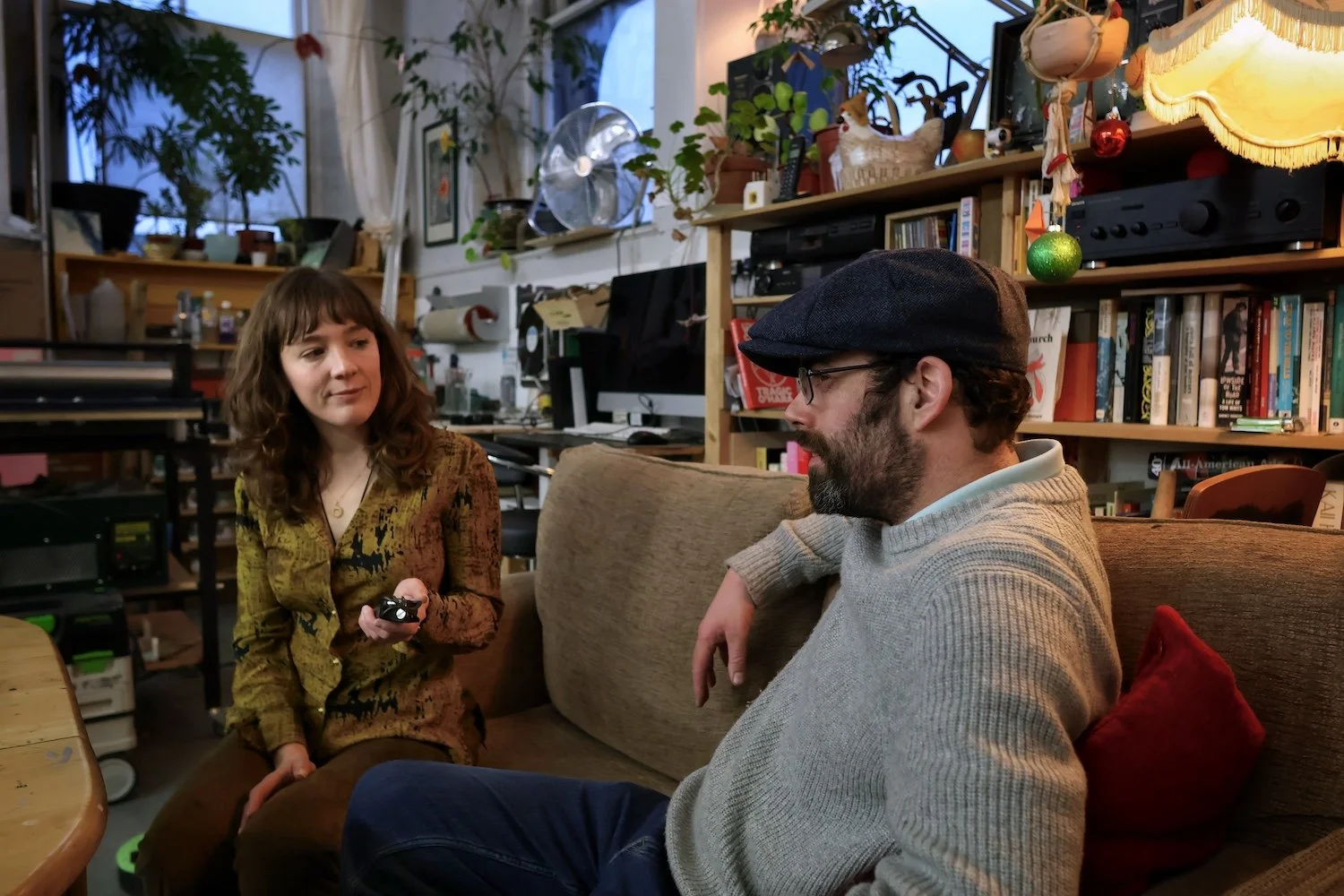
By Rebecca Morris | Photos by Ilaria Lipperi
I didn’t truly appreciate the wealth of Scots songs and ballads until, ironically, I moved to Andalusia to learn about flamenco. Participating and learning from a culture that took pride in its dialect and worked hard to preserve its folk traditions was heartening to witness. I went to Jerez de la Frontera to learn flamenco but I found myself, as I picked up the guitar for the first time, fumbling through old Scots ballads.
I recalled songs from my youth: I remembered my uncle singing Now Westlin Winds, an ode to nature by Ayrshire’s ain Rabbie Burns; or humorous Glesca folk ditty, The Red Yo-Yo, by Matt McGinn from Glasgow’s Calton district, a favourite among my aunties and cousins.
While running the Rebel Choir in London, I rediscovered Matt McGinn through teaching the song, If it Wisnae for the Union, with its clever refrain: “Ye widnae hae yer telly the noo if it wisnae fer the union.” Later, while facilitating workshops to make a youth-led podcast about mill history with ReMode in Paisley, I stumbled upon The Wark o’ the Weavers. Its chorus, “If it wisnae fer the weavers what wid we dae?” revealed that Matt McGinn, in true folk fashion, had updated this tune to reflect the time he was writing – in 1960s Glasgow.
Matt McGinn was born only a stone’s throw away from my paternal grandparents, both reared in Toonheid. Despite my parents leaving Glasgow to start a family in London, and even after I escaped to Andalusia, I was continuously led back to my roots through songs.
Growing up in multilingual London, most of my friends spoke another language. Mine was Scots. In my early teens, I moved to Glasgow, left again when I was an adult, and eventually returned (again). When I began to find my voice in folk, wrapping my tongue and mouth around the vernacular of my forebears felt good.
The beauty of learning these local languages and dialects is that they belong to anyone, whether they are “native” or not. In Andalusia, I felt more included when I began to learn the dialect through song and local expressions. In 2025, we saw Gaelic and Scots become protected languages under the Scottish Languages Act. Though better late than never, it follows decades of excluding Scots from mainstream education. Children were discouraged from speaking the Scots that they heard at home and in the streets. My dad was confused by the fact that he was required to say “yes” at school, when everywhere else it was “aye.”
There was a recent stramash when a right-wing English politician criticised the fact that Glaswegian children were multi-lingual, calling it “a cultural smashing.” In fact, many Glaswegian children have always been multilingual, as they spoke Scots. The future of Glasgow is a hybrid of international dialects and languages, including the new commitment to the Scots heritage. At a Scot’s songs workshop I ran for Greater Govanhill Magazine at Tramway, we sang lullabies and Matt McGinn. Everyone participated and learnt something new, whether they were familiar with Scots or not at all.
These songs remind us of our histories and common threads. The mill and weaving songs are particularly resonant. How many of us across the globe had family who worked in mills or as weavers? Last year, I taught mill songs to a community of women who claimed they couldnae sing. Yet they gae it laldie, performing to enthralled audiences, including at Paisley’s historic Sma’ Shot Day festival.
Gathering to sing is about more than wellbeing. It is reclaiming a common folk culture, owned, for and by the people. These songs were written by weavers and miners. For centuries, balladeers roamed the streets telling news of other towns and selling their songs, until they were prohibited and dubbed “beggars.” Nowadays, folk music has been rebranded as a specialised and expensive pursuit. Yet folk music has a life of its own: it is always transforming.
In that spirit, I am continuing this project with communities across Glasgow, Renfrewshire, and Ayrshire. At my job as a practitioner at Battlefield Primary Afterschool Care, I teach enthused weans cherished but endangered Scots songs, such as Mairi’s Wedding. I am also collaborating with the visual artist, Stuart Murphy, researching ballads that bring alive his art, which looks at the lower classes and vagabonds of Scotland’s past.
Stuart’s practice is steeped in local social history, from his North Ayrshire hometown of Kilbirnie to his studio in Glasgow’s Calton. The Calton, famous for its weaver martyrs, brings us back to Matt McGinn, one of Glasgow’s most prolific working-class songwriters, who wrote as many songs as Robert Burns. Let’s not forget folk artists who celebrated local culture with humour and heart. Let us continue the tradition and make new ones, reflecting the Glesga we know and love today.
Connect with Rebecca & Stuart on Instagram: Rebecca - @rebecca_maria_morrisStuart - @stuartmurphysocialhistoryart
The publisher acknowledges receipt of the Scottish Government’s Scots Language Publication Grant towards this publication.
