Stories From our Streets: Coplaw Street
From horse-drawn trams and Spitfire pilots in kilts to the hidden VR post box still standing today, Coplaw Street has been the beating heart of Govanhill for over a century. Stacey Anderson takes a walk through time, uncovering the stories of the hospitals, drill halls, and community hubs that shaped this iconic street throughout time.
By Stacey Anderson | Photos by John Bowden
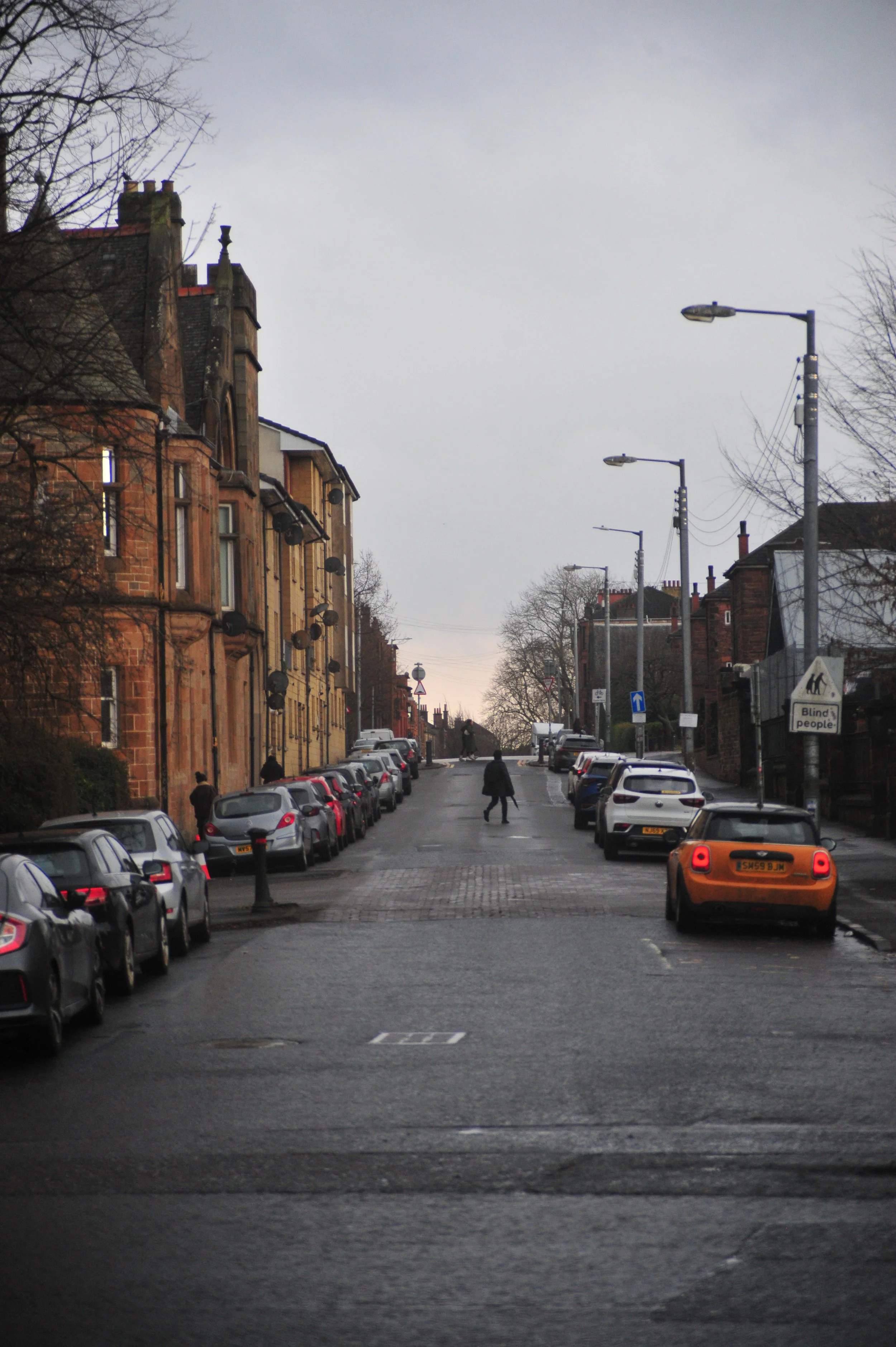
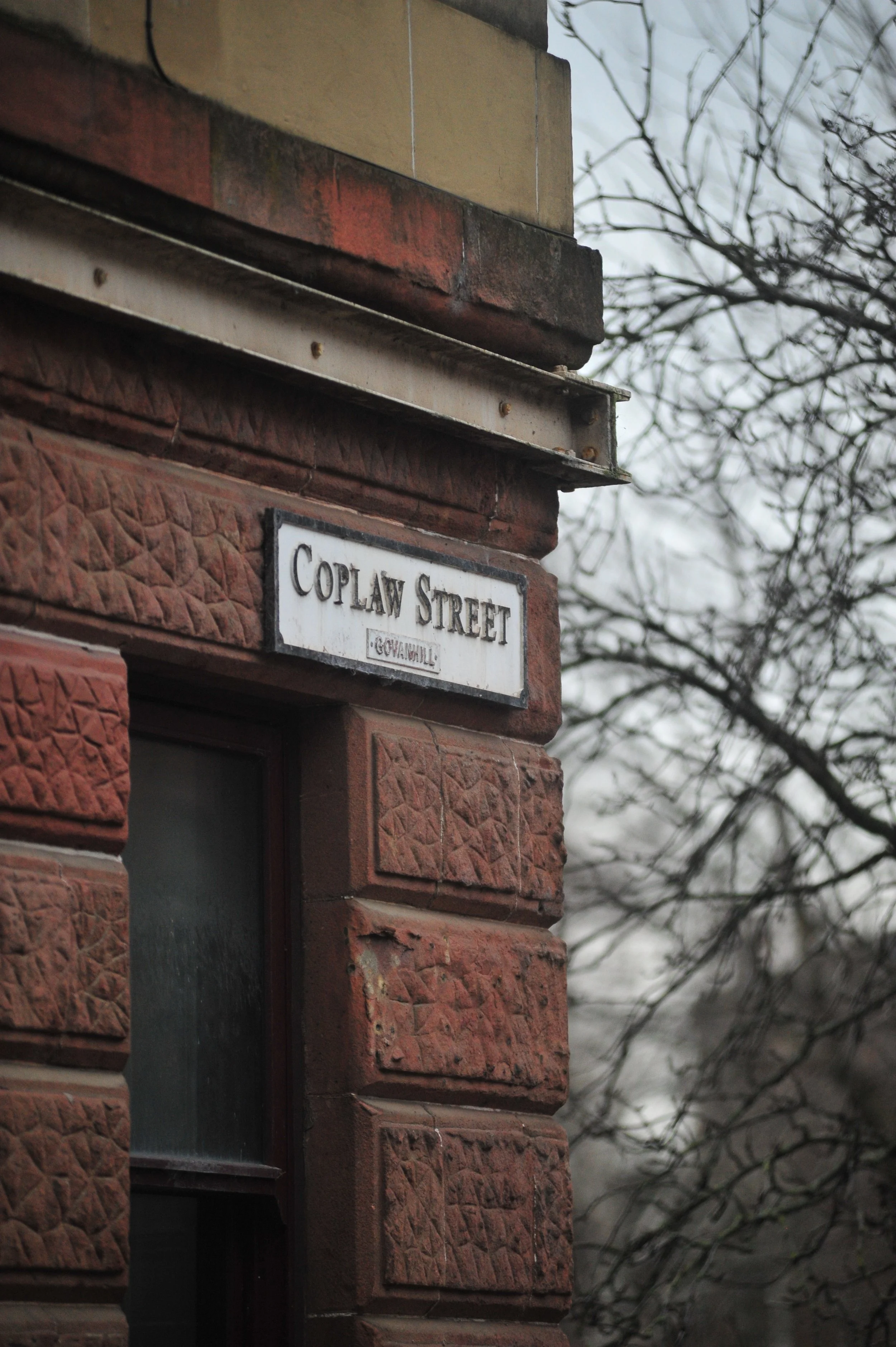
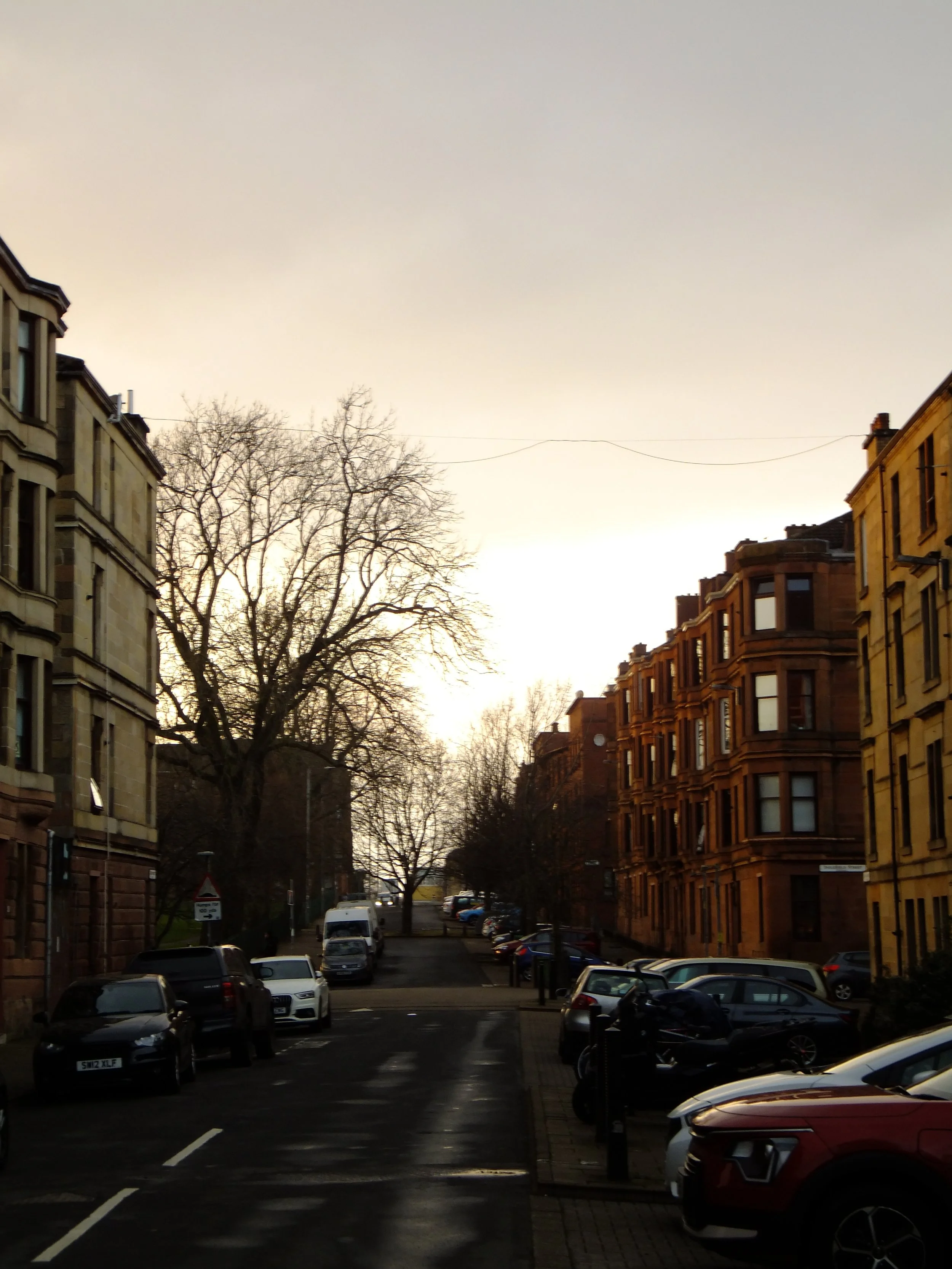
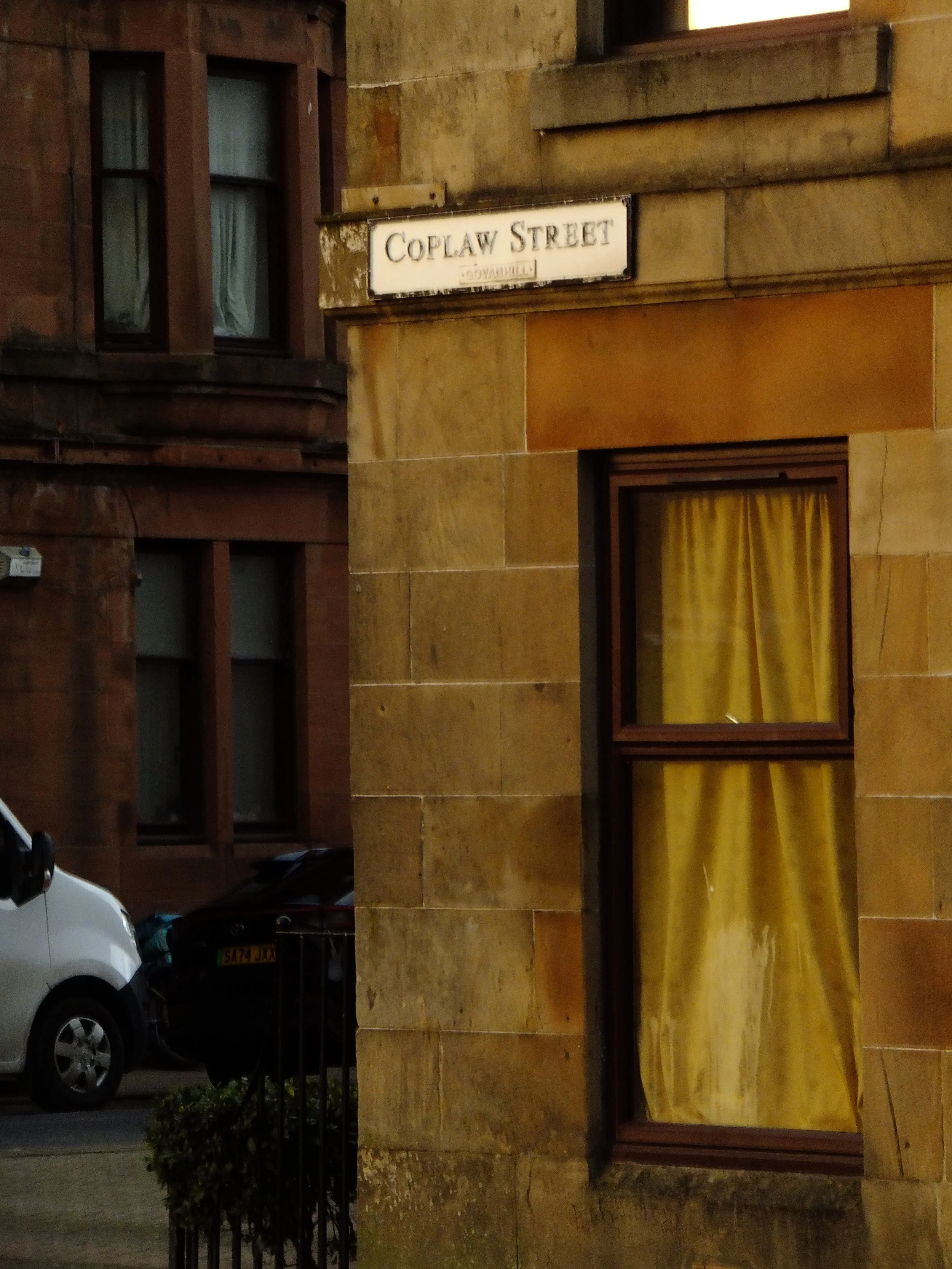
Coplaw Street runs fae two ae Govanhill’s great roads, spannin Pollokshaws Road tae Cathcart Road. As such, it’s been a hub ae activity fur the area ae Govanhill since its inception, makin it hame tae a number ae notable buildings.
Its namesake originates fae the area itself which wus, fur a time, known as Coplawhill/Coplaw Hill. It’s thought that there wus an incline which wus levelled oot fur the creation ae Vicky Road in the mid 19th century. At this time, trams wur aboot tae be introduced tae the city n a major line connectin the city centre tae Queens Park wus incoming. Coplaw Street itself saw the Number 1017 open-topped double-decker used as a trainin car fur new employees on a dedicated tram line on the street. Wit we now know tae be Tramway used tae be known as the Coplaw Horse-Tram Depot.
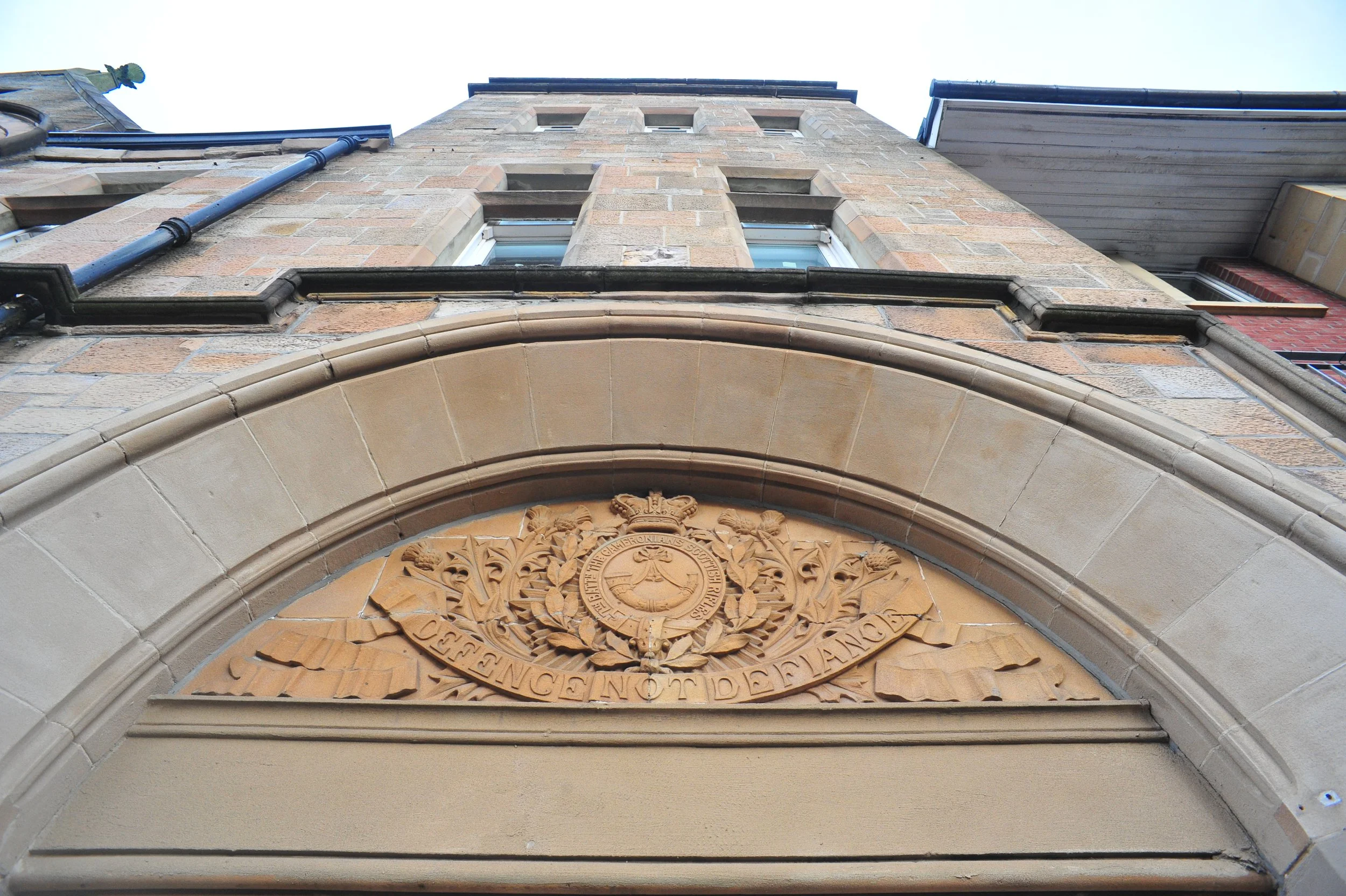
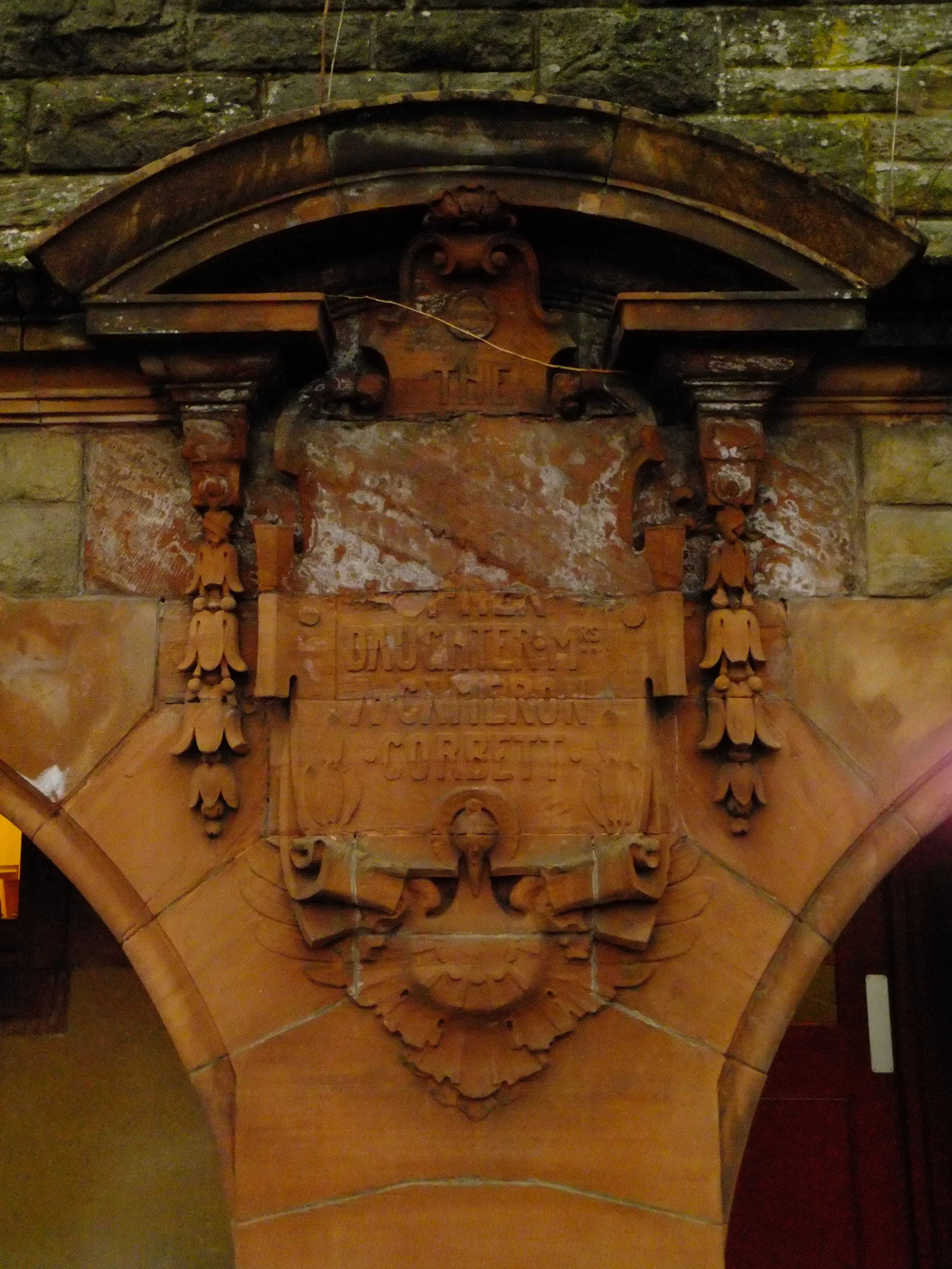
At 41 Coplaw Street, just aff Pollokshaws Road, you’ll see its hame tae a listed building, the Third Lanark Drill Hall. The remaining hall wus an extension ae the building, designed by John Bennie Wilson. Opened in 1884, it wus initially part ae the headquarters ae the Third Lanarkshire Rifle Volunteers, who wur an autonomous voluntary regiment until they wur absorbed by the British Army. The battalion would mobilise at the Drill Hall before bein deployed tae the Western Front durin’ the First World War. As part ae the Cameronians (Scottish Rifles) regiment, the Hall wus used until the battalion disbanded in 1967. A crest payin homage tae the 7th Cameronian Rifles is still visible above the former entrance. The hall later housed a leisure centre before ultimately bein’ converted tae residential apartments at the start ae the millennium.
Just further up the road is where an RAF building used tae reside on the corner ae Vicky Road n Coplaw Street. Around the 1920s, this woulda been the Headquarters for Govanhill’s own Auxiliary Air Force Squadron. This voluntary unit wus notable as the first ae its kind n they would go ontae fly Spitfire planes in World War II. Proud ae their Scottish roots, they wur the first tae dawn kilts as part ae their uniforms!
This building wis then purchased by The Jewish Welfare Centre an wis a hub fur various Jewish organisations between 1970 and 1996. It served as the headquarters fur both the Glasgow Jewish Welfare Board n the Glasgow Jewish Representative Cooncil n also provided the meeting spot fur the Jewish Blind Society. A restaurant, Freeds, provided kosher meals n there wis a small theatre for the Avrom Greenbaum Players, an amateur company, put on performances includin works fae local talent, as well as mare notable playwrights, the likes ae Alan Bennett.
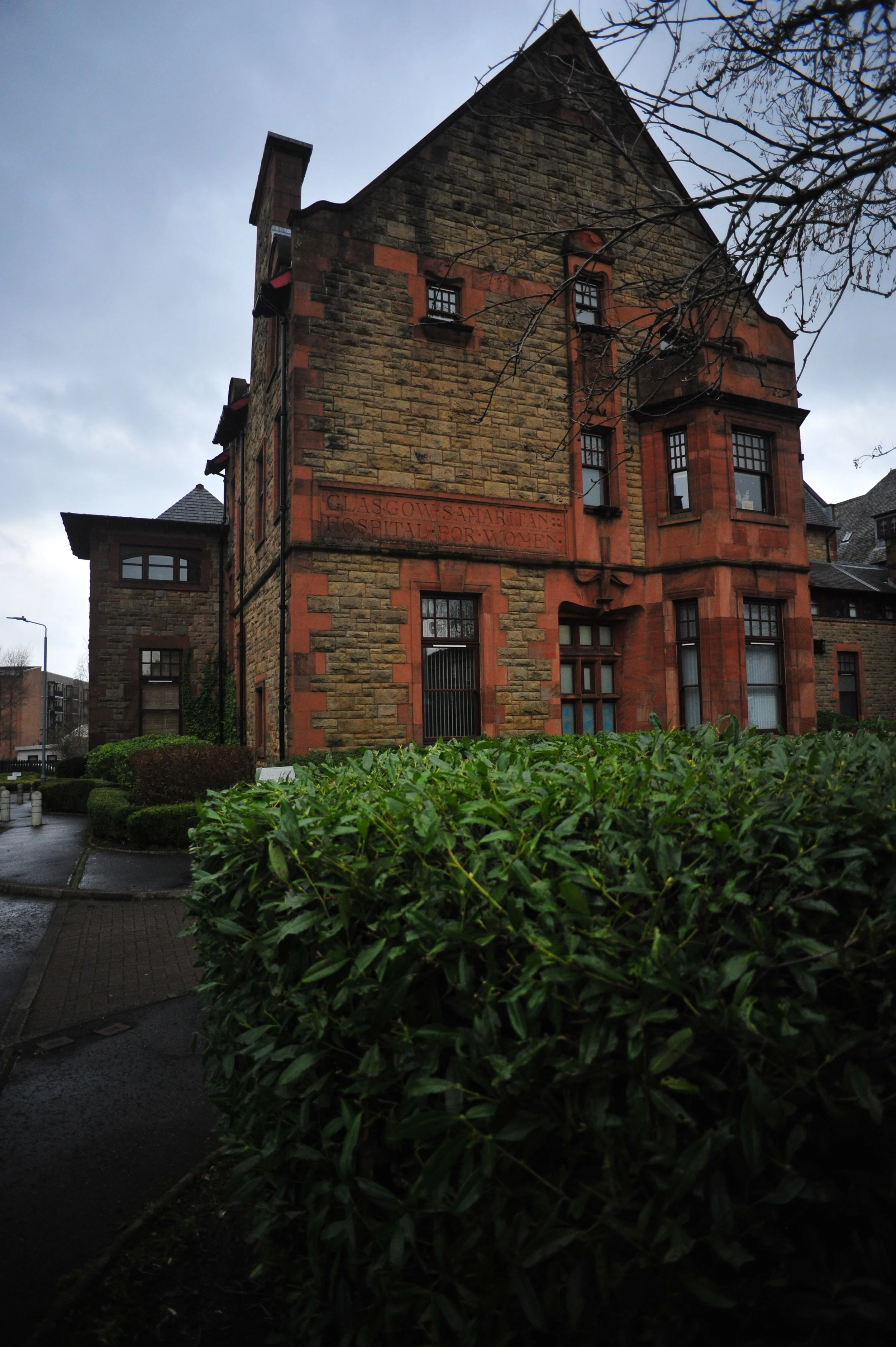
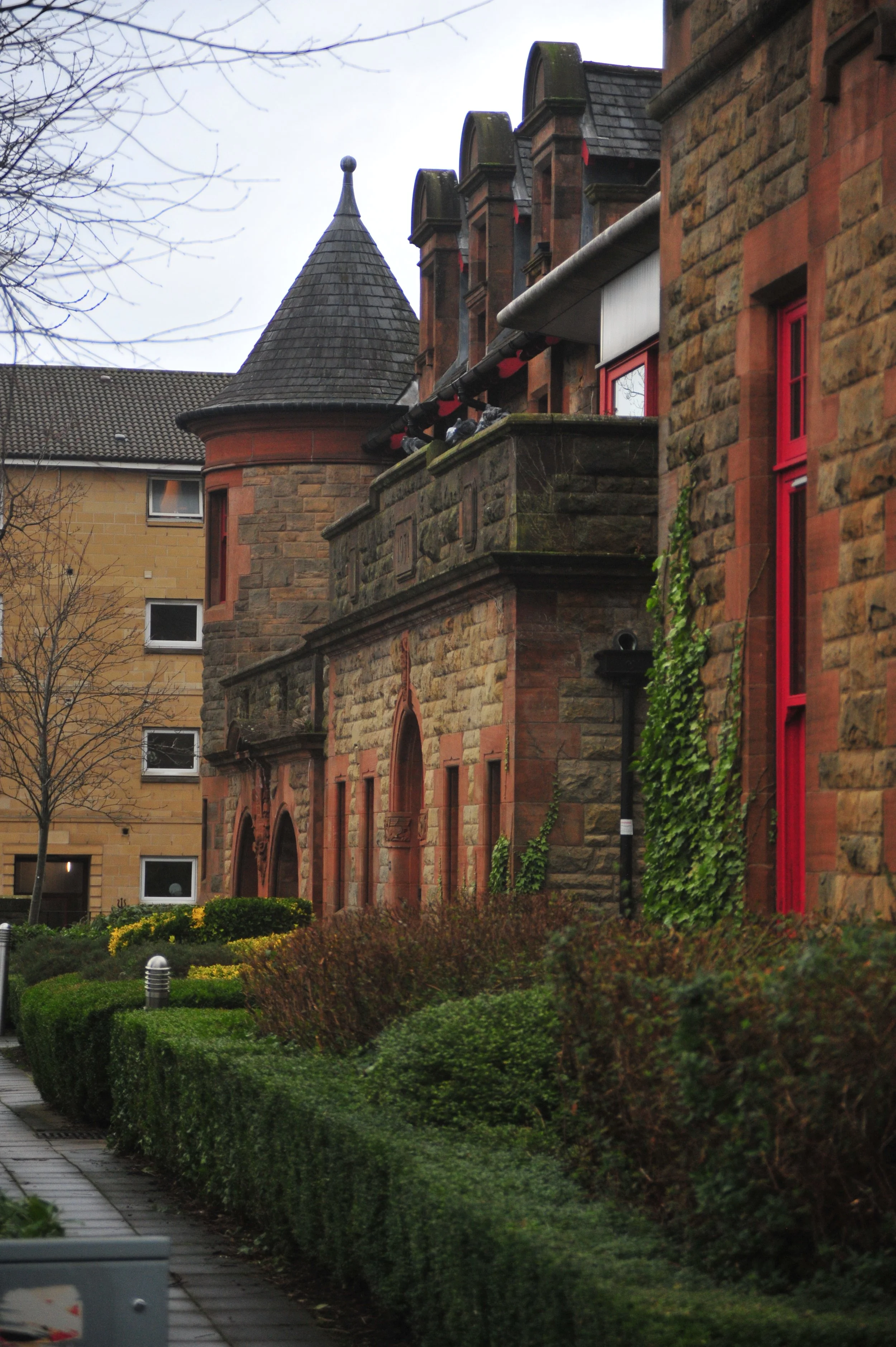
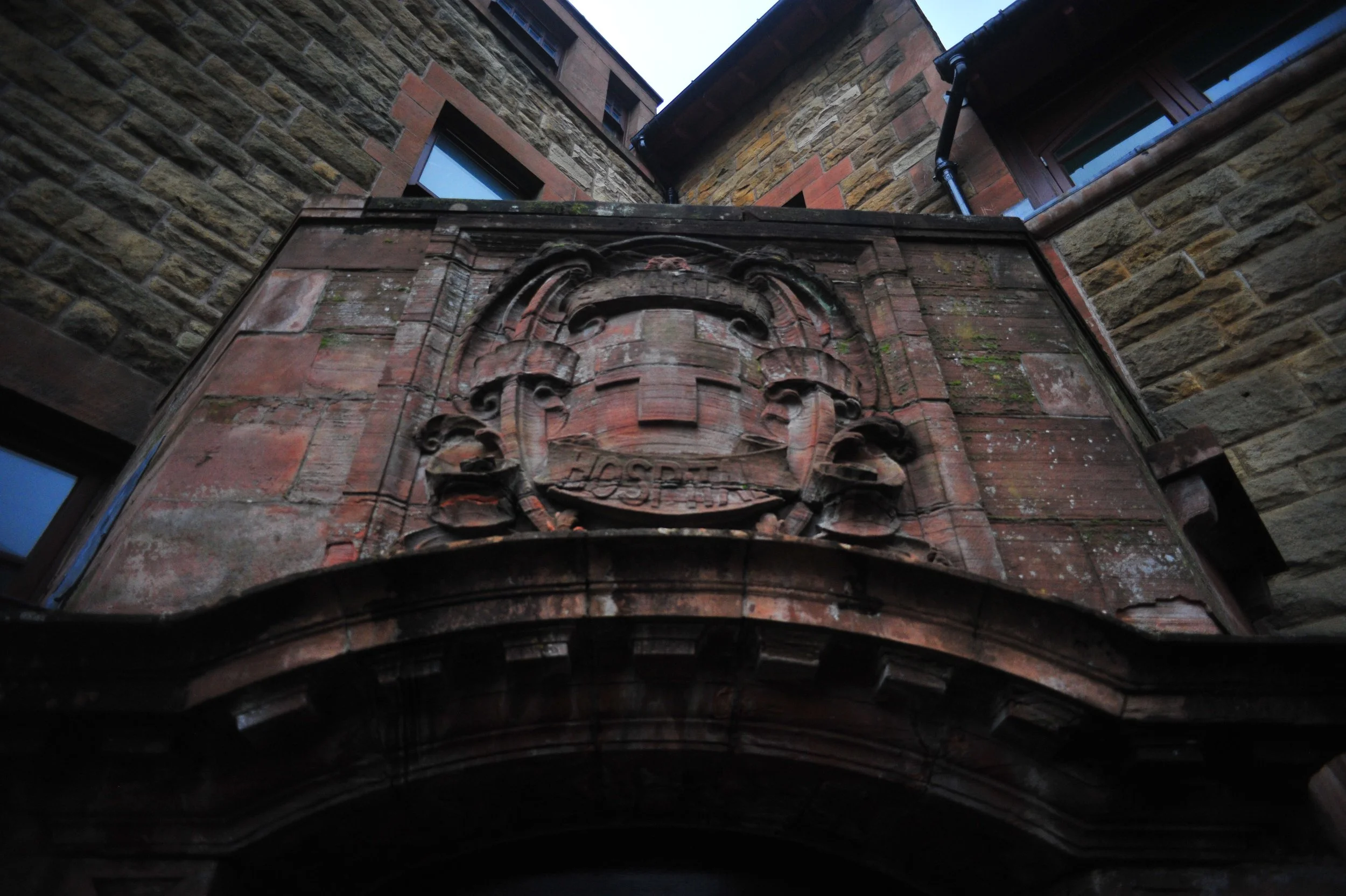
Movin along the street we come tae the Glasgow Samaritan Hospital for Women, at the other side ae the Vicky Road junction, which opened its Govanhill premises in 1896. It wus a purpose-built project, designed by architects MacWhannel n Rogerson utilisin red sandstone brick n red dressings in a mixed Art Noveau (which ye can see in the asymmetry ae the building) n Scottish Renaissance and Baronial style (giving the building a fortified look with the conical turrets). As the demand for gynaecology specialities grew, the capacity ae the hospital gradually increased tae accommodate additional wards, wings wae new specialties, n nurses’ hames. The hospital wus originally funded by the local branch ae the Ladies’ Auxiliary Association n became part ae the NHS followin World War II. It wus in operation until 1991 n it then took on a new chapter as residential flats.
In front ae the former hospital, ye will see a seemingly ordinary post box. However, upon a closer look ye will see it’s marked wae a ‘VR’ which indicates that it wus built during the reign ae Queen Victoria. Its design is purported tae be in celebration ae Queen Victoria’s Golden Jubilee n woulda been handy fur the comings and goings ae the hospital.
Your memories of Coplaw Street
Angela Murray remembers the Forsythe Memorial Church, which was open from 1903 to 1983 and then converted into office space. Angela notes that many family members were involved in the church and it’s where she was baptised. She added that her papa was a church elder and her mum and Aunty Isa played piano for the Sunday School.
The publisher acknowledges receipt of the Scottish Government’s Scots Language Publication Grant towards this publication.