They don’t see us, they don’t hear us
Rahela Cirpaci, a community organiser in the Roma community and in the Govanhill area, speaks about the racist treatment she has been subjected to and about how projects such as Climate Sisters have been key spaces for advocating for change.
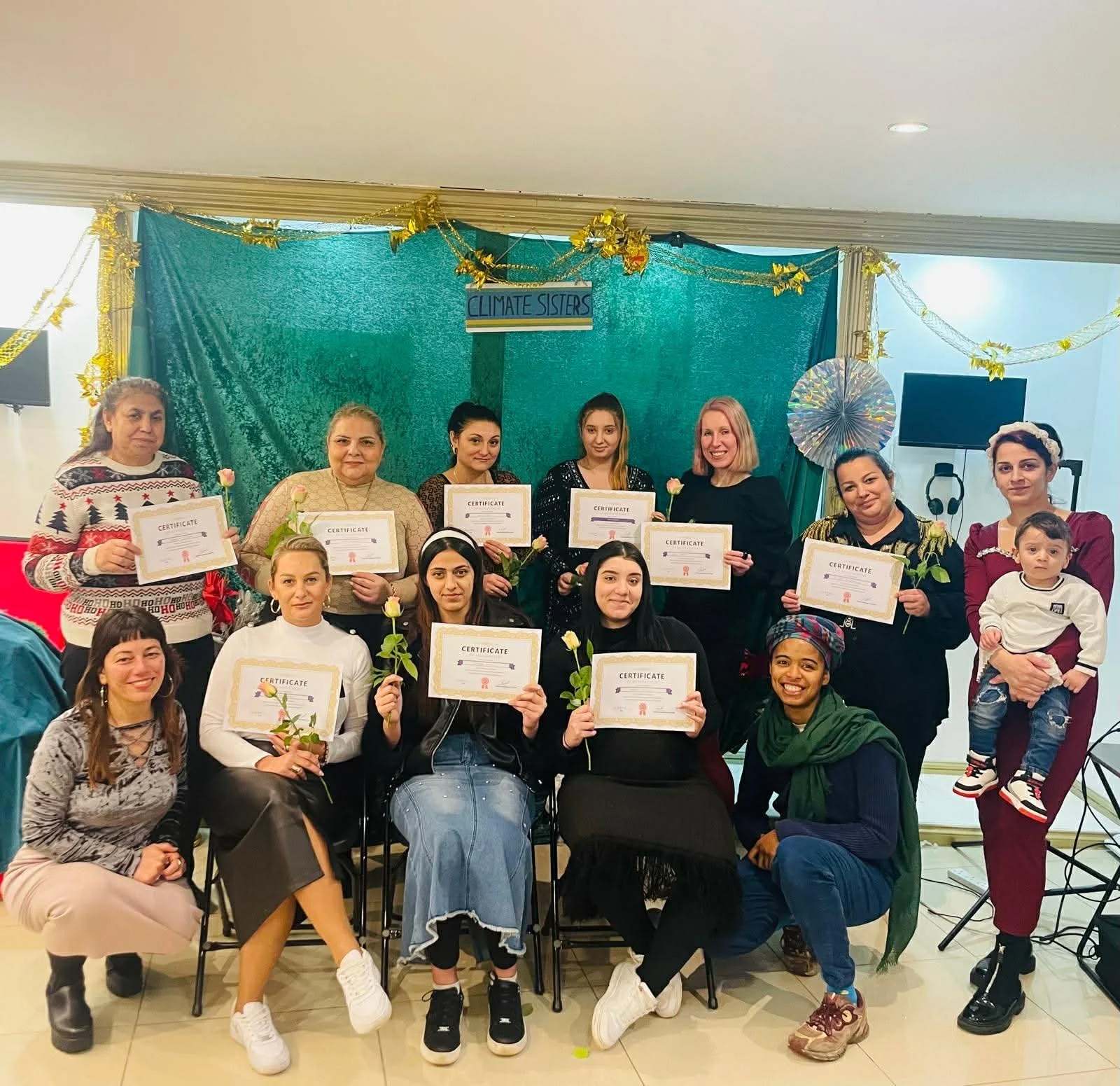
By Rahela Cirpaci | Photo of the Climate Sisters courtesy of Romano Lav
I teach Romanes – the language of the Roma people. Over the years, I have had students from all walks of life. My students are normally either Roma people wanting to reconnect to their roots, or non-Roma people who want to learn in order to connect and create a bond with their neighbours.
It fills me with joy to see people interested in learning about our beautiful language. It has survived despite violent attempts to silence us.
I feel passionate about keeping my language alive – just like Scots speakers do. Like Scots, our language has been suppressed and marginalised.
I want to focus my story today on a recent example of feeling voiceless.
My sister-in-law, who is also my neighbour, recently experienced serious housing issues. She has three children, between two and five. They had been living with no hot water and heating for four months, during the coldest time of the year.
She contacted her housing association many times to get the boiler fixed. When someone eventually arrived, he was rude and condescending. He refused to work on the boiler because she is also dealing with a mice problem – something many people in Govanhill experience. He blamed her and said replacing the boiler would cost thousands, asking her, “Do you know what thousands are?”
The same engineer later came to my home for a gas inspection. He again refused to work due to pest issues, turned the heating system off, and complained to the pest control worker who was present. I told him he couldn’t leave us with no heating or hot water with children. He didn’t care and said he would not return until the pest issues were resolved.
My sister-in-law and I made a formal complaint. Your home should be your safe space – we felt this man brought discriminatory beliefs into our homes.
I know my rights. Tenants have a right to heating and hot water, especially in winter with small children.
We are also part of the Climate Sisters project, run by the Women’s Environmental Network. My sister-in-law bravely presented her situation there, linking environmental justice and housing justice. A non-Roma woman in the group with links to the Green Party contacted our local councilor for support on the situation.
The very next day, the housing association called to arrange inspections. The inspector was shocked by how we had been treated, and we were assured the engineer would not return. This shows the importance of allyship but why are we not listened to in the first place? We Roma often feel unseen and unheard.
As well as being a teacher, I am a mother of four and co-run Romano Lav, a grassroots organisation empowering Roma people through rights-based education, community care and creativity. I speak fluent English and have strong community connections, yet I am still talked down to. If this is happening to me, what is happening to those with limited English who don’t know their rights?
We are all human beings and deserve to feel safe, secure and respected – in our language and in our homes.
