What is a festival for?
As Govanhill International Festival and Carnival marks its tenth anniversary, Govanhill Baths arts & heritage manager Simone Stewart reflects on the festival's roots in anti-racist organising, the challenges of staying true to its purpose, and why long-term cultural infrastructure matters more than ever.
By Simone Stewart, arts & heritage manager, Govanhill Baths Community Trust | Photos by Rob Reid
In 2016, Govanhill Baths Community Trust and partners – many of whom we still work with today – organised anti-racist concerts drawing on the legacy of Rock Against Racism. Roma and Eastern European families in the neighbourhood were experiencing racist attacks. They were being scapegoated publicly, blamed for local problems, described in newspapers and council chambers in language that was ugly and deliberate. The concerts were a response to that.
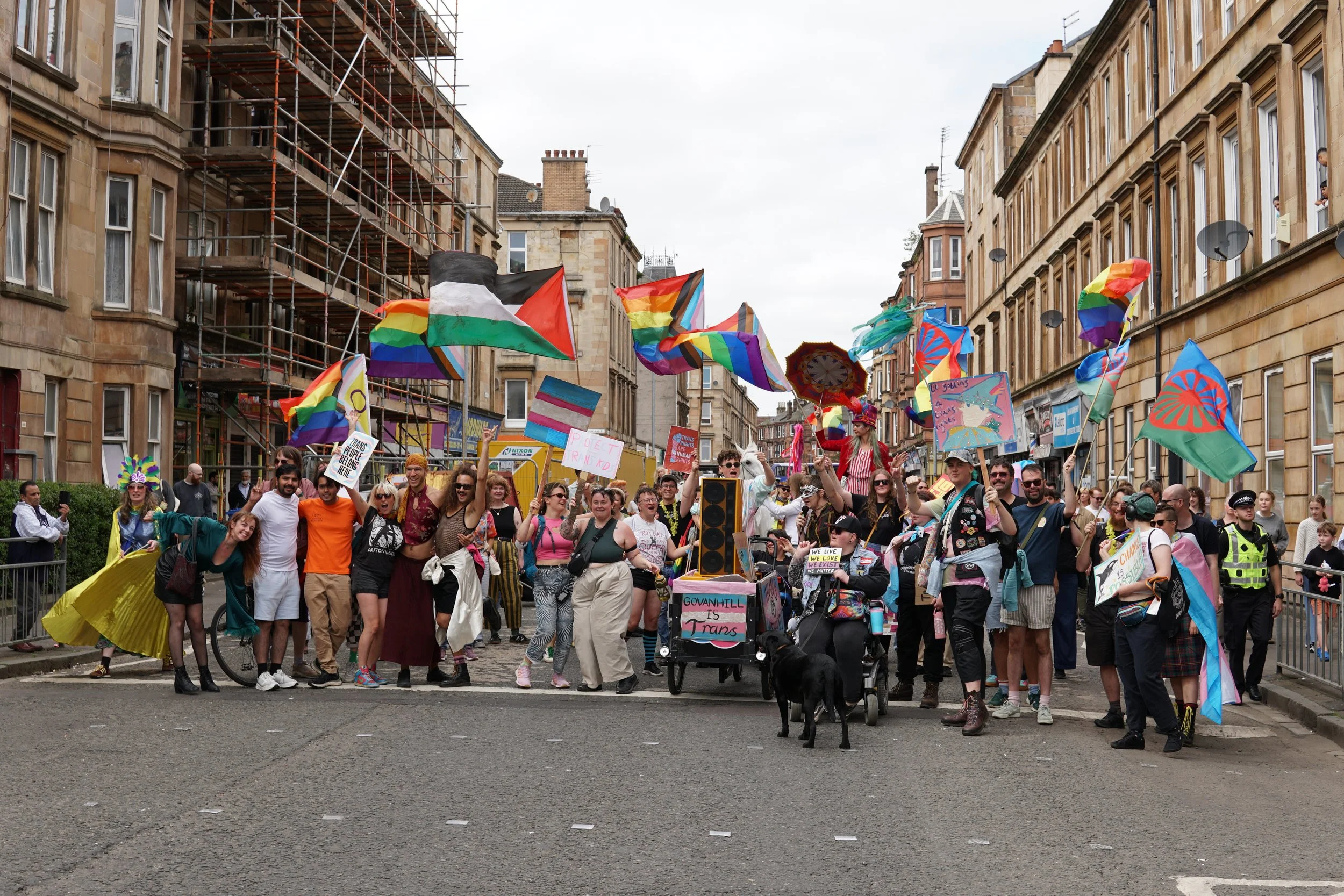
The first Govanhill International Carnival took place the following year in August 2017. Around 4,000 people came out: schools, community organisations, faith groups, recovery support networks, neighbours, many of them carrying banners made in workshops over the preceding weeks. They walked through the streets of Govanhill together.
From those beginnings, the festival grew rapidly. By 2019, it had expanded to eleven days, launched the Govanhill Book Festival and showcased CineRoma, the UK's first Roma film festival. It has hosted Roma Holocaust Memorial events and conversations on the Kenmure Street solidarity action, the campaign for justice for Sheku Bayoh, Palestinian artists, and Glasgow's anti-racist history stretching back to the 1930s – always in partnership with artists, activists and local communities. In 2025, more than 8,000 people attended over fifty events across the neighbourhood. This year, the festival celebrates its tenth anniversary.
I find that growth genuinely remarkable. I also find myself unsettled by how festivals like this get talked about.
Search Govanhill online and you will still find content framing it as somewhere to be pitied or avoided. That outside gaze has followed this community for years. Cultural expression pushes back against it. It asserts something different about who lives here and what this place is. But visibility brings its own risks. As festivals like this grow, the language that once described the work gets taken up by institutions and funding bodies far removed from the actual effort.
Words like diversity, participation, inclusion, community and solidarity get turned into criteria and tick boxes, things to be measured and reported rather than practised. They stop describing anything real. And the festival that inspired them gets cited as evidence of a thriving community by the very institutions that had nothing to do with building it. I want to be clear: this festival was never trying to hit a diversity target. It started because people were being attacked in the street.
That is precisely why infrastructure matters. Not themed activity that bubbles up for a fortnight and leaves nothing behind, but physical, civic, community-owned space that holds the work across time. Govanhill Baths Community Trust has been making that argument since 2001, not as history but as ongoing practice. The campaign to save and transform the Baths continues now. The festival and that campaign are not separate things. They are the same refusal, expressed differently.
But I want to be honest about something harder. The risk of becoming what we critique does not only come from outside. It can come from within. A festival that has been running for a decade, that draws over 8,000 people, still has no guaranteed future beyond this year's fundraising round.
Every year, our CEO and a small team, including me, fundraise from scratch to keep it going. That precarity has a cost that is rarely spoken about: it leaves almost no time to slow down and think properly with our partners, to be genuinely challenged, to ask whether our judgement is still as open and plural as it needs to be. Good judgement, the kind that keeps a festival honest, requires the ability to think from the standpoint of others. Not every decision can be driven by what is survivable. Some have to be driven by what is right – in a moment when the communities this festival exists for are under real and growing pressure, and when the health of public life itself feels fragile.
This year, support from Creative Scotland's Expanded Festivals Fund gives us something we have not always had: genuine room to think. Not to deliver more, but to ask better questions, with partners and with this community. The fund supports new activity, year-round artist development, deeper international collaboration, and the further development of our Creative Neighbourhood Grants, which put resources directly into the hands of local groups and artists to shape the programme themselves.
We are glad of it. But it funds what is additional. The core festival, ten years old, drawing thousands of people every August, remains entirely dependent on fundraising from scratch each year. That is not a complaint. It is a structural fact. And it tells you something important about which kinds of cultural activity get treated as permanent and which get treated as projects.
The question we keep returning to is this: what kinds of artistic practice help create a shared world in which more people can appear, act, speak, disagree, remember and be recognised?
The conditions that a festival creates – being visible, on the street, together, part of something that says you belong here – can generate things that outlast the event itself. Networks form. Organisations get founded. People who were isolated, find each other.
The seed of all of it is the same: the experience of being seen, in public, as part of something that matters. Ten years on, that remains the most powerful thing a festival can do. It will happen again this August.
Govanhill, we will see you there.
Govanhill International Festival and Carnival Highlights – 1 August-16 August
Parade & Carnival 2026
When: Saturday 1 August, 1-5pm (assemble from 12:30pm)
Starting Point: Queen's Park (Victoria Road Gates)
Starting at Queen's Park, the Carnival Parade winds through Govanhill and into Govanhill Park – drums, banners, costumes, brass bands and community groups from across the neighbourhood and beyond.
In the Park – a Celebration For Everyone
When: Saturday 1 August, 2-5pm
Where: Govanhill Park
As the parade arrives, the afternoon opens up. The live stage features Maz and the Phantasms, Makongo, Samba Sene and Romane Cierhenia.
Govanhill Baths, Ours!
A Century of Community, Activism and Renewal
When: 4 July – 27 September
Where: Greater Govanhill’s Community Canvas space, upstairs Tramway
Govanhill Baths, Ours! tells the story of a building that became much more than a building. Opened in 1917 as a public bath and wash-house, the Baths were part of the everyday infrastructure of this neighbourhood for generations, where people washed, swam, worked, met, learned, gathered and built quiet forms of connection across difference.
See the entire programme for this years Govanhill International Festival & Carnival on our website here
Solidarity Screenings
When: Sunday 9 August, 12-8pm
Where: The Steamie, Govanhill Baths, 99 Calder Street
The Steamie in Govanhill Baths becomes a cinema for a day. Four films about resistance, solidarity and what ordinary people can do when they refuse to accept things as they are.
Govanhil Book Festival
When: Friday 8 August, 7pm–8:30pm
Saturday 9 August, 10–5:30pm
Where: Queen’s Park Govanhill Parish Church
Govanhill Street Music Festival
When: Saturday 16 August, 12-8pm,
Where: In and around Govanhill
This year's programme spans live music, DJs, spoken word, performance and outdoor gatherings curated by SNACK Magazine, Duende Soundsystem, Love Music Hate Racism, SANTV and the Trans+ bloc, alongside the Govanhill Baths Creative Canopies programme.
For more information of events, timing, costs and booking visit govanhillbaths.com/festival
This year's festival is supported by grant funding from Creative Scotland's Expanded Festivals Fund
