Inside the vape shops of Govanhill
Ever since a fire on Union Street burned down a B-Listed and beloved Victorian building, vape shops have been under scrutiny. We set out to learn more about vape culture in Govanhill, who’s selling them, who’s buying them, and how the council plans to implement better protection.
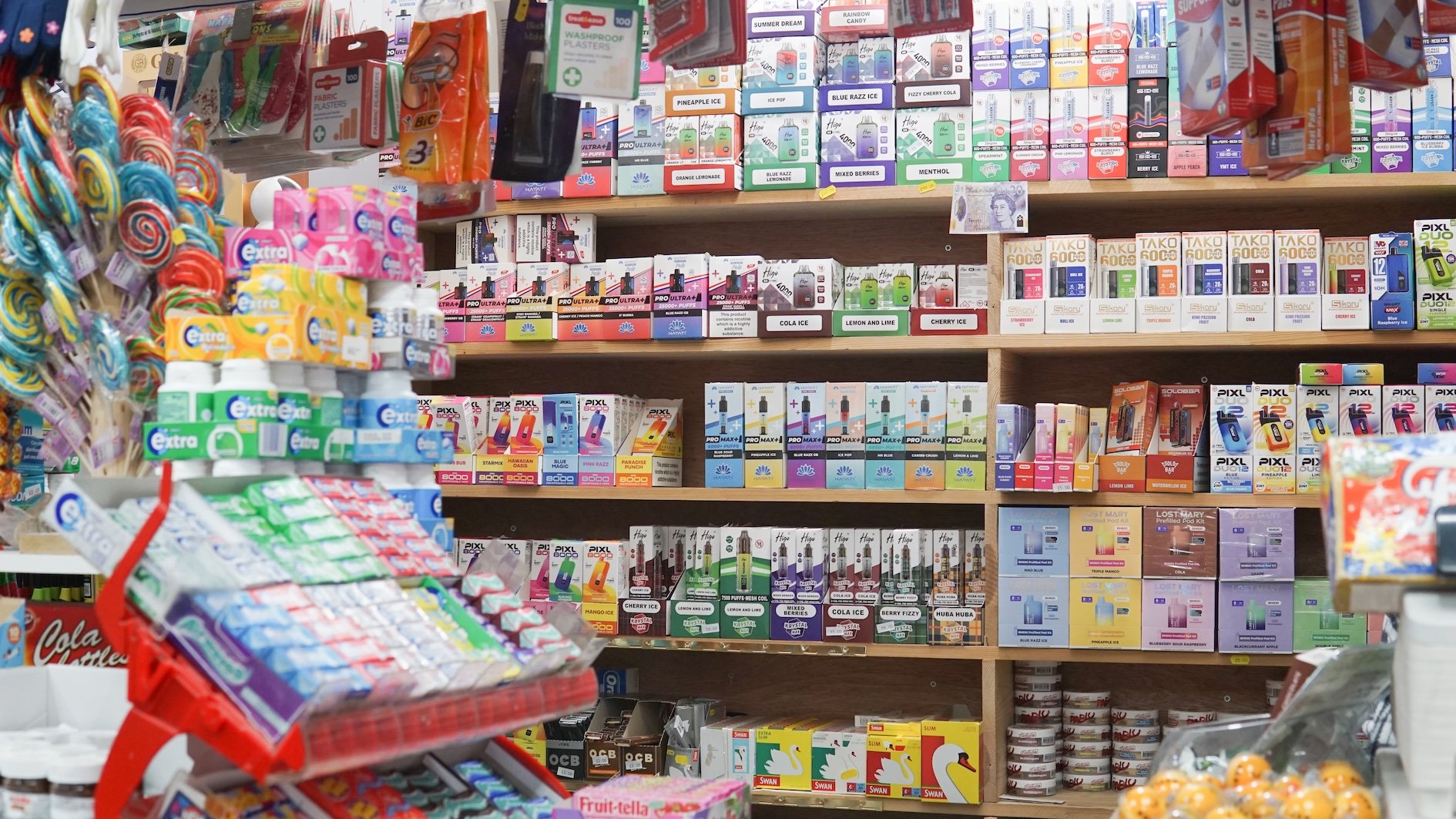
Inside one of shops selling vapes
Words and photos by Alice Austin | With some additional research from students at Bellahouston Academy
Ali stands behind the counter of Euro Shop, an immaculately well-organised convenience store on Allison Street. Rows of chocolate bars, bubble gum and cereal bars line the counter in front of him, and behind are boxes and boxes of vapes. Strawberry, mango, watermelon, cotton candy, menthol, lychee ice, dragon fruit, guava, aloe vera and scores more. Except for the black and white text that warns buyers the product is highly addictive, they look very appealing indeed. The flavours, the packaging, the graphics. I quit smoking ten years ago and even I feel an impulse to grab one and puff it.
“These are very popular,” Ali says, gesturing behind him. “We don’t even sell tobacco products, just vapes. If people want tobacco they can go to Pricecutter down the road.”
When I ask Ali about the fire near Glasgow Central Station, he looks gutted. “It’s extremely sad,” he says, then signals me to follow him to the back room. “That’s where we keep our fire extinguishers,” he says, pointing to one with a black label, which means it’s suitable for Lithium-Ion fires.
I’m on a mission to count the number of shops that sell vapes in Govanhill, and as I go, I ask each about their fire safety precautions. Some have fire extinguishers like Ali’s and others don’t.
Elaine Gallagher is a Councillor for the Southside Central ward for the Scottish Green Party. She says it’s essential that vapes are stored safely and told me that her party is asking for more stringent licensing for vapes and more funding to support trading and safety inspections.
“Pop-up shops are widespread in the city, with traders trying to make a living on a shoestring and operating in a precarious way,” she says. “They are less likely to comply with licensing and registration regulations, which is a problem for the city in enforcing trading and safety standards.”
But Mhairi Hunter, SNP Councillor for Southside Central, says the council’s current focus is on ensuring shops are enforcing age restrictions and tackling illicit tobacco.
“There is no additional regulatory guidance on appropriate storage methods,” she tells me. “The Council does not make laws or regulations, its role is to enforce them, so this needs to be taken forward at national level with Glasgow City Council being keen to contribute to the development of further regulation along with fire safety professionals.”
In Scotland, you need to register with the Scottish Tobacco and Nicotine Vapour Product Register to sell both tobacco and vapes. Students from Bellahouston Academy cross-checked some of the addresses selling vapes with the Register and found that several weren’t registered.
On my vape-crawl of Govanhill, the vast majority of shops don’t sell tobacco because demand simply isn’t high enough. When it comes to vapes, though, they fly off the shelves and make up a significant portion of their income.
“Cherry is the most popular flavour,” says Mohammad at Cluj Minimarket, passing me one over the counter. “Plus it’s cheap, only £4.”
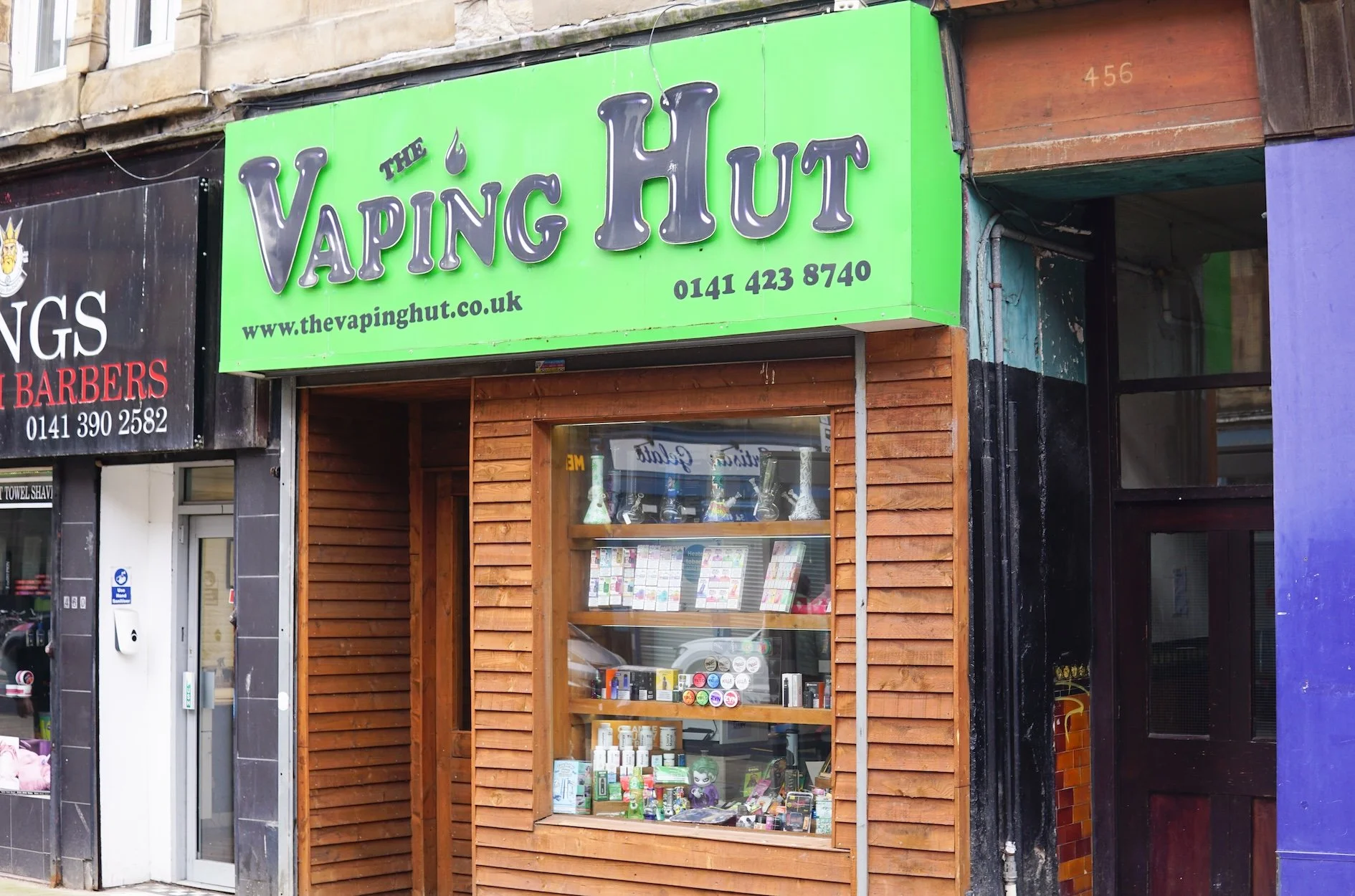
The Vaping Hut on Victoria Road
The most popular are affordable but not disposable, as single-use vapes were banned in the UK in June 2025 to curb the sharp rise in youth vaping and tackle environmental damage – although experts say this did nothing to stop kids vaping. They just switched to refillable.
On my walk, I took a tally of how many shops I could spot. I spotted six shops selling vapes on Cathcart Road, including a dedicated shop called Techn Cloud. On Victoria Road, I counted nine shops selling vapes, including Tesco, Sainsbury’s and two dedicated vape shops: The Vaping Hut and Smoke Vape Flavours. On Allison Street, I counted eight shops selling vapes, all of them convenience stores and fruit and veg shops, while on Calder Street, there’s just one shop selling vapes. That’s 24 in total.
I didn’t see any evidence of vape litter on my vape travels, perhaps because of increased awareness due to the fire, but students from Bellahousten Academy spotted nine pieces of litter within a ten minute walk of the Community Newsroom.
Since the Union Street fire, it’s not so much the vape shops that have come under fire but the people who run them.
As rightwing sentiment sweeps Scotland, immigrant communities are being blamed for many of society’s problems: unemployment, crime rates, litter, housing shortages. Look at the comment section on any of the social media posts about the Union Street fire and it’s clear migrants are also being blamed for causing it.
Historically speaking, low-income, recent migrants have always taken up small retail businesses because it’s a secure way to make money. Vape shops are just the latest incarnation, as they don’t need much staff, they don’t need much space, storage is simple and language barriers won’t get in the way of business. That’s why recent migrants are likely to run or own convenience stores, takeaways, barber shops, and electronic repair stores. It’s not specific to vape shops.
So to see the full weight of society bearing down on vape shops seems a little unfair. Perhaps, too we could look at the landlords who let their properties fall into disrepair and rent them out to short-term pop-ups without ensuring the proper safety regulations. We could also look at budget cuts that mean Glasgow City Council don’t have the budget to enforce regulations. Or we could look at the vape industry itself, which has done such a successful job of marketing its highly addictive products that they’re now a money-making machine for small businesses.
Catherine has been working at The Vaping Hut ever since it opened in 2017. “All of these vapes come from official wholesalers,” she says, pointing at the huge selection behind her. “These all go through British standard testing so these are all safe, but a lot of these vape shops are not coming through the proper channels to be checked and regulated.”
There’s a Tesco Metro and Sainsbury’s Local not far from The Vaping Hut, and Catherine says she often has people coming into her store to ask how to work the vapes they sell. “One customer actually told us the person behind the counter in Sainsbury's directed them to come in here and ask us how to work it.”
Vapes aren’t that simple to use. Components need changing, filters need cleaning and oil needs to be refilled, plus they need to be disposed of properly. They aren’t a straight forward product to buy or to sell.
After the fire near Glasgow Central, Catherine says lots of people called up asking how they can dispose of their vapes responsibly. “The Tesco here on Victoria Road has a recycling bin battery for vapes, so we tell them to dispose of them there,” she says.
At that moment, a brown-haired man in his 30s, looking somewhat dishevelled, comes into the shop to buy two strawberry-banana vapes. He tells me how he got hooked almost by accident.
“I’ve been vaping for four years,” he says. “I was at a party and someone had a disposable vape and we couldn’t smoke at that party, so I started then. I stopped smoking more or less, but I vape way more than I smoke.”
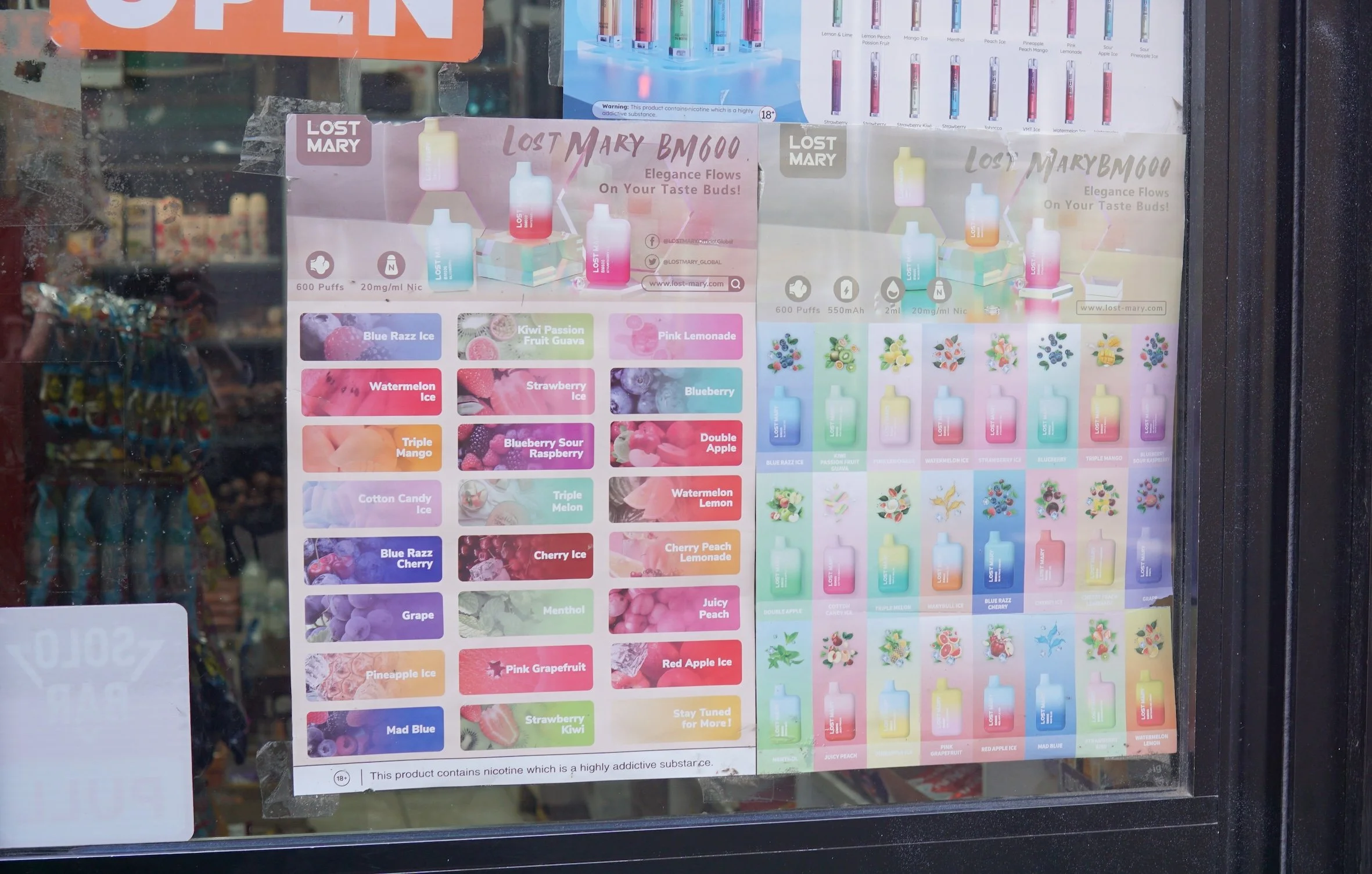
A poster showing some of the Lost Mary vape flavours
He tells me it’s much easier as it’s socially acceptable to vape indoors. “At first, when I’d buy a disposable, it’d probably last a week,” he says. “Today we're going to the rugby and there's no way it'll last the whole day because my pals will want some. So I’m definitely hooked. Is it better than smoking cigarettes? I don't know.”
Early commercial E-cigarette rollouts started in the mid-2000s when a Chinese pharmacist created an alternative smoking product after his father passed away from lung cancer. Early adopters were mainly smokers looking for alternatives, and the devices were initially expensive and limited in flavour and style.
They exploded in popularity in the 2010s with the rise of refillable tanks and flavoured e-liquids. Companies like Juul in the U.S. popularised sleek, colourful, easy-to-use devices, and vape shops started appearing in cities everywhere, including the UK, often run by small business owners.
Flavoured products, marketing and social media presence fuelled both popularity and controversy, with many companies claiming they weren’t marketing to children while pushing sweet, candy-like flavours, colourful packaging and teaming up with TikTok influencers.
Most of the vape shops I pop into in Govanhill say that around £4 - £6 vapes are the most popular, with flavours like cherry and mint flying off the shelves. They all tell me demand is high.
So how can we safeguard vape shops on UK high streets? “I think the council need to crack down on all these shops who don’t have a clue what they’re selling,” Catherine says. “Even the corner shops that sell vapes.”
But with so many folk hooked on vapes and thus providing a significant share of income for many local businesses alongside council budget cuts, it’s unlikely that’ll happen any time soon.