The legacy of empire at Glasgow’s Commonwealth Games
When Glasgow agreed to host the 2026 Commonwealth Games, it raised important conversations about the historical and ongoing legacies of colonialism. As the city says goodbye to the Games, those questions remain.
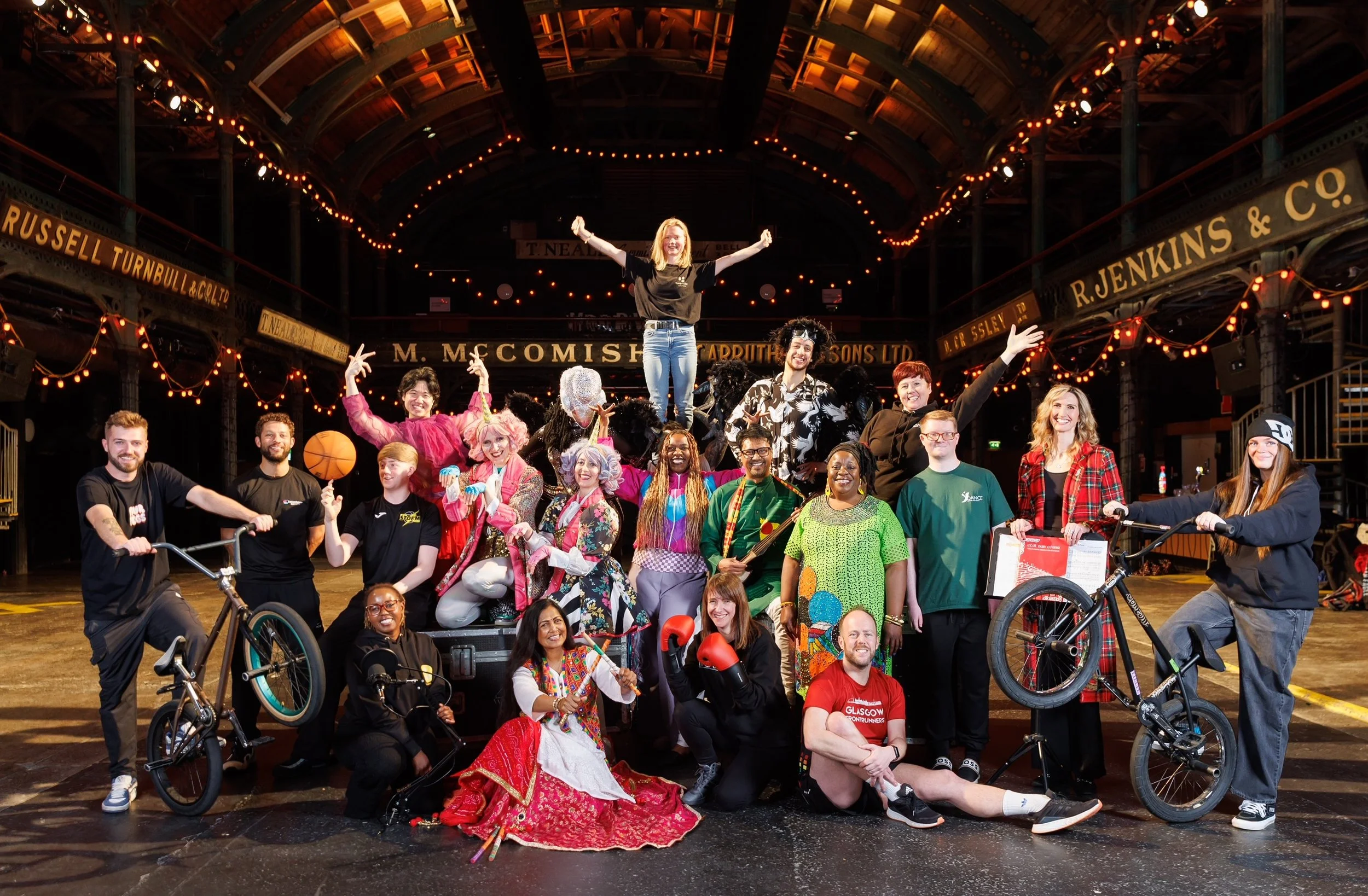
By Emma Bainbridge | Photo courtesy of Commonwealth Games Glasgow 2026
The Commonwealth Games returned to Glasgow this summer, bringing with them a complicated legacy of colonialism, displacement, and empire.
Today, the Commonwealth Games presents the event as an opportunity for different countries and cultures to come together through sport. But the fact remains that the thread connecting these countries is colonisation by the British empire – a violent process that continues to disadvantage colonised people and countries.
“The Commonwealth Games are often presented as a celebration of friendship and shared history, but that history is rooted in empire,” says Zandra Yeaman, trustee of the Scottish Museum of Empire, Slavery, Colonialism, and Migration (SMESCM), who described the Games as a “paradox.”
“For many people, the Games embody a tension between genuine international connection and the unresolved legacy of colonialism. They can be a space for solidarity, but also a reminder of how those relationships were originally forged through unequal power and racial hierarchy.”
From empire to Commonwealth
When the earliest iteration of the Commonwealth Games took place in 1930, the British empire was still very much intact and the event was known as the British Empire Games. Held in Hamilton, Canada, the participating countries were England, Australia, Bermuda, British Guyana, Northern Ireland, Newfoundland, New Zealand, Scotland, South Africa, and Wales.
As the British empire gradually fell apart, the name of the Games changed too, becoming first the British Empire and Commonwealth Games from 1950-1966 and then the British Commonwealth Games until 1970.
Since 1930, the Commonwealth Games has only been held in non-white majority countries three times: Kingston, Jamaica in 1966; Kuala Lumpur, Malaysia in 1998; and Delhi, India in 2010. Every other edition has been held in either Britain, Canada, Australia, or New Zealand.
Graphic by Laura Hurst
Addressing colonialism in Glasgow 2026
Glasgow 2026 Chief Executive Phil Batty told Greater Govanhill: “At Glasgow 2026, we have a responsibility to front up to the past of the Commonwealth movement, which is intrinsically linked with historical injustice.”
He added that the wider Commonwealth Festival sought out programming with a “Focus on social injustice and acknowledging the complex historic and contemporary relationships of the Commonwealth and possible routes to a just future.”
One such contribution comes from Turner Prize winning artist Jasleen Kaur, whose public artwork, Superstructure, consists of eight weathervanes along the Clyde featuring words or phrases that evoke the river’s history of trade, industry, and empire.
Meanwhile, Australian South Sea Islander artist Jasmine Togo-Brisby’s exhibition Liquid Land explores the history of enslavement and forced labour in the South Pacific.
Complimenting Kaur’s artwork is Watershed, a series of events on river rights and ownership inspired by Jude Barber and Louise Welsh’s citizen investigation into ownership and privatisation of the Clyde. Barber and Welsh were also the team behind the Empire Café, which brought people together to discuss Glasgow’s role in the Tranatlantic slave trade during the 2014 Commonwealth Games.
“We thought it would be a bit remiss if there wasn’t a conversation around that part of our history,” says Barber. “I feel that that conversation, although it sometimes still gets a bit of pushback in certain quarters, [is] definitely more in our consciousness as a city.”
She credits now-Councillor Graham Campbell and the Coalition for Racial Equality and Rights for starting conversations about this history in the early 2000s and 2010s.
This history is also front and centre in Radical Glasgow Tours’ Glasgow, sport, and Commonwealth tour designed specifically for the festival. The group, which has been organising walking tours on Glasgow’s social history since 2022, takes participants through Glasgow Green while discussing radical sporting history and the city’s role in both empire and resistance.
“We’re very focused on the idea of engaging with histories as continuing struggle and thinking about what the living traditions of resistance against empire mean in the city,” explains Henry Bell, historian and co-founder of Radical Glasgow Tours. “Engaging with how white supremacy has been fought in the past, both by Glaswegians and by people internationally, is crucial for understanding how we combat it today.”
He also acknowledges the colonial baggage of the Games as well as the importance of critical perspectives.
“Obviously the Commonwealth Games is inevitably going to be tied to soft power and international relations, and Radical Glasgow Tours hopes to both be in useful dialogue with it, but also a thorn in its side to some extent,” he says.
Nevertheless, Yeaman and SMESCM Co-Lead Coordinator Salma Ali stress that gestures to acknowledge and confront the legacy of empire in the Commonwealth have to go beyond symbolism and look to long-term change.
“There’s such a huge focus on creating programming and creating outputs, but then the outputs end because they’re project-based and they’re short-term,” Ali explains. “You have to sit and think, ‘we’re going to host these events, and yes, it’s timetabled, but what are the legacies and what do we change?’”
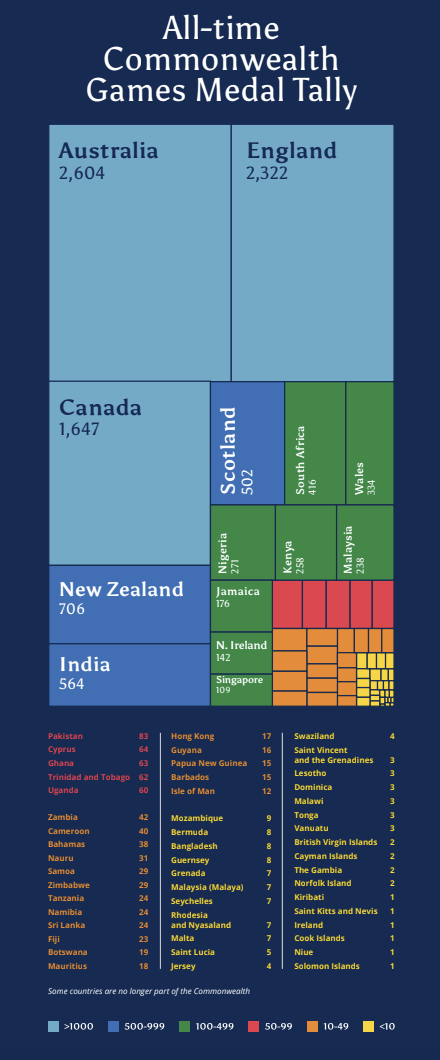
It is important because these legacies also continue to influence access and resources for athletes too, as some countries dominate the scoreboard.
For Yeaman and Ali, going beyond symbolism means shifting the conversation to reparative justice to tangibly address the inequalities created through colonialism.
“For me, decolonisation is really about nation states and how they build and repair and do reparative justice,” says Yeaman.
Looking to 2030 and beyond
The fact that the Glasgow 2026 edition of the Commonwealth Games moved from Australia at the last minute due to costs sparked conversation about the future of the Games and its sustainability. Phil Batty told Greater Govanhill that he hoped Glasgow 2026 could be a blueprint for a more sustainable, inclusive, and financially responsible model of the Games, where host communities have the chance to reap the social and economic benefits of hosting. He also pointed to a shift in host locations away from the Global North, with Amdavad, India set to host the 2030 Games, and Nigeria vying to become the first African host in 2034.
In Henry Bell’s view, it’s the Commonwealth nations of the Global South who will ultimately shape the future of the event.
“I think the answer should be that we shouldn’t be looking at Europe or North America or Australia to decide how these nations relate to each other,” he says. “I think we need to be asking Ghana and India and Jamaica how these nations relate to each other.”
Yeaman agrees that it’s ultimately people in formerly-colonised Commonwealth countries whose voices should be centred: “I don’t think it’s for me to dictate how something should look. I think it should come from those source communities themselves.”
Several interviewees acknowledged that there can be a positive impact when people come together for such events, especially for celebrations around sport.
“A lot of cultures and a lot of communities rely on sports for things like mental health and social health and community as well. So I think the idea of having games and a sporting event to bring people together is actually not unknown to communities,” says Salma.
However, she added that such gatherings should be used as an opportunity to have significant conversations instead of just celebrating.
“Lots of community-building has happened over the centuries that is worth celebrating, but also, that celebration story is in the context of larger struggles of resistance, resilience, and ongoing struggles,” she says.
For Henry Bell “There’s a real connection that is brought about by people coming together to share activities and to share their experiences of those activities across the world.
“Both on a local and an international level, there is always radical potential when you’re bringing people together. What is done with that radical potential is kind of the question.”
